
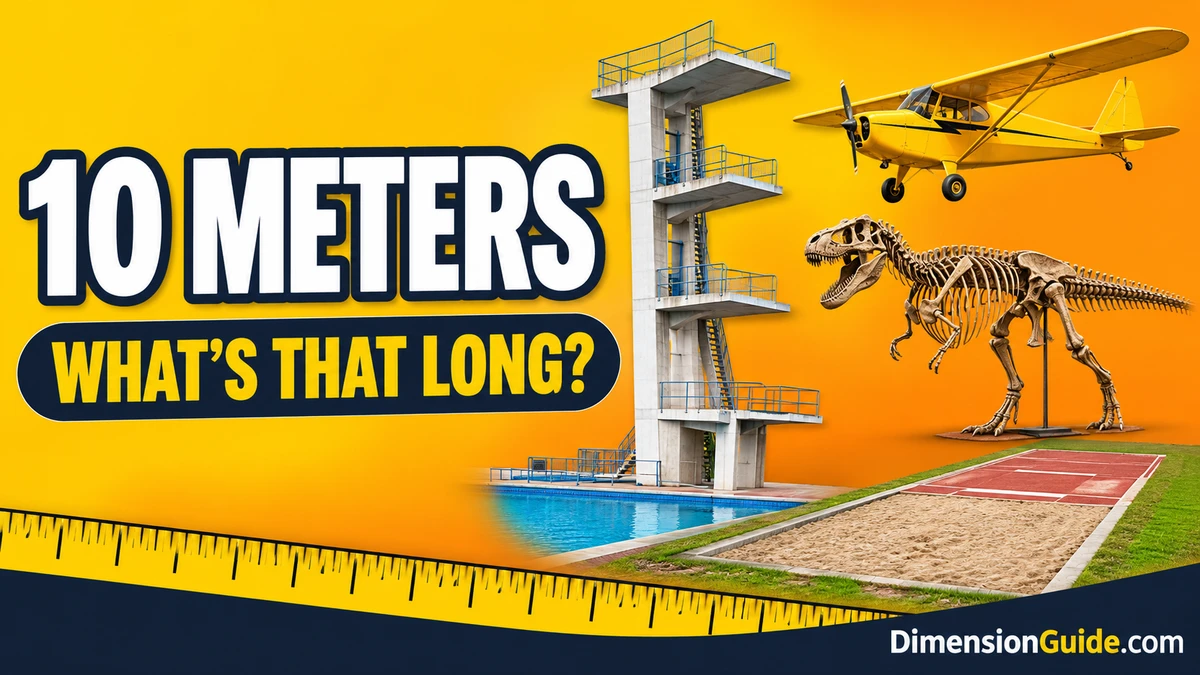


Short answer: 10 meters is 32.81 feet, or about 13 to 14 normal steps. In other units that is 10.94 yards, 393.7 inches or 1,000 cm.
Pace off 10 meters and you will take 13 to 14 normal steps, about 32.8 feet. It is too far for a ruler and too short to feel like a trip, so most of us guess wrong.
Here are 16 things at or near that length, with the gap spelled out for every near miss.
10 Meters in Feet, Inches, and Yards
The meter is the base unit of length in the metric system. Since 1983 it has been fixed by the speed of light, so a meter is the same everywhere on Earth. No stretching, no wiggle room.
| Unit | 10 meters equals |
|---|---|
| Centimeters | 1,000 cm |
| Millimeters | 10,000 mm |
| Inches | 393.7 in |
| Feet | 32.81 ft |
| Yards | 10.94 yd |
| Kilometers | 0.01 km |
| Miles | 0.00621 mi |
The easy trick is to think of 10 meters as a bit more than 10 yards. A meter is about 3.28 feet, a yard is exactly 3 feet, so you get about 9 percent extra.
Pro tip:
To go from meters to feet in your head, multiply by 3 and add a tenth of that. For 10 meters, 30 plus 3 gives you 33 feet. The exact answer is 32.81, so you land within a few inches.
16 Things That Are 10 Meters Long (or Very Close)
I checked each size against a rulebook, a spec sheet, or a standards document. Near misses are labeled as near misses.
1. 10 Meter Diving Platform (height)
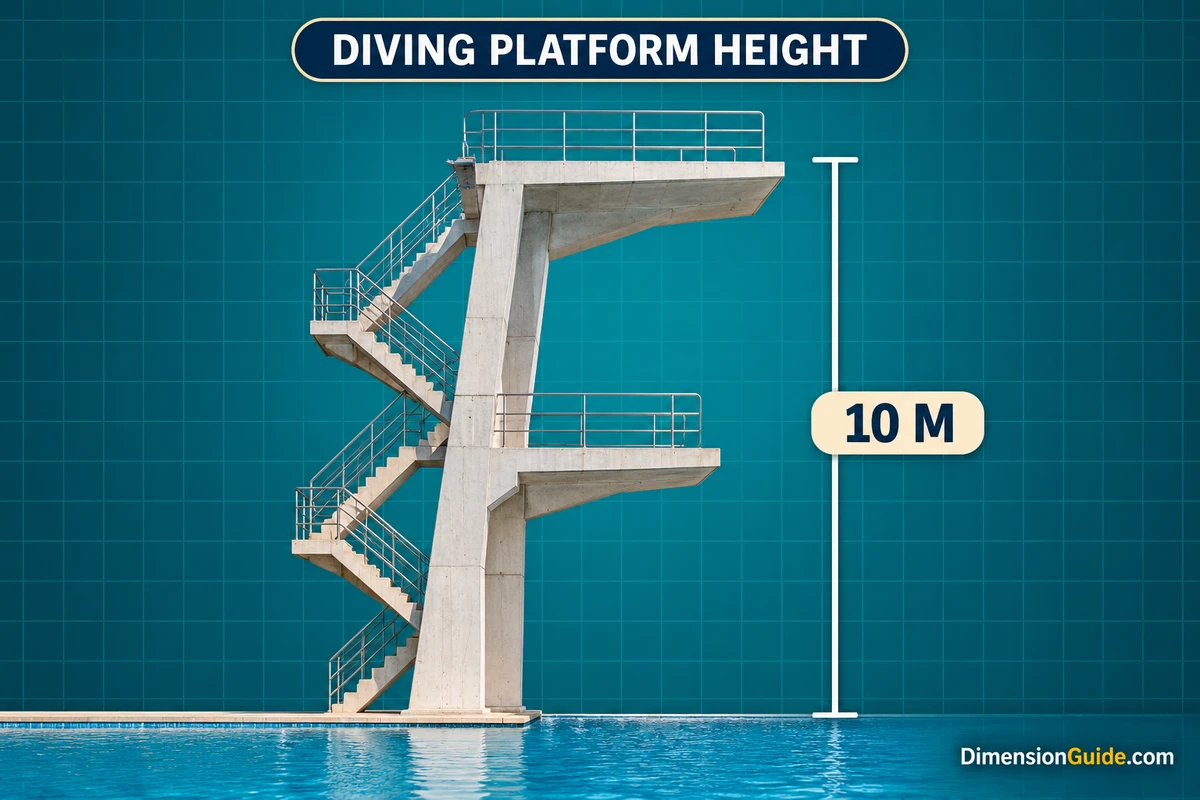
The top board at an Olympic diving pool sits exactly 10 meters above the water. That is 32.8 feet.
Stand up there and you are about three floors up in a regular building. Divers hit the water at roughly 50 km/h, which is why it feels like a big deal.
2. 10 m Air Rifle and Air Pistol Range
Is there a sport where 10 meters is the whole point? Yes. Olympic air rifle and air pistol shooters fire at a target exactly 10 meters away.
The scoring bullseye on a rifle target is tiny, about half a millimeter wide on the official card. Shooting that from 10 meters is like hitting a pinhead from across a classroom.
3. Rugby 10-Meter Line
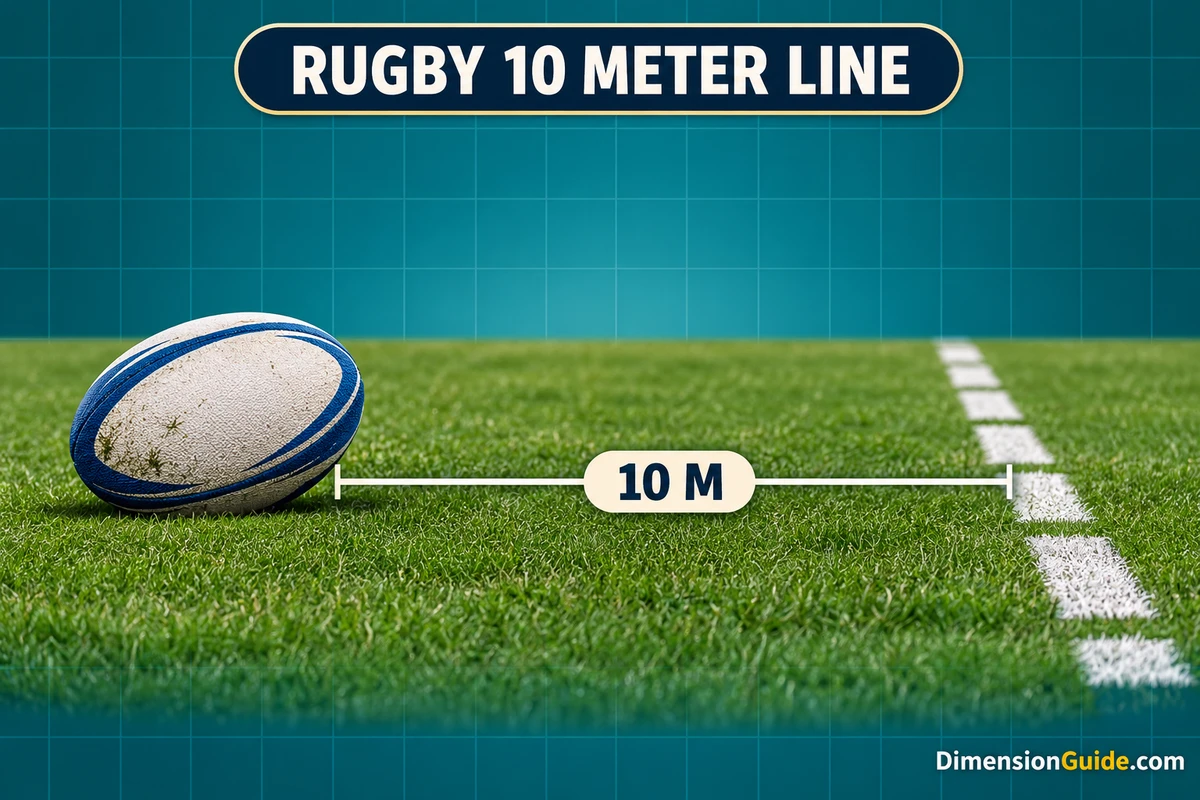
Rugby union fields have dashed lines drawn 10 meters on each side of the halfway line.
On a kickoff, the ball has to travel at least that far or the other team gets a choice of restarts. So the next time a kick falls short, you know the exact distance it missed by.
The line is dashed on purpose. Solid lines mark the boundaries, and dashed ones mark distances like this.
4. Tennis Doubles Court (width)
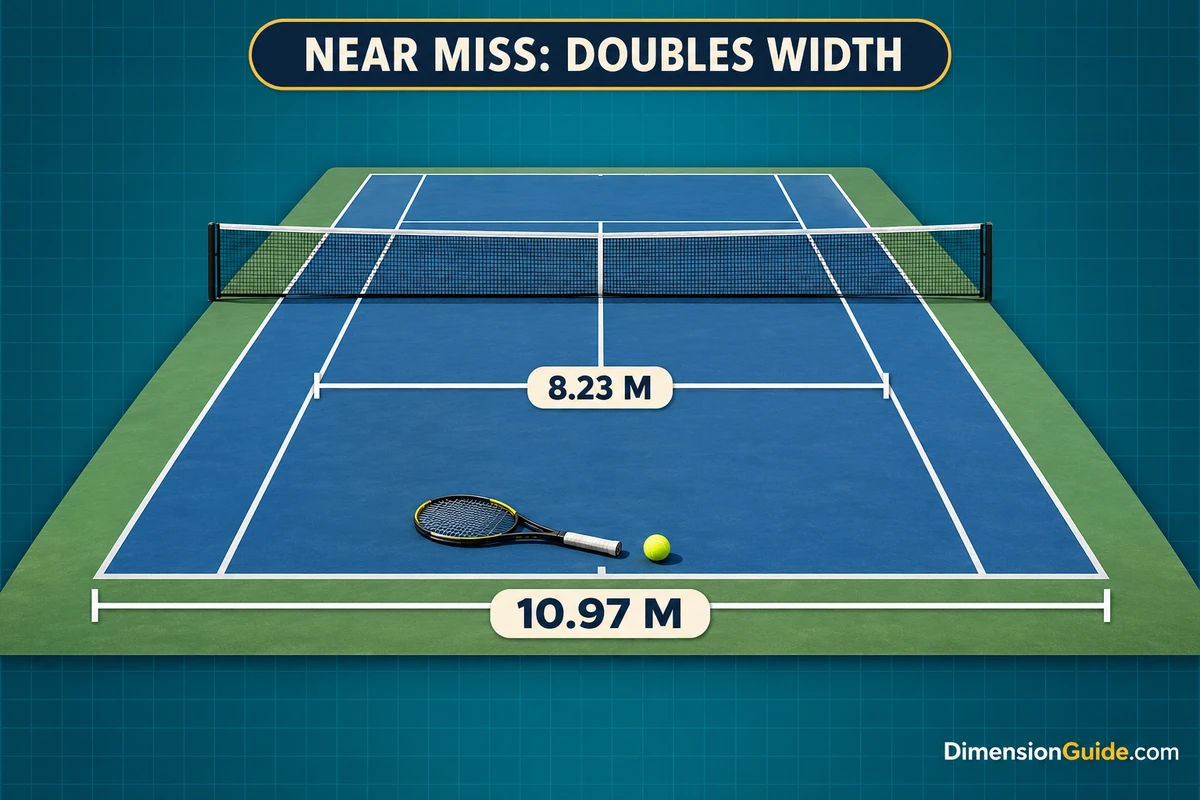
A doubles court is 36 feet wide, which is 10.97 meters. That makes it a near miss by about a meter, since 10 meters is 32.8 feet.
Singles players use the narrower 27 feet (8.23 meters), then the outer lanes open up for doubles. Same court, two different widths.
5. Soccer Penalty Mark (distance to goal line)
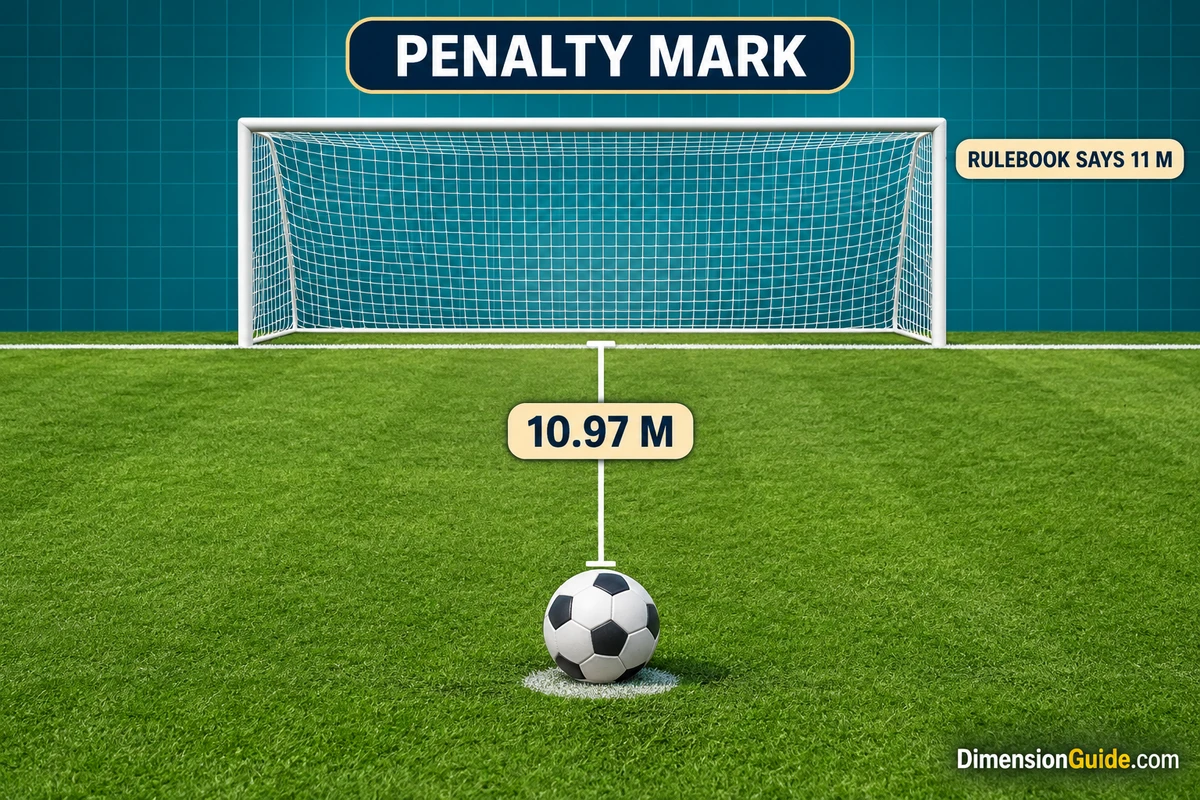
The spot for a penalty kick is 12 yards from the goal line. That is 36 feet, or 10.97 meters, and the official rulebook rounds it to 11 meters.
Look closely and you will notice something funny. It is the same distance as a tennis doubles court is wide, because 12 yards and 36 feet are the same length.
So a penalty shooter faces roughly one meter more than a clean 10.
6. Free Kick Wall Distance (soccer)
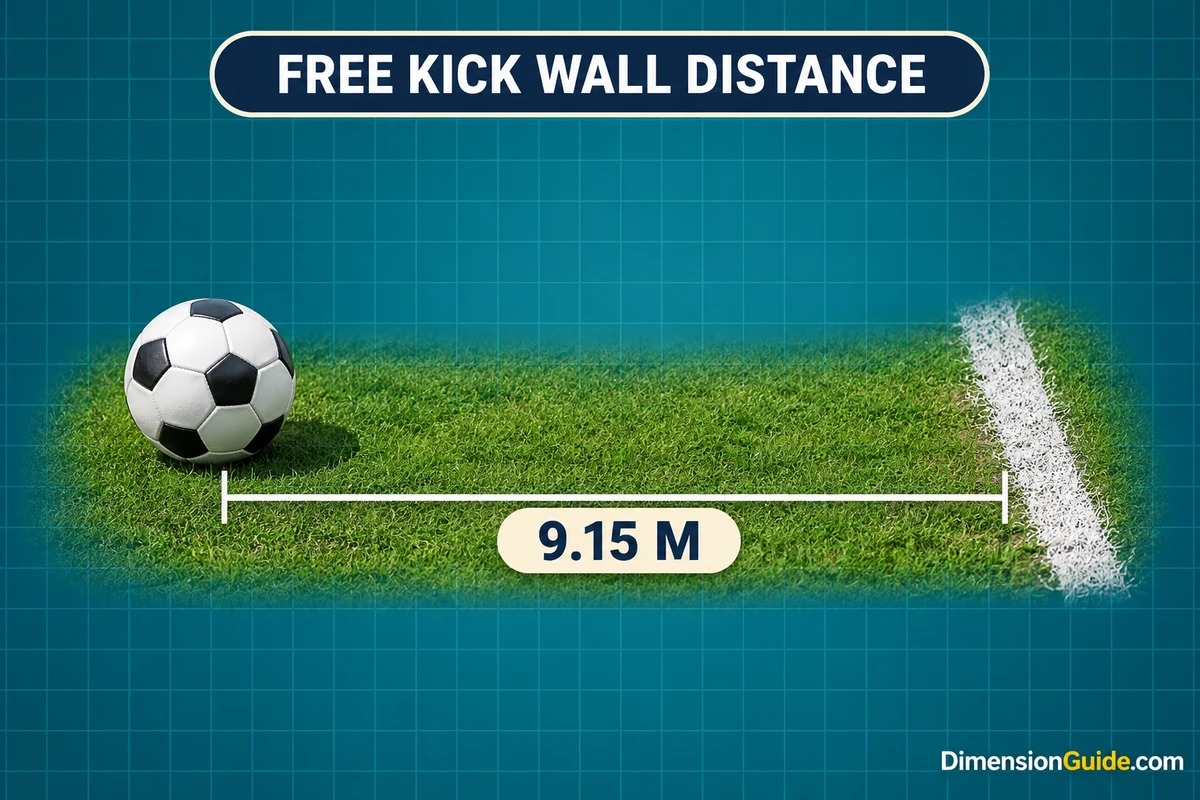
When a team takes a free kick, defenders must stay 9.15 meters away. That is 10 yards.
It is a near miss, about 85 centimeters shy of 10 meters. Referees spray a foam line to mark it, so you can see the distance on the grass for a few seconds. Pretty clever for a bottle of foam.
7. Pétanque Jack Throw (longest legal)
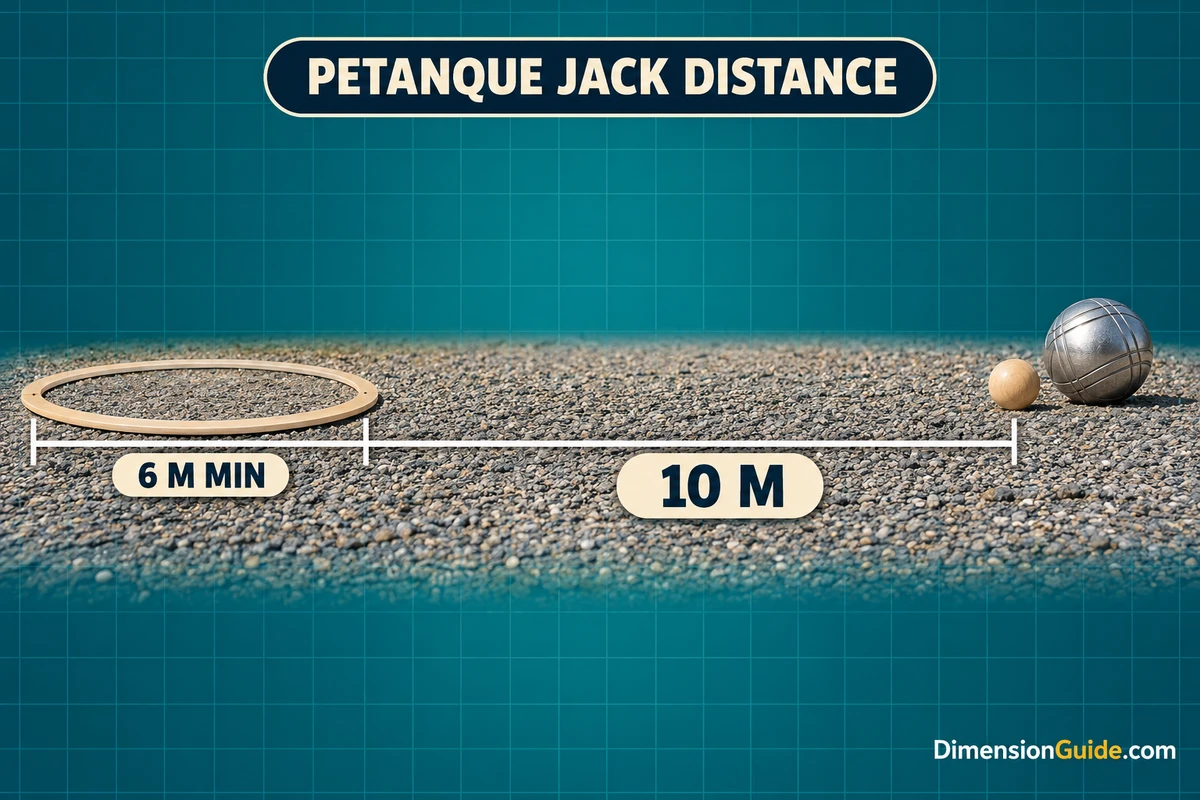
In pétanque, the little target ball is called the jack, and it has to land between 6 and 10 meters from the throwing circle for adult play.
So 10 meters is the upper limit. Throw it any farther and you have to throw it again. The rule is measured from the inside edge of the circle, which trips up beginners all the time.
8. Volleyball Net (length)
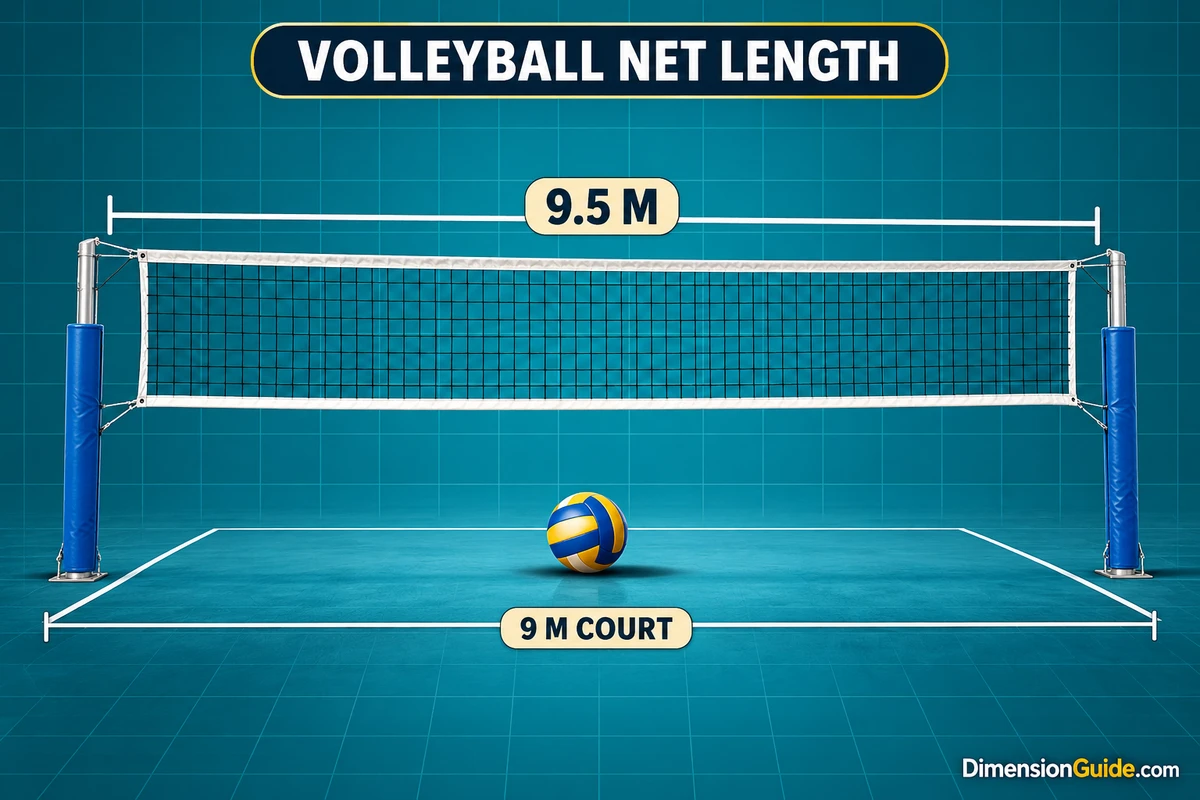
Volleyball nets are 9.5 meters long, which makes them a near miss by 50 centimeters.
The court itself is only 9 meters wide, so the net reaches a little past each sideline. Those extra bits hold the antennas that mark where the ball can go.
9. 35-Foot Transit Bus
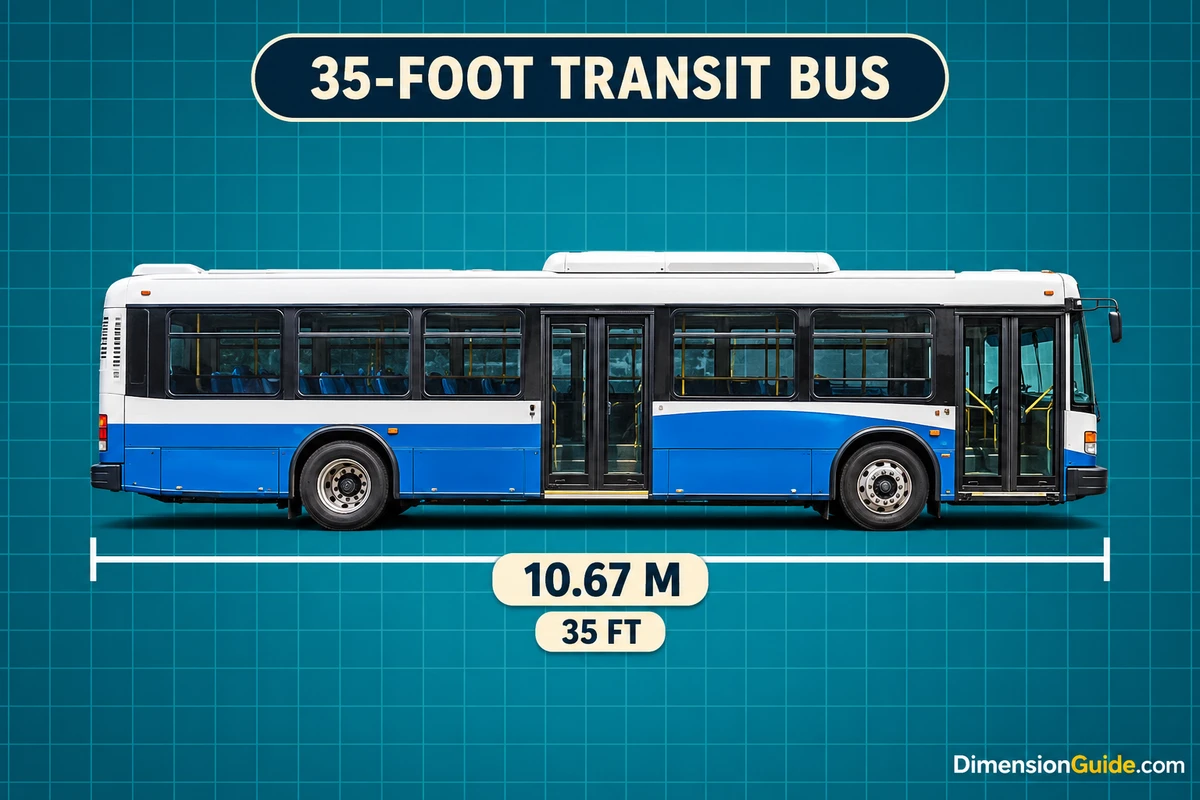
Why is a transit bus listed as 35 feet instead of 10 meters? Because American buses are sold in feet. The 35-foot version comes out to 10.67 meters.
Gillig, a major US bus maker, offers its Low Floor model in 29, 35, and 40 foot lengths. The 35-foot version is the midsize one, and it is a close match for 10 meters, about 67 centimeters over.
10. Cessna 172 Skyhawk (wingspan)
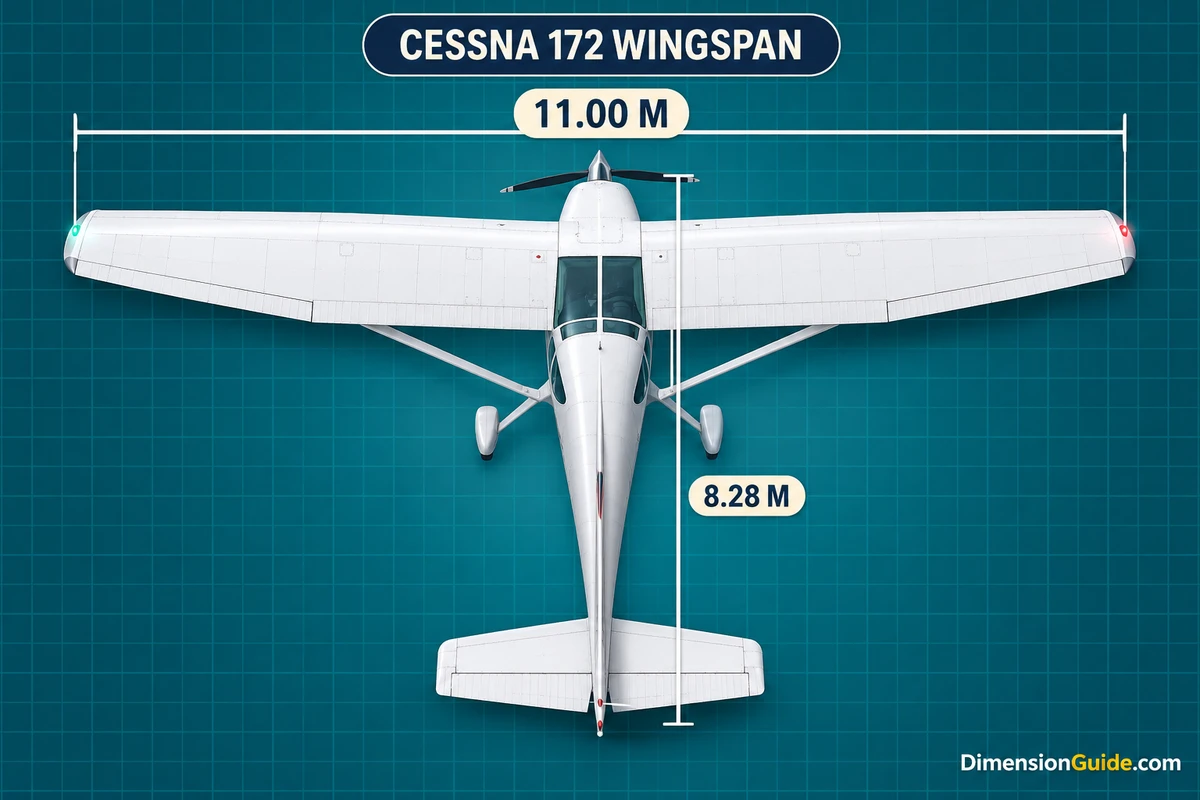
The Cessna 172 is the most common training plane in the world, and its wingspan is 36 feet 1 inch, or 11.00 meters.
That is a meter over our target, but it is a handy number to know. The plane itself is only 8.28 meters from nose to tail, so the wings are wider than the body is long.
11. Long Jump World Record
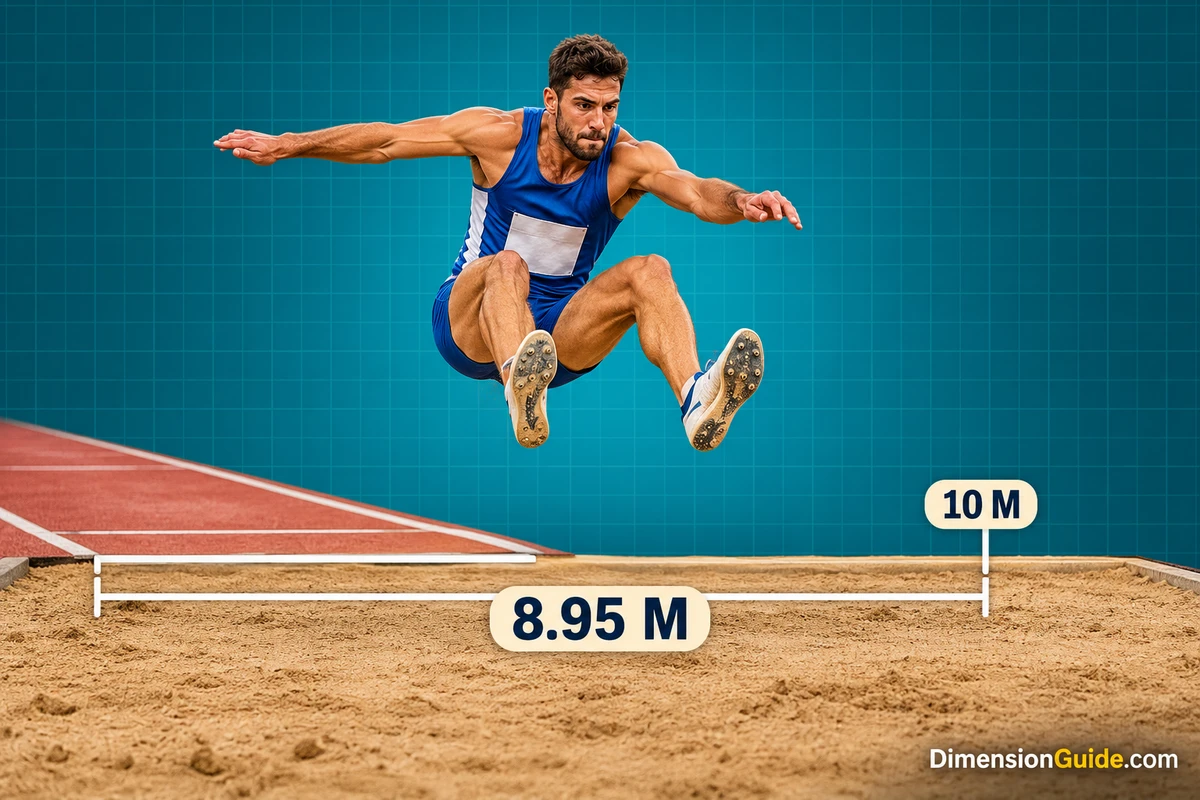
The men’s long jump record is 8.95 meters, set by Mike Powell in 1991. That is more than a meter short of 10, and it has stood for decades.
Weird, right? Humans can sprint 10 meters in a couple of seconds, but we can’t jump that far in one go. The record is still about 90 percent of the way there.
12. Two Toyota Camrys, Bumper to Bumper
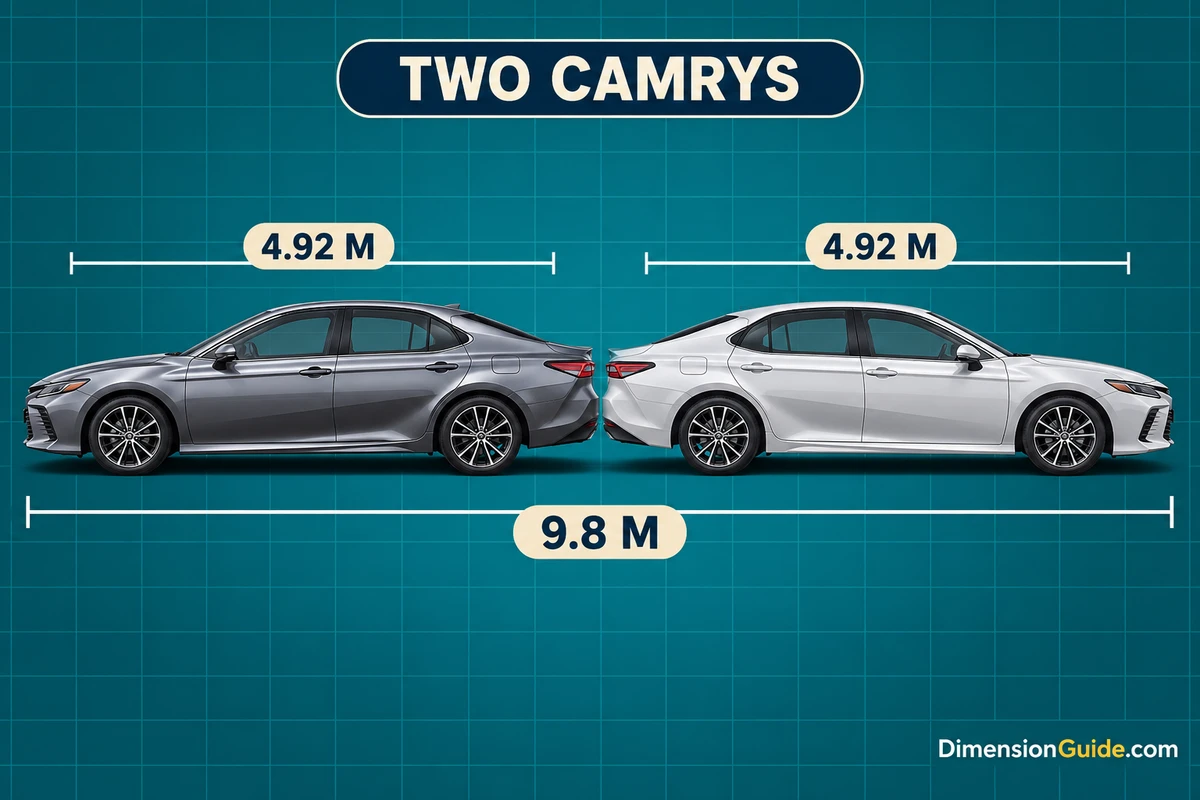
The 2025 Toyota Camry is about 193.5 inches long, or 4.92 meters. Park two nose to tail and you get roughly 9.8 meters.
It is a fair match, a few inches short. Most mid-size sedans fall between 4.8 and 5 meters, so this trick works for almost any family car.
13. Utility Pole (35-foot class)
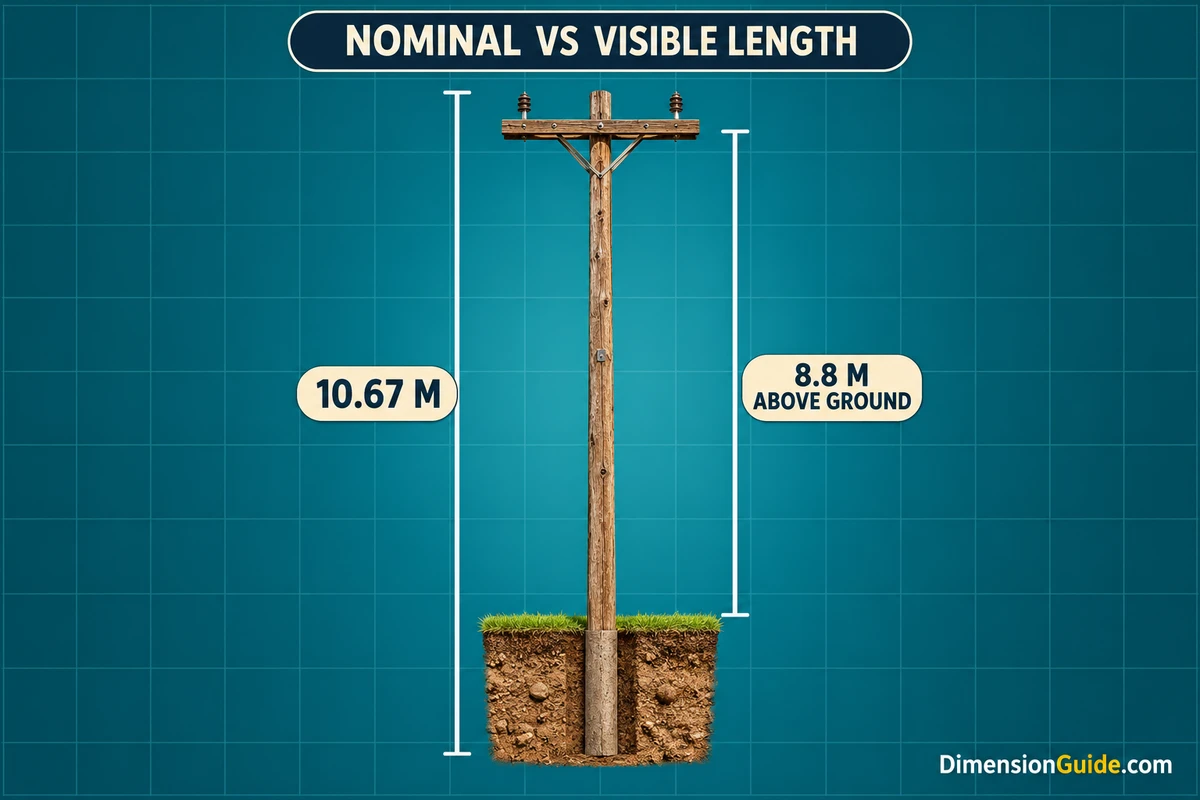
A 35-foot wooden pole is 10.67 meters long, which sounds like a good match until you remember part of it is underground.
A common rule of thumb buries a pole about 10 percent of its length plus 2 feet, so roughly 6 feet of the 35 is under the dirt. What you actually see above ground is closer to 8.8 meters.
Nominal length and visible length are two different things.
14. Killer Whale (largest males)
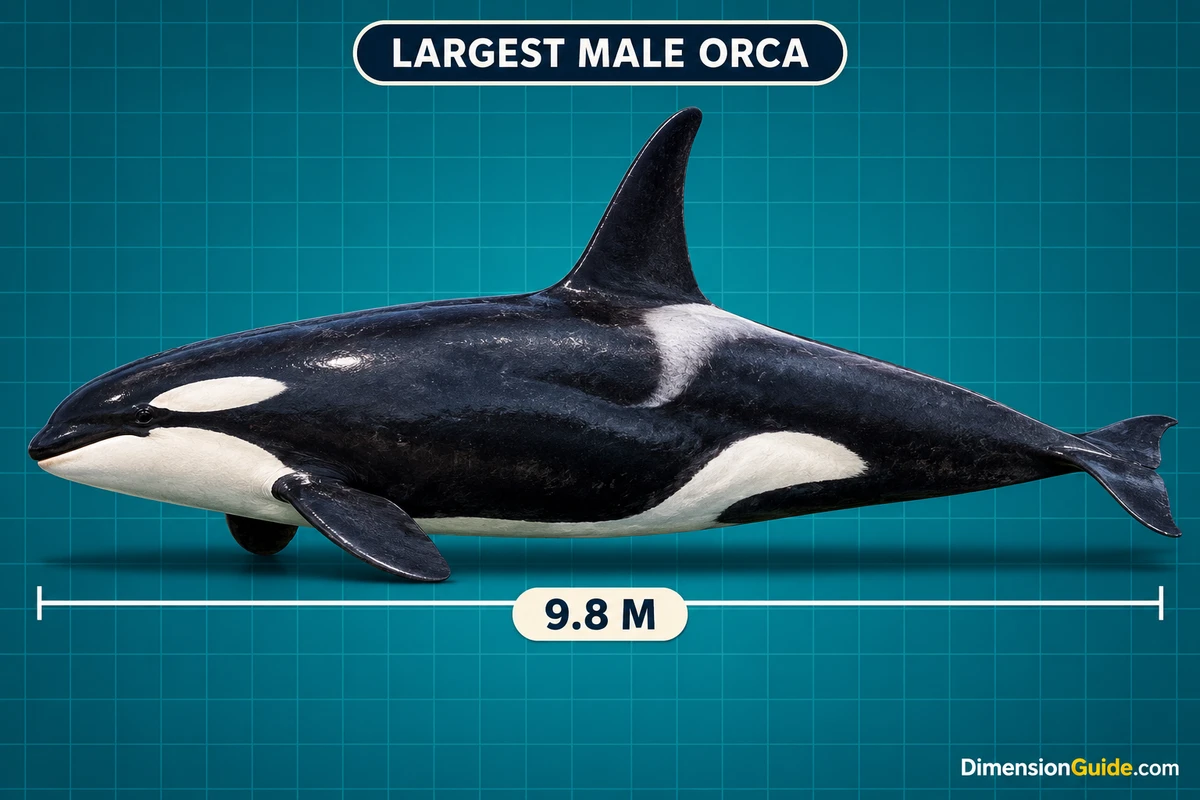
Orcas are big. The largest males are reported at about 32 feet, which is 9.8 meters.
Most males are smaller, around 6 to 8 meters. Females stay shorter still. So a full 10 meter orca would be a record-setting animal, and a 10 meter measuring tape is about what it would take to stretch along one.
15. Tyrannosaurus Rex “Sue” (near miss)
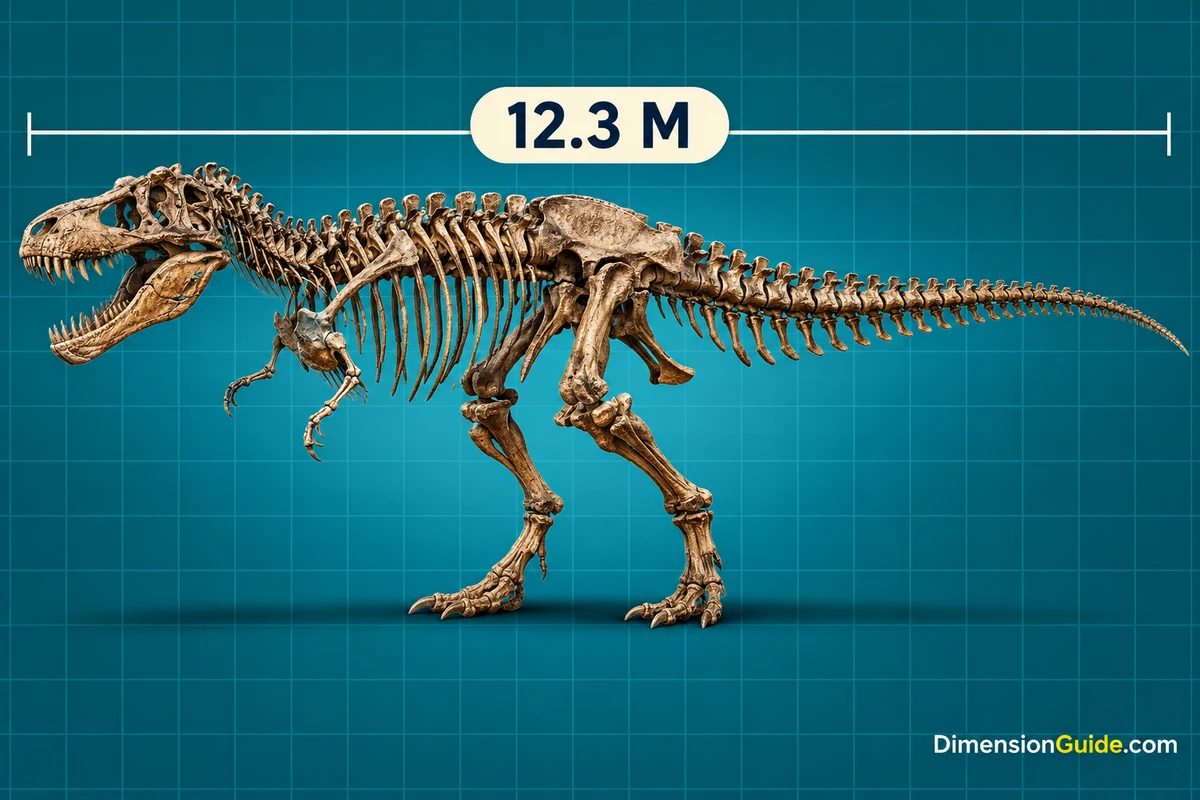
The best-known T. rex fossil, called Sue, measures about 12.3 m (40.5 feet) from nose to tail tip.
That is 2.3 m over 10, so picture one full tennis court width plus a bit more. A big predator, and a good yardstick.
16. Piper J-3 Cub (wingspan)
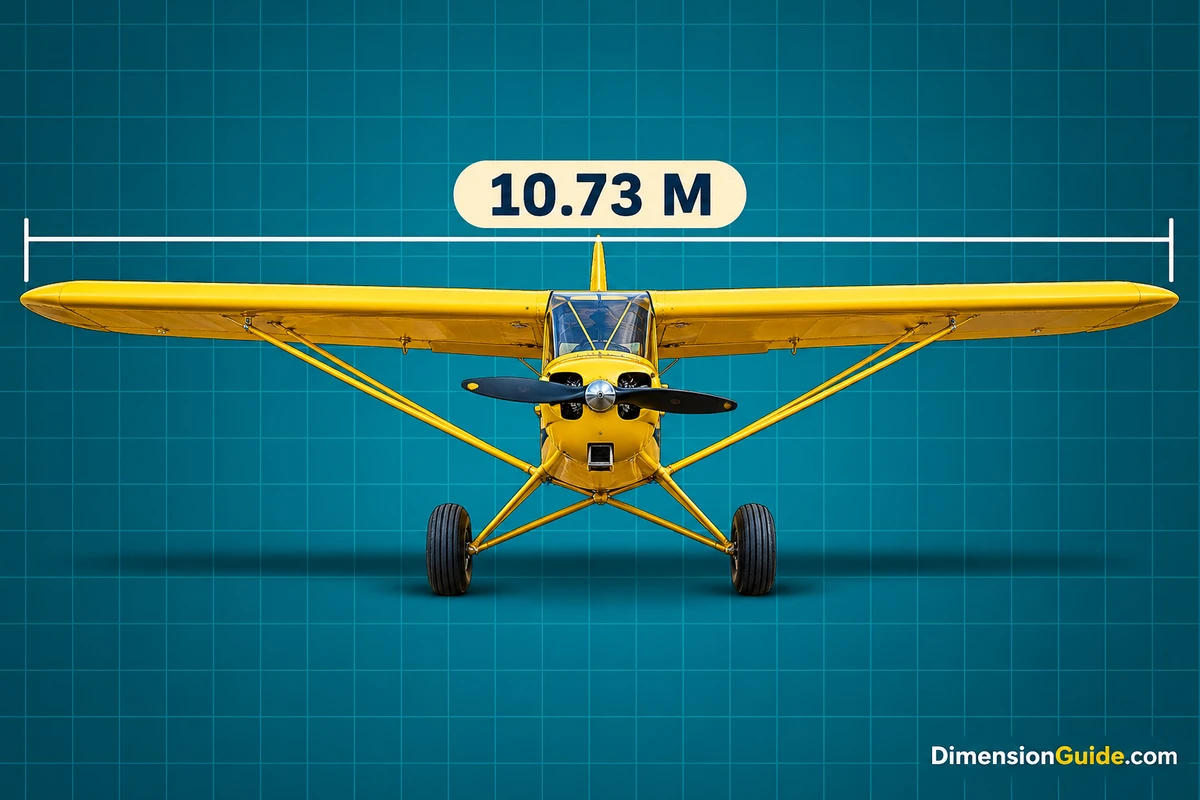
The classic yellow trainer has a wingspan of 35 feet 2.5 inches, or 10.73 m.
That is a hair over 10 meters. A pilot standing on the ground can almost reach both wing tips if they pace it out.
How to Pace Out 10 Meters Without a Tape
An adult step is usually about 0.7 to 0.8 meters. That means 10 meters is around 13 or 14 steps, give or take.
Want to know your own number? Pace out a known distance once, like a rugby pitch line or a garage, and divide. After that you can measure almost anything by walking.
Time works too. At an easy walking speed of about 1.4 meters per second, 10 meters takes around 7 seconds. For comparison, Usain Bolt’s 100 meter record of 9.58 seconds works out to an average of about 0.96 seconds for every 10 meters.
Watch out:
Steps change when you are tired, carrying something, or walking uphill. Pace your own stride on flat ground for a number you can trust.
The Meters vs Yards Trap in Sports
Look back at the list and you will spot a pattern. Soccer and tennis were born in yards and feet, then got converted to metric. Rugby and shooting started in meters.
That is why the numbers come out a little off. A 10 yard rule becomes 9.15 meters. A 12 yard spot becomes 10.97 meters, which the rulebook rounds to 11. Neither one lands on a clean 10.
| Thing | Real length | Compared with 10 m |
|---|---|---|
| Rugby 10-meter line | 10.00 m | exact |
| Dive platform | 10.00 m | exact |
| Air rifle range | 10.00 m | exact |
| Soccer penalty mark | 10.97 m | 0.97 m longer |
| Tennis doubles width | 10.97 m | 0.97 m longer |
| Free kick distance | 9.15 m | 0.85 m shorter |
| Volleyball net | 9.50 m | 0.50 m shorter |
Watch out:
Do not treat a yard like a meter. Over 10 units the gap is already 0.86 meters, and over a full field it grows to several meters.
How 10 Meters Compares to Other Lengths
Need a sense of scale? 10 meters is exactly one third of a 30 meter length, and a basketball court runs 28 meters, so you could fit about two and a half 10 meter strips along its side. It is also a little over three times as long as 10 feet, which is only 3.05 meters.
Going the other way, 10 meters is about two thirds of 50 feet, which comes to 15.24 meters. And at the small end, 10 meters holds about 33 of the 30 cm rulers you use at school.
Pro tip:
10 meters is also 1,000 centimeters. If a sign says 1000 cm and you were expecting something much bigger, it is the same length.
Keeping 10 Meters in Your Head
Count out 13 or 14 steps in a hallway or driveway once and the distance sticks.
After that, a penalty spot, a bus or a tennis court looks like what it is: a near miss within a meter.
Twice this distance is 20 meters, and half of it is 5 meters.
10 Meters: Quick Answers
How many steps is 10 meters?
For most adults it is about 13 to 14 steps. Your own stride may be shorter or longer, so pace out a known distance once to check.
Is 10 meters the same as 10 yards?
No. 10 meters is 10.94 yards, so it is about 0.94 yard (just under a yard) longer. Ten yards is 9.14 meters.
How tall is a 10 meter building?
Usually about three stories. Most floors run around 3 meters from floor to floor, though commercial buildings can have taller ceilings.
Sources
- NIST: the meter is defined by the fixed speed of light in a vacuum.
- IFAB: Laws of the Game, penalty mark and free kick distances.
- World Rugby: Law 1, the ground and the 10-meter lines.
- AOPA: Cessna 172 specifications.
- FIPJP: official pétanque rules, jack distance of 6 to 10 meters.
- Gillig: Low Floor bus available in 29, 35, and 40 foot lengths.