
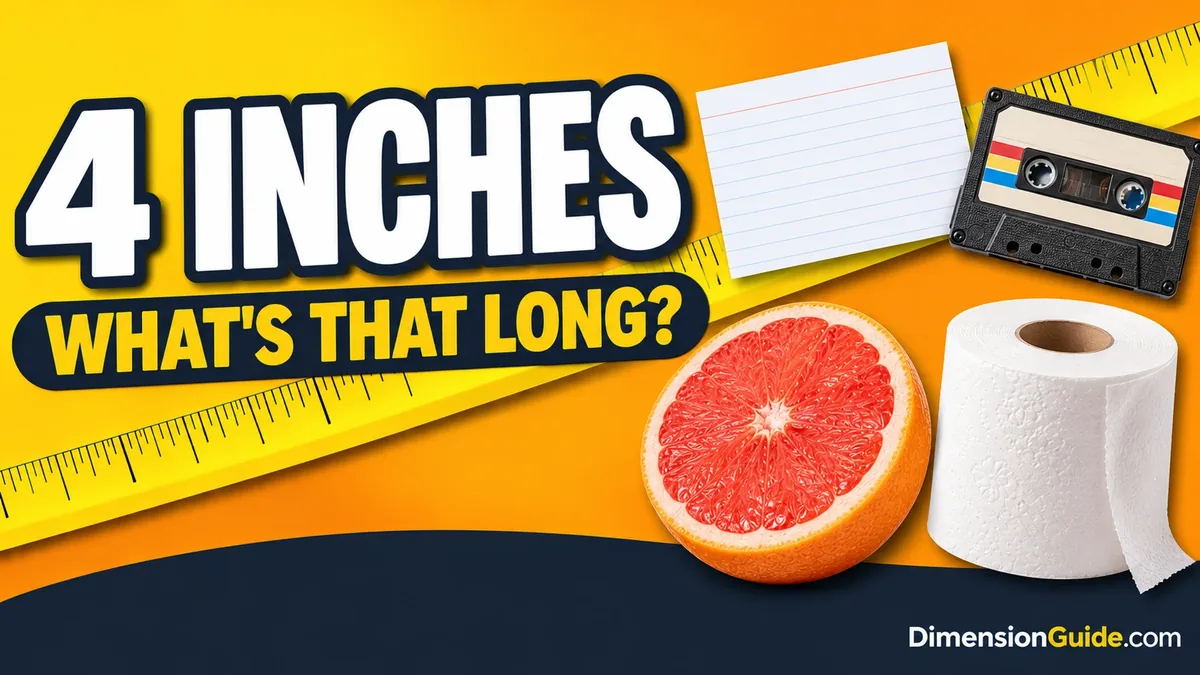


In short: 4 inches is 10.16 cm, or a third of a foot. The short side of a 4 x 6 index card is exactly that long.
Here’s a weird fact: horses are measured in 4-inch steps.
It’s true. A horse’s height is counted in “hands,” and one hand is exactly 4 inches. That old unit is still one of the easiest ways to remember this size.
But you don’t need a horse to picture 4 inches. Below, I’ve rounded up 15 everyday things that are 4 inches long. Some are exact. Some are close. And a few just borrow the name.
How Long Is 4 Inches?
- In centimeters: 10.16 cm
- In millimeters: 101.6 mm
- In feet: 1/3 of a foot (0.333 ft)
- In meters: 0.1016 m
Three 4-inch pieces make exactly 1 foot.
Think in metric? 4 inches is a hair over 10 cm. Only 1.6 mm longer.
Is 4 Inches the Width of Your Hand?
Close, but not quite.
US Army body data (ANSUR II) puts the typical hand width across the knuckles at 3.1 inches for women and 3.5 inches for men.
So 4 inches is your hand width plus a bit. About 1 inch more for many women, and half an inch more for many men.
That’s why the horse “hand” works as a rough guide. It started as a real hand width and was later fixed at 4 inches.
15 Things That Are 4 Inches Long
Exact matches come first. Then the close ones. And at the end, two building sizes that only use 4 inches as a name.
1. A Horse “Hand” (unit)
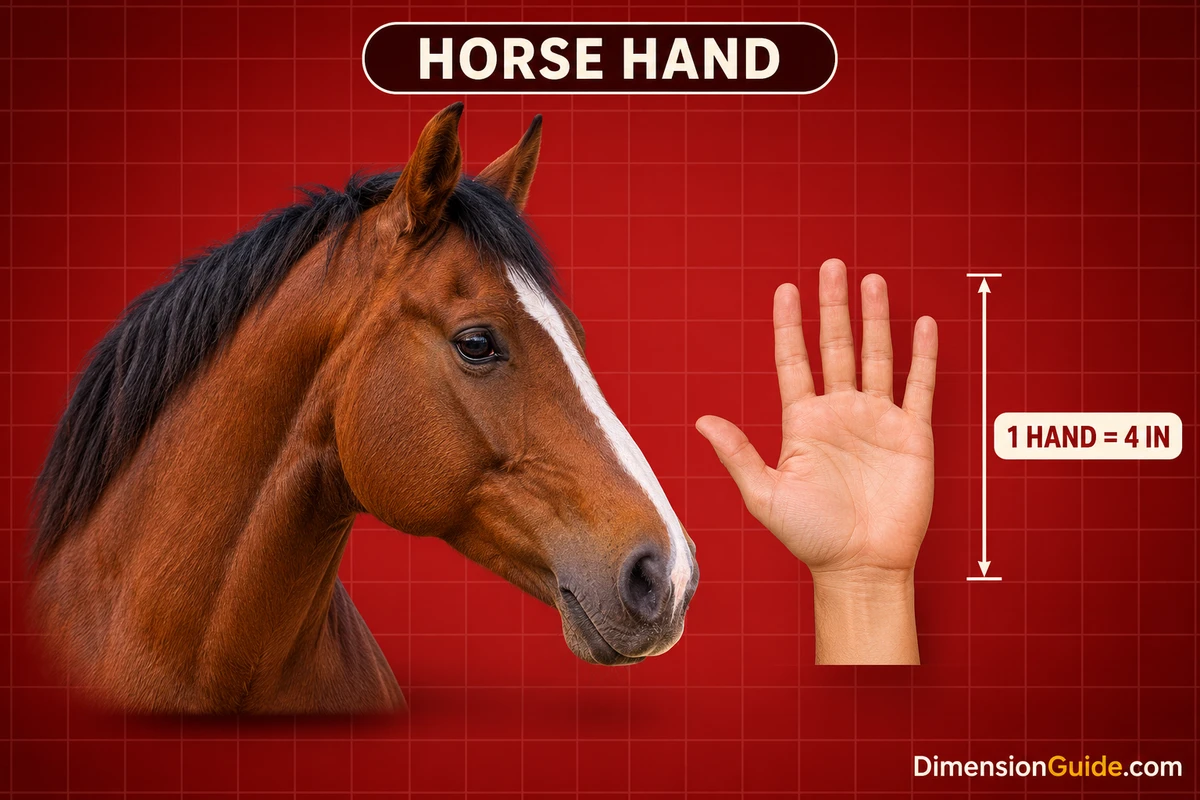
This one’s my favorite, because it never changes.
Horses are measured in “hands,” and one hand is exactly 4 inches. A 15-hand horse stands 60 inches, or exactly 5 feet, at the shoulder. The unit started long ago as the width of a person’s hand, and today it’s locked at 4.
Ever seen “15.2 hh” in a horse ad? That means 15 hands plus 2 inches, or 62 inches. Every time someone talks about horse height, they’re counting in 4-inch steps.
Horse people use this every day. Height is measured from the ground to the withers, the bump at the base of the neck, which is why you see “hh” instead of inches. By convention, a horse that measures 14.2 hands or less is usually called a pony.
Horse height is measured at the withers, the highest point of the shoulder, not the head. A pony is usually under 14.2 hands, and anything taller is called a horse.
2. 4 x 6 Index Card (short side)
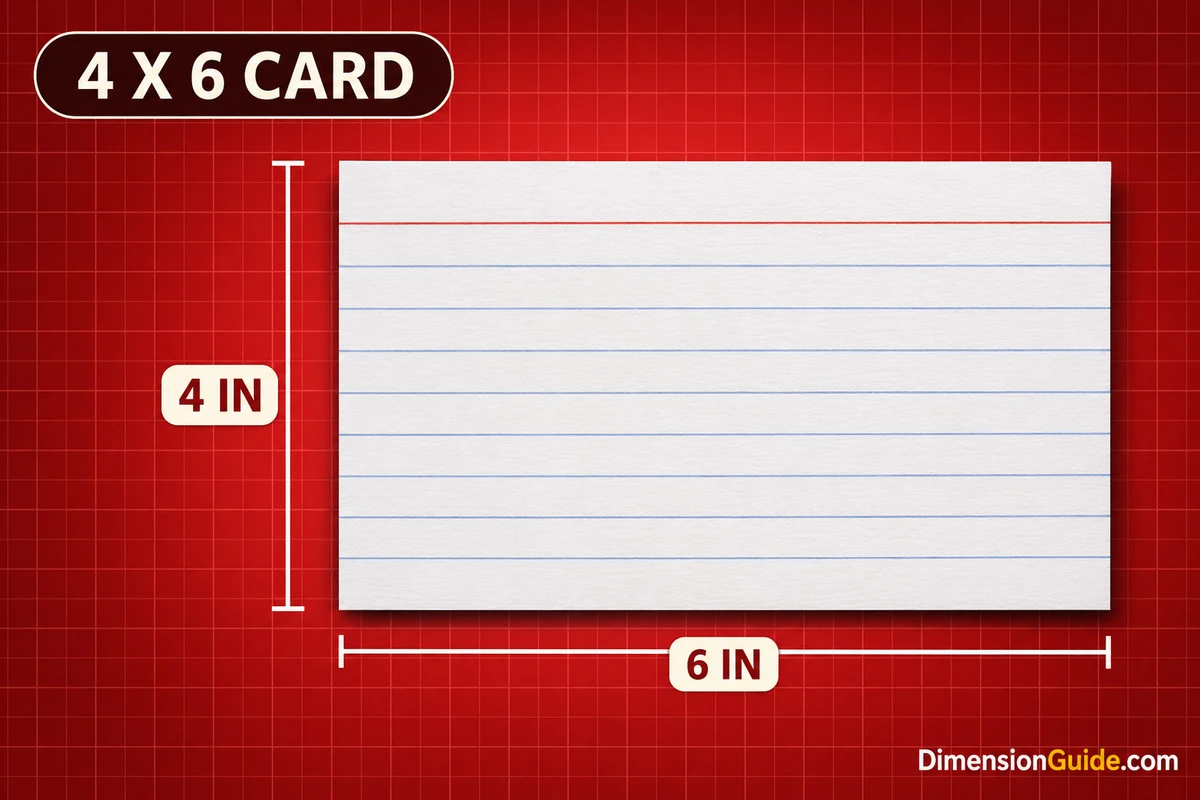
Got an old photo album? Every print in it is probably a 4-inch guide.
A 4 x 6 index card and a standard 4 x 6 photo share the same size, so the short side is exactly 4 inches. Turn the card sideways and line up that edge, and you can mark a line without a ruler.
The long side is 6 inches, half a foot, so one card gives you two sizes. Just don’t grab a 3 x 5 card by mistake. Its short side is 3 inches, a better fit for my 3-inch list.
Many photo prints are 4 x 6 inches because it matches the 3:2 ratio of most cameras. If you pick a frame, check that the opening matches 4 x 6 and not just the outer size.
3. 4 x 4 Sticky Note (each side)
3M makes Post-it Super Sticky notes that measure 4 inches on every side. The package rounds the metric size to 101 mm.
These big squares are popular on planning boards, so check your office drawer. The regular Post-it is only 3 x 3.
Here’s a fun trick: fold one corner to corner, and you get a triangle with two 4-inch sides. Stick three in a row on a wall, and you’ve got exactly a foot.
A 4 by 4 note is bigger than the classic 3 by 3, which is why it suits lists and reminders. If you need a quick 4-inch ruler, one edge of a sticky note is a handy stand-in.
4. Golf Tee (longest allowed)
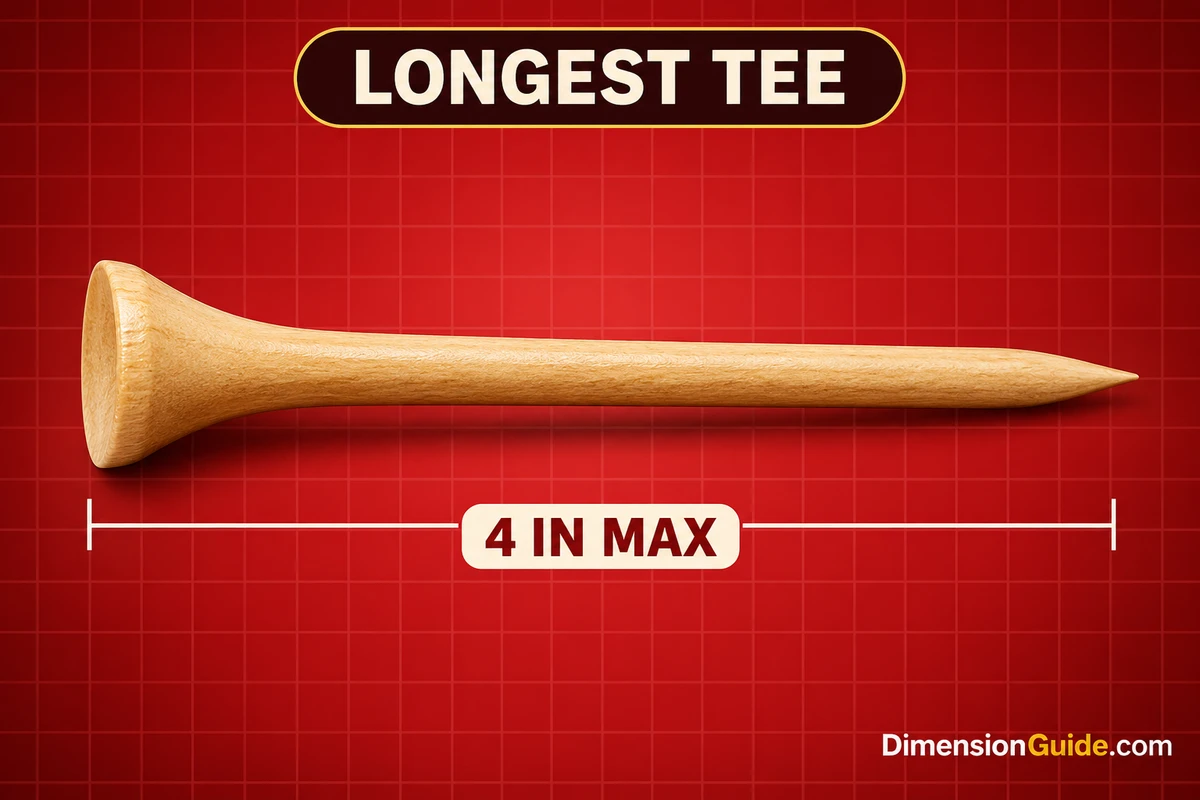
How long can a golf tee be? The rules say 4 inches, max.
So the longest legal tee is exactly our size. Long tees are made for today’s big drivers, and plenty of golfers carry a few, while shorter 2 3/4 and 3 1/4 inch tees are more common for irons. Find a long one in your bag, measure it once, and you’ve got a pocket ruler.
The R&A rules cap tee length at 4 inches, or 101.6 mm, so makers print their longest legal tees at exactly that size. Longer tees exist, but they aren’t allowed in competition.
A tee at the 4-inch limit is rarely used in play, because most golfers prefer 2 3/4 or 3 1/4 inches. The longer limit exists mainly to allow for large drivers.
5. Cassette Tape (length)
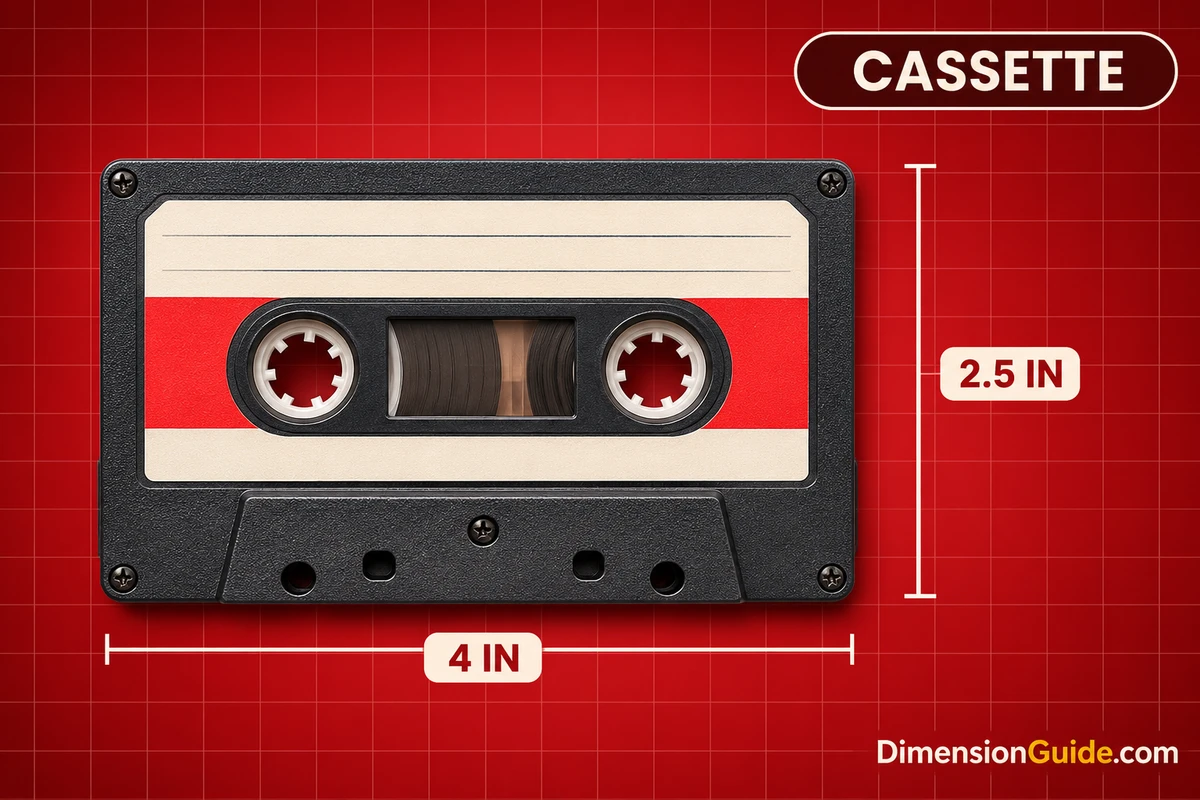
A classic audio cassette is 4 inches long and 2.5 inches tall, a size set back when cassettes first came out.
Measure the tape itself, since the plastic case is a little bigger. Thrift stores, old glove boxes and family closets are full of them.
Two cassettes end to end make 8 inches, about the size of the stuff in my 8-inch guide.
Cassettes were designed to fit a pocket, and the 4-inch length is the same for every standard tape. They were standardized in the 1960s, so tapes from different years fit the same player.
6. Nintendo Switch Joy-Con (height)
At 102 mm, or 4.02 inches, the original Switch Joy-Con is almost exactly 4 inches tall. That’s Nintendo’s own number.
Slide it off the console and stand it upright. Use the tall side, since the width is much smaller. And stick with the originals, because the newer Switch 2 Joy-Con are bigger.
The Joy-Con is a controller you can hold in one hand, which is why a 4-inch length feels natural. If you buy a case, check that it has room for the controllers attached.
7. Medium Grapefruit (across)
Breakfast counts too.
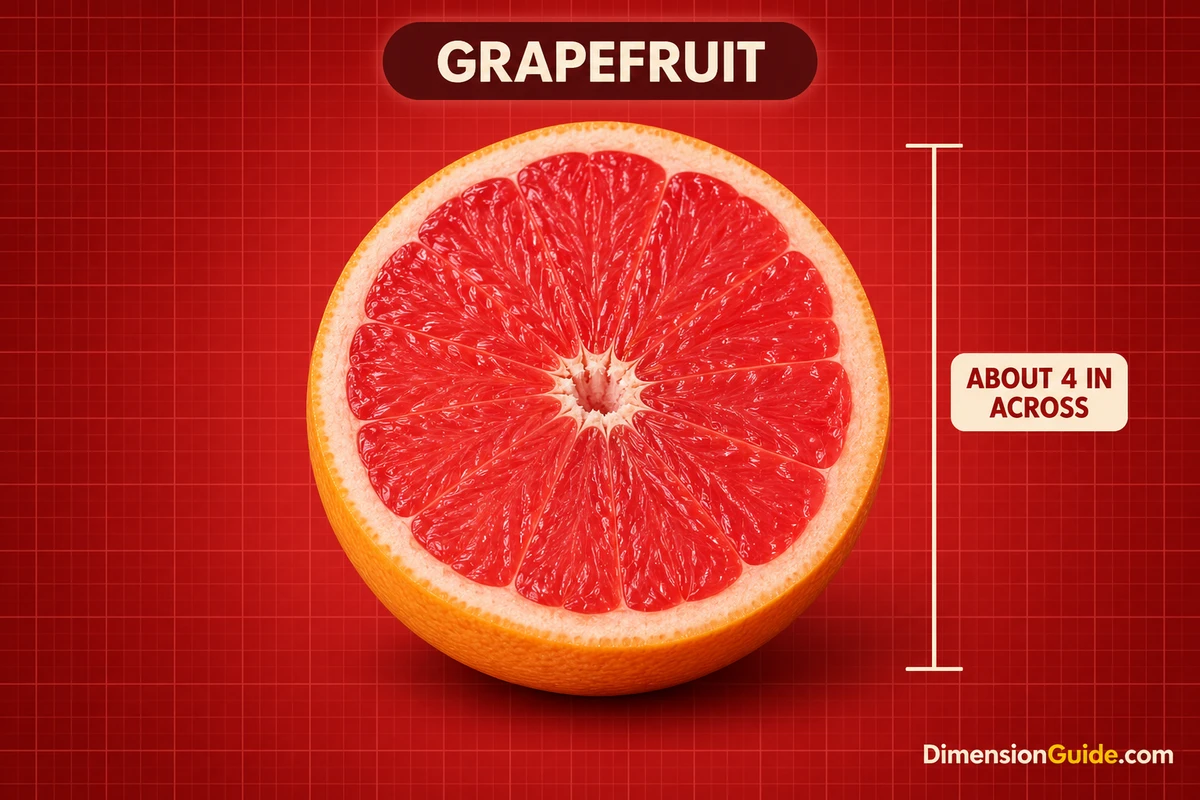
The USDA lists a medium grapefruit as about 4 inches across. A small one is about 3.5 and a large one about 4.5, so the size label tells you a lot.
Measure straight across the middle, where it’s widest. Or just cut one in half. The round face shows you a 4-inch circle.
Grapefruits vary a lot, and a medium one can be a little smaller or larger than 4 inches. For a size guide, pick a fruit with firm skin and measure across the widest part.
8. Toilet Paper Sheet (width)
Honestly? Of every guide on this list, this is the one people always have nearby.
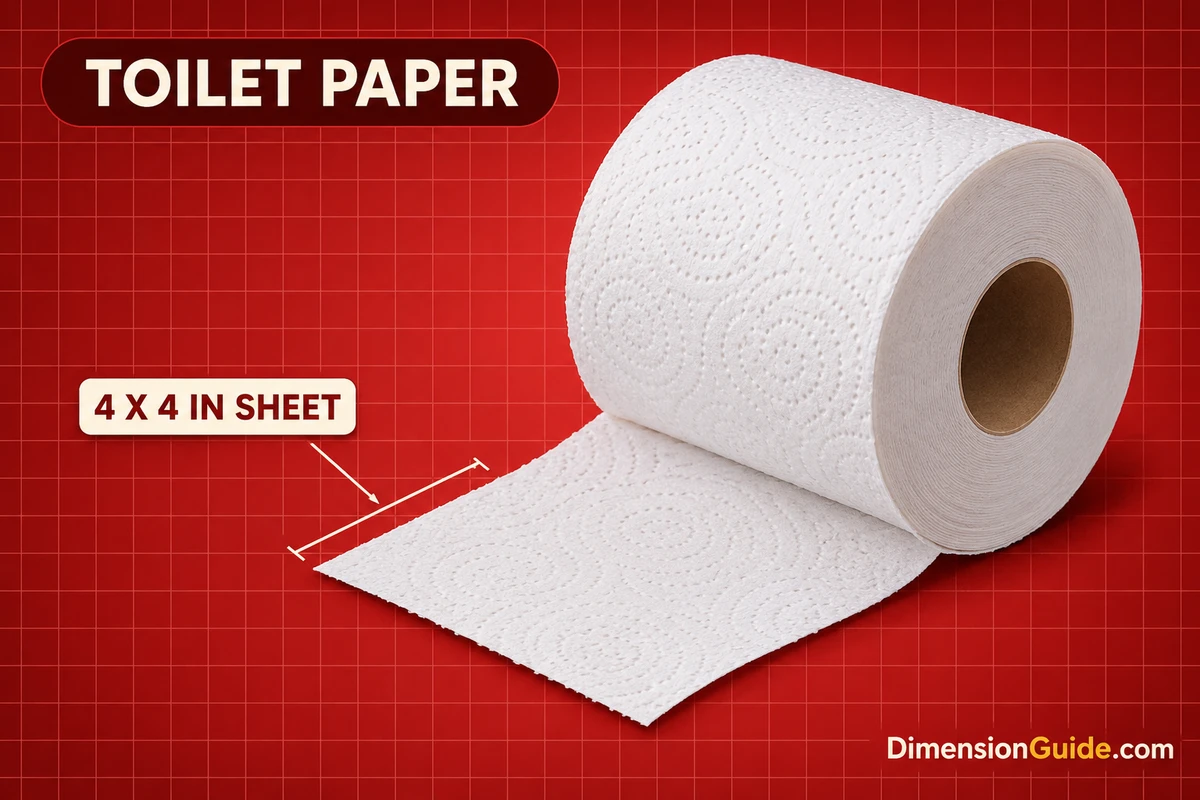
Many standard rolls, like Scott Essential, have sheets that are 4 x 4 inches. Tear one off, and you’re holding a 4-inch square. Brands vary a little, and some sheets are 4.1 inches wide. Lay three in a row, and you’re at about a foot.
Toilet paper sheets are about 4 inches wide so a roll fits standard holders. Rolls vary in diameter, but the width is one of the most consistent sizes in a house.
9. #10 Envelope (short side)
The standard business envelope, called a #10, stands 4 1/8 inches tall. That’s just an eighth of an inch over.
It’s sized to hold a letter folded in three, so bills and bank letters often come in it. Need exactly 4? Fold over a tiny strip at the edge. Only the short side helps here, since the long side is 9 1/2 inches.
Number 10 envelopes are the most common business size in the US. The short side is 4 1/8 inches, so you can use it as a 4-inch guide with a small allowance.
10. Credit Card (corner to corner)
Here’s a trick most people don’t know.
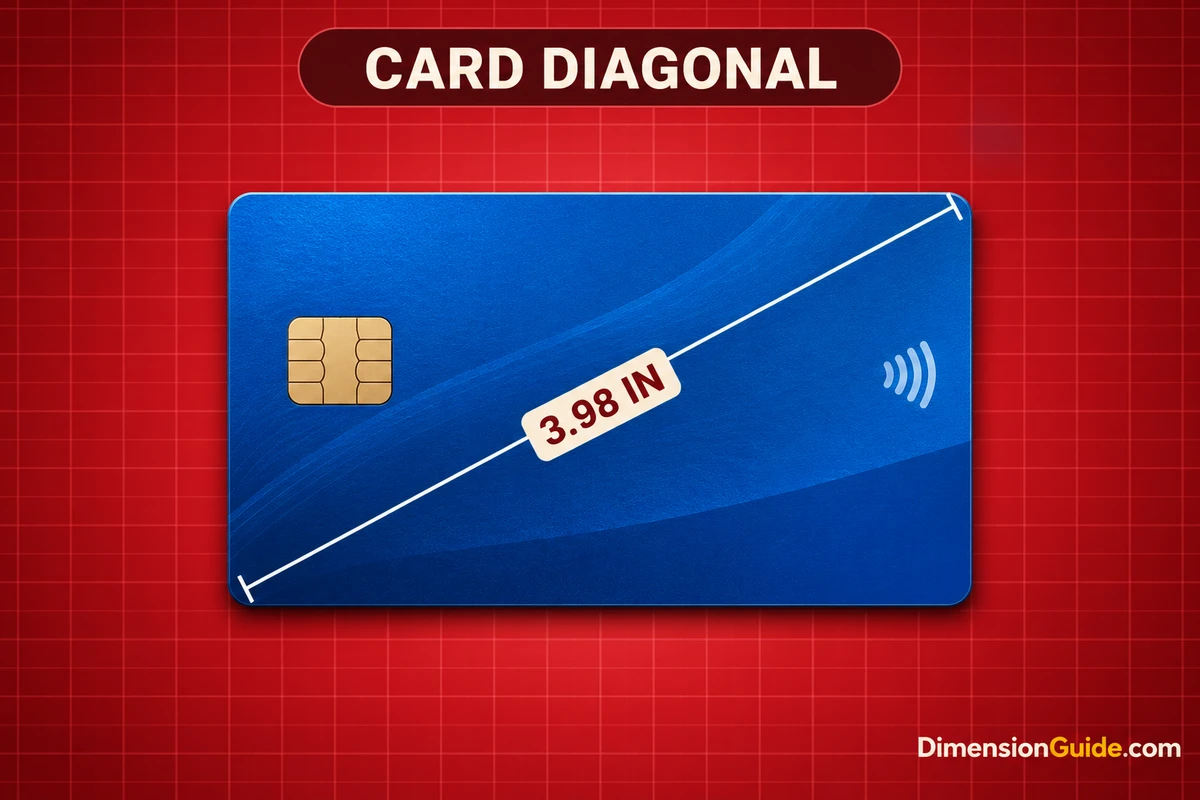
No side of a credit card is 4 inches. The long side is 3.37. But corner to corner, it’s about 3.98 inches. I worked this out from the official card size, 85.60 x 53.98 mm, and honestly, it surprised me how close it lands.
Lay a thin thread from one corner to the other. The diagonal of a rectangle is always longer than either side, and for a card it adds about 0.6 inch.
The diagonal of a standard card, from corner to corner, comes to about 4 inches, since the sides are 3.37 and 2.13 inches. It is a neat trick when you have no ruler.
11. Two AA Batteries (end to end)
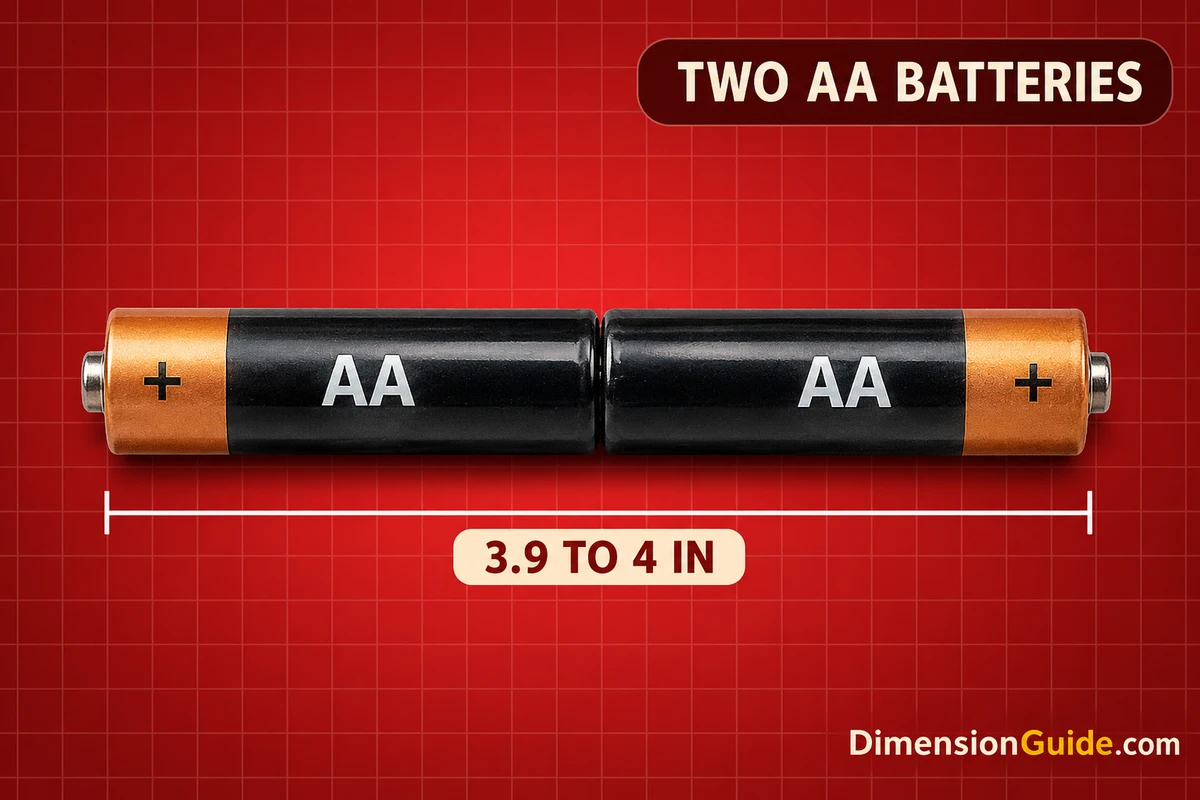
Two AA batteries end to end measure 3.9 to 4 inches, since each one is 49.5 to 50.5 mm.
They follow a world standard, so any brand works. Line up the flat bottom of one with the button of the next. Lots of remotes and toys take two AAs, so you may already have a pair.
Don’t try it with AAAs. They’re about 1.75 inches each, so two only make about 3.5.
AA batteries are made to a standard length, so two in a row are a reliable guide. Many flashlights have a battery tube sized for four AAs, which shows how consistent the size is.
12. Four Quarters (in a row)
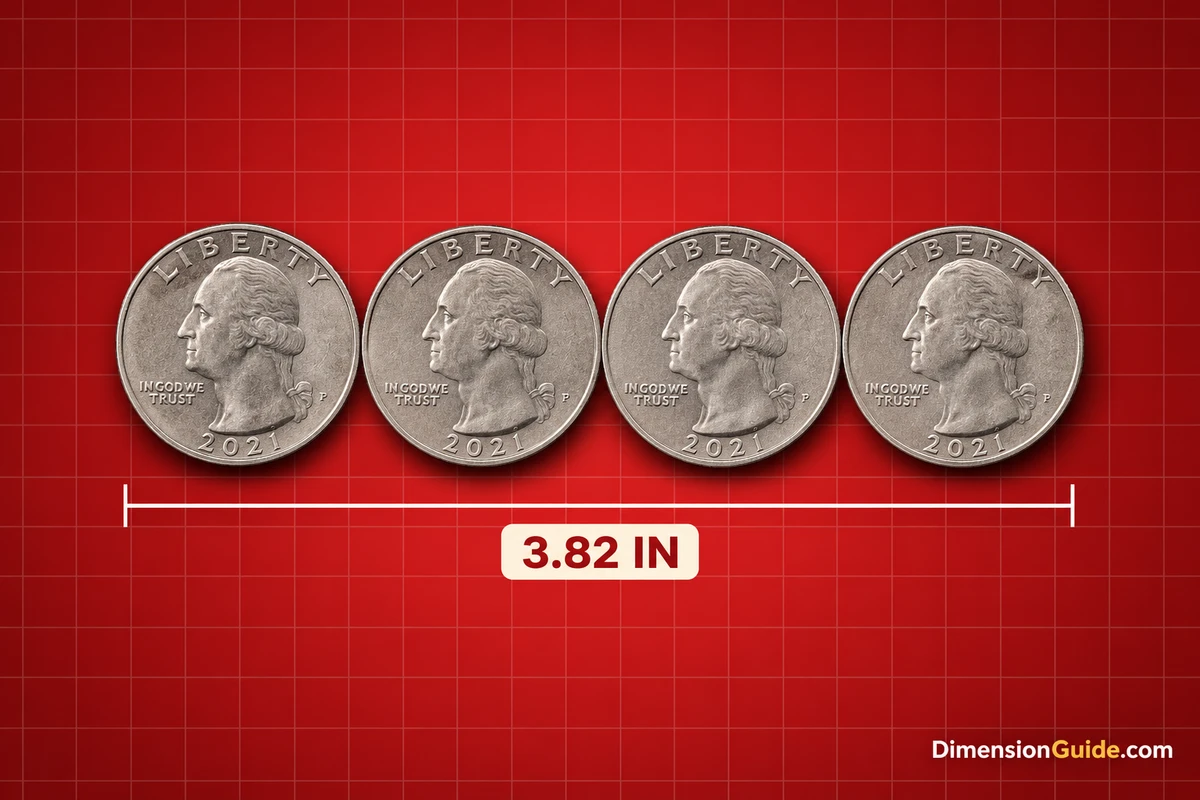
Four quarters in a row make 3.82 inches, since each is 0.955 inch across. Leave tiny gaps, and you get close to 4.
Got nickels instead? A nickel is 0.835 inch, so five in a row make about 4.18 inches. Four quarters land just under, five nickels land just over. Use whatever’s in your pocket.
Coins have a standard size, so a row of quarters is an easy way to estimate small lengths. Five quarters in a row come to almost 4.8 inches.
13. Monarch Butterfly (wingspan)
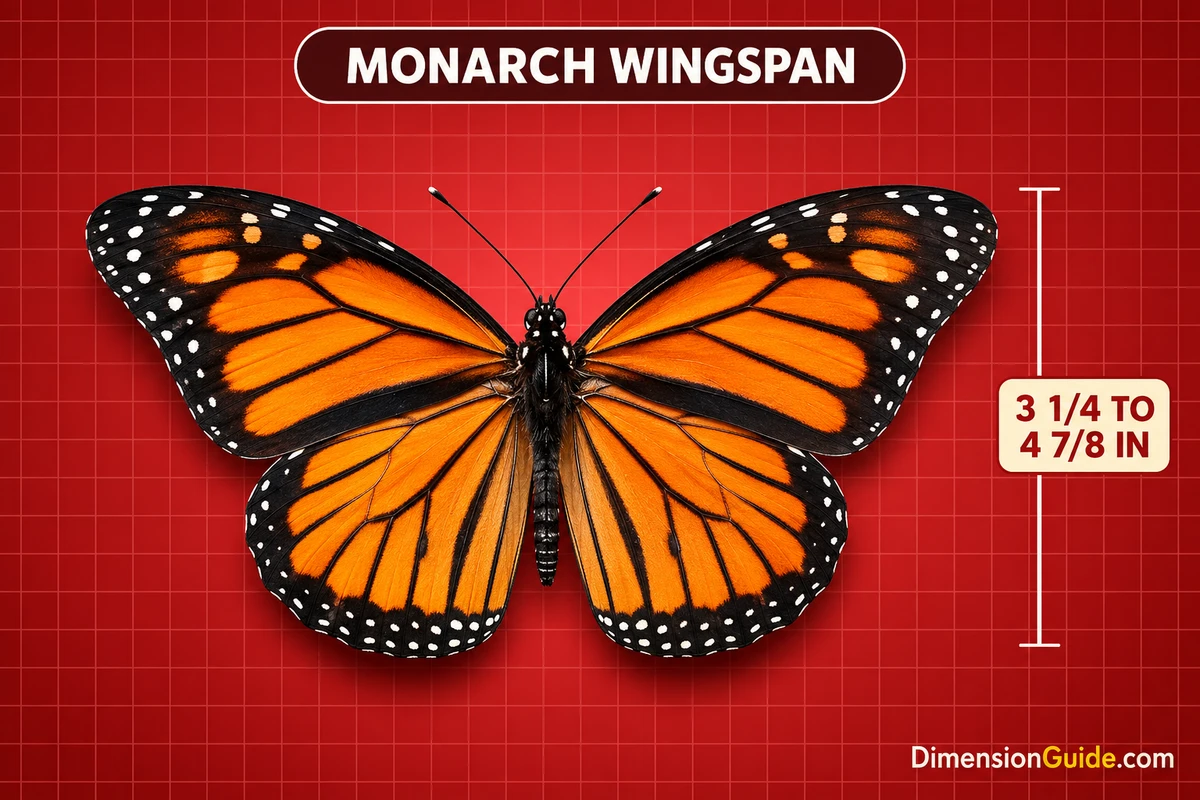
A monarch’s wings span about 3 1/4 to 4 7/8 inches, tip to tip. Lots of them land right around 4, which makes them a fun guide on a garden walk.
Size changes between males, females and generations. You’ll see them across much of North America in late summer and fall as they fly south. Look for the bright orange wings with black veins.
Monarchs vary in size, so published wingspans are ranges. A butterfly at the top of the range almost fills your palm.
14. Standard Brick (width)
Now for the sneaky ones.
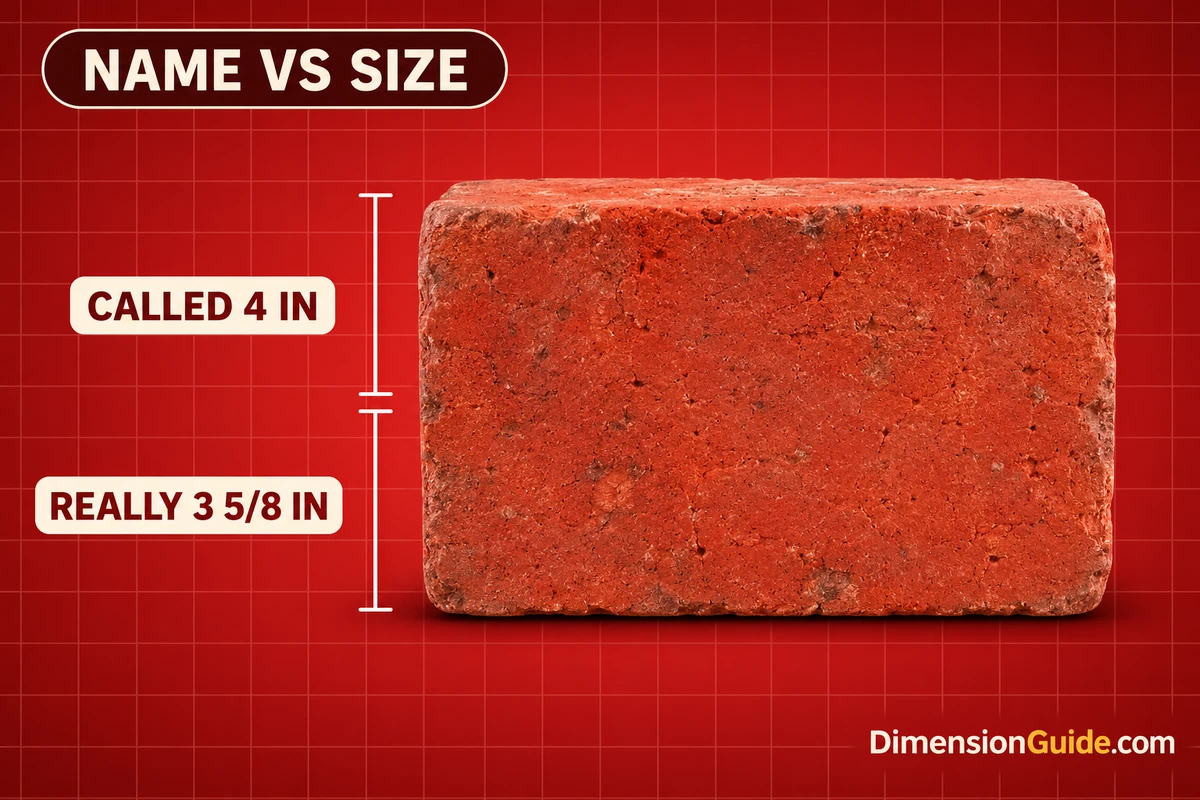
A modular brick is called 4 inches wide, but the brick itself is 3 5/8 inches. The missing 3/8 inch is for the mortar joint, so brick plus joint takes up exactly 4 inches in a wall. Three side by side, joints included, fill a foot.
Length works the same way. The brick is 7 5/8 inches long, made to fill 8 inches with its joint.
Masons plan with the nominal size because the mortar joint is part of every measurement. That’s why “a 4-inch wall” is built from bricks 3 5/8 inches wide, and why counting the rows of bricks gives you a quick way to estimate how tall a wall is.
Brick sizes differ by country, so the 4-inch figure applies to modular bricks in the US. If you plan a wall, check the actual brick size, because mortar joints add to the final measurement.
15. 2×4 Board (wide side)
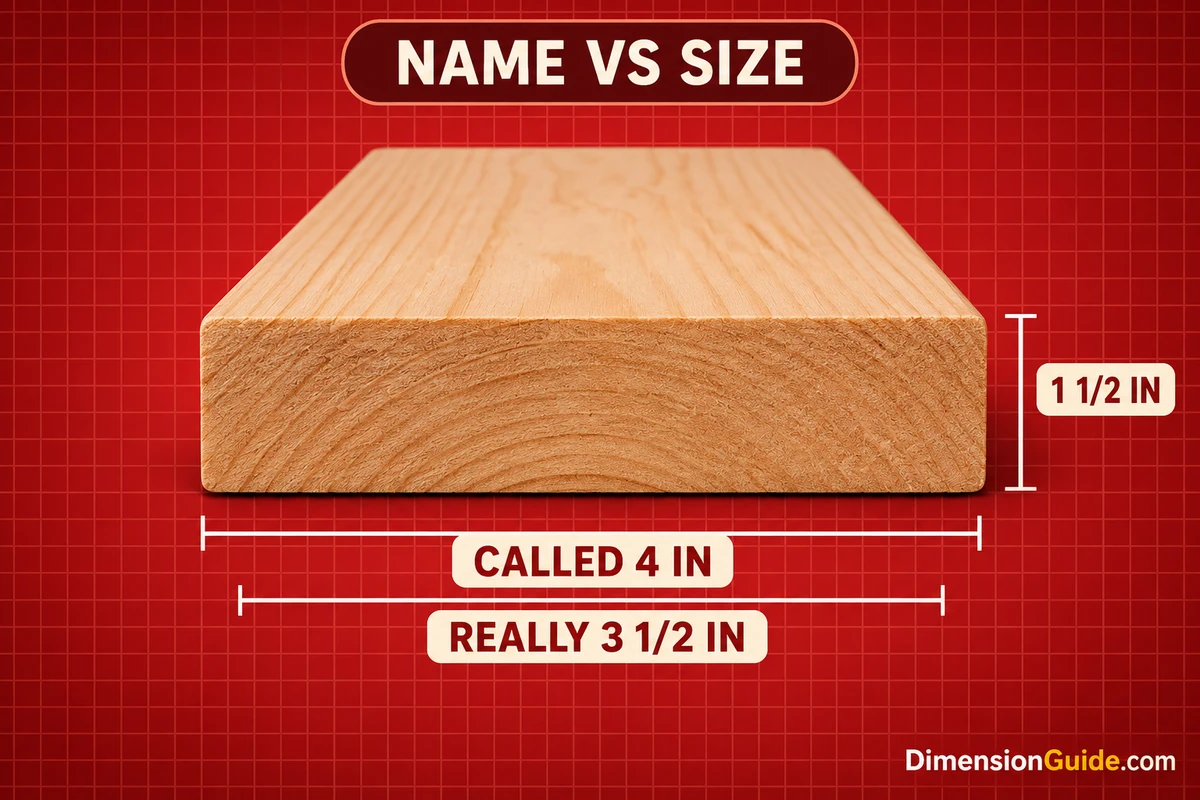
Is a 2×4 actually 4 inches wide? Nope. The wide side is only 3 1/2 inches, and the narrow side is 1 1/2, not 2.
Boards are cut, dried and planed smooth, so they end up smaller than the name. A 4×4 post works the same way at 3 1/2 x 3 1/2. Fun fact: a 2×8 is only 7 1/4 inches wide, which makes it one of my favorite 7-inch guides.
That half inch lost on each side is why a wall framed with 2×4 studs is 3 1/2 inches thick before drywall. When you plan shelves or built-ins inside a stud wall, use 3 1/2 inches for the space, not 4.
Building Sizes That Only Use 4 as a Name
In building, lots of sizes are “nominal.” Translation: the number is the name, not the real size.
| What it’s called | The real size |
|---|---|
| 2×4 board | 1 1/2 x 3 1/2 in |
| 4×4 post | 3 1/2 x 3 1/2 in |
| “4-inch” brick | 3 5/8 in wide |
| “4-inch” pipe | 4 1/2 in across the outside |
If size matters, measure the real piece. The name just tells you which size group it belongs to.
Watch out:
A 2×4 is not 4 inches wide. Its wide side is 3 1/2 inches. When you plan a project, use the real size, not the name.
Quick Ways to Mark 4 Inches
- A 4 x 6 card or photo. The short side is exactly 4 in. Error: almost none.
- Two AA batteries. End to end, about 3.9 to 4 in. Error: up to 0.1 in short.
- Four quarters. 3.82 in in a row, so leave small gaps. Error: about ±0.2 in.
A Few Quick Answers
Is 4 inches the same as 10 cm?
Almost. 4 inches is 10.16 cm, so it’s only 1.6 mm longer than 10 cm.
How many 4-inch pieces make a yard?
Nine. A yard is 36 inches, and 36 divided by 4 is 9.
How tall is a 15-hand horse in feet?
Exactly 5 feet at the shoulder. 15 hands x 4 inches = 60 inches.
My Everyday Pick for 4 Inches
I reach for a 4 x 6 index card first. Its short side is exactly 4 inches, and it fits in any drawer.
No card handy? Tear off a sheet of toilet paper. In most homes, that’s a 4-inch square.
Need the metric version? 10 cm is just under 4 inches.
Sources
- NIST: the inch is defined as exactly 25.4 mm.
- USDA FoodData Central: grapefruit sizes (small, medium, large).
- The R&A Rules of Equipment: golf tee maximum length.
- 3M Post-it: 4 x 4 in Super Sticky notes.
- Nintendo: Joy-Con size.
- Hand (unit): the horse “hand” is 4 inches.
- Brick Industry Association: modular brick sizes.
- Illinois DNR: monarch butterfly wingspan.
- Made Good Designs (ANSUR II data): adult hand width.