



Short answer: 15 feet is 4.572 meters, or exactly 5 yards. That is 180 inches, about the length of a compact car.
Basketball fans already know 15 feet: it is the free-throw line to the backboard. In other units, that is 4.57 meters, or exactly 5 yards.
The 15 examples below show what else lands there and how close each one gets.
15 Feet in Yards, Inches and Meters
One foot is exactly 0.3048 meters, so the math is clean. Multiply 15 by 0.3048 and you get 4.572 meters, with nothing rounded.
| Unit | 15 feet equals |
|---|---|
| Inches | 180 in |
| Yards | 5 yd |
| Meters | 4.572 m |
| Centimeters | 457.2 cm |
| Millimeters | 4,572 mm |
Need a bigger or smaller yardstick? 10 feet is two thirds of this length, and 50 feet is a bit more than three of them laid end to end.
Pro tip:
Think in yards. Five big steps for a tall adult, or about six normal steps, gets you close to 15 feet. Walk it once and you will remember it.
How Far Is 15 Feet When You Walk It?
At an easy walking pace of 3 mph, you cover 4.4 feet every second. That means 15 feet takes about 3.4 seconds.
An average adult step is roughly 2.5 feet, so expect about 6 steps. Your own stride will vary, so pace it out once and write down your number.
Fun math: a mile is 5,280 feet. You would need to lay 15 feet end to end 352 times to cover one mile.
15 Things That Are 15 Feet Long
Some of these are exact by the rules. Others are close enough to picture. I flag the difference as we go.
1. NBA Free-Throw Line (distance from backboard)
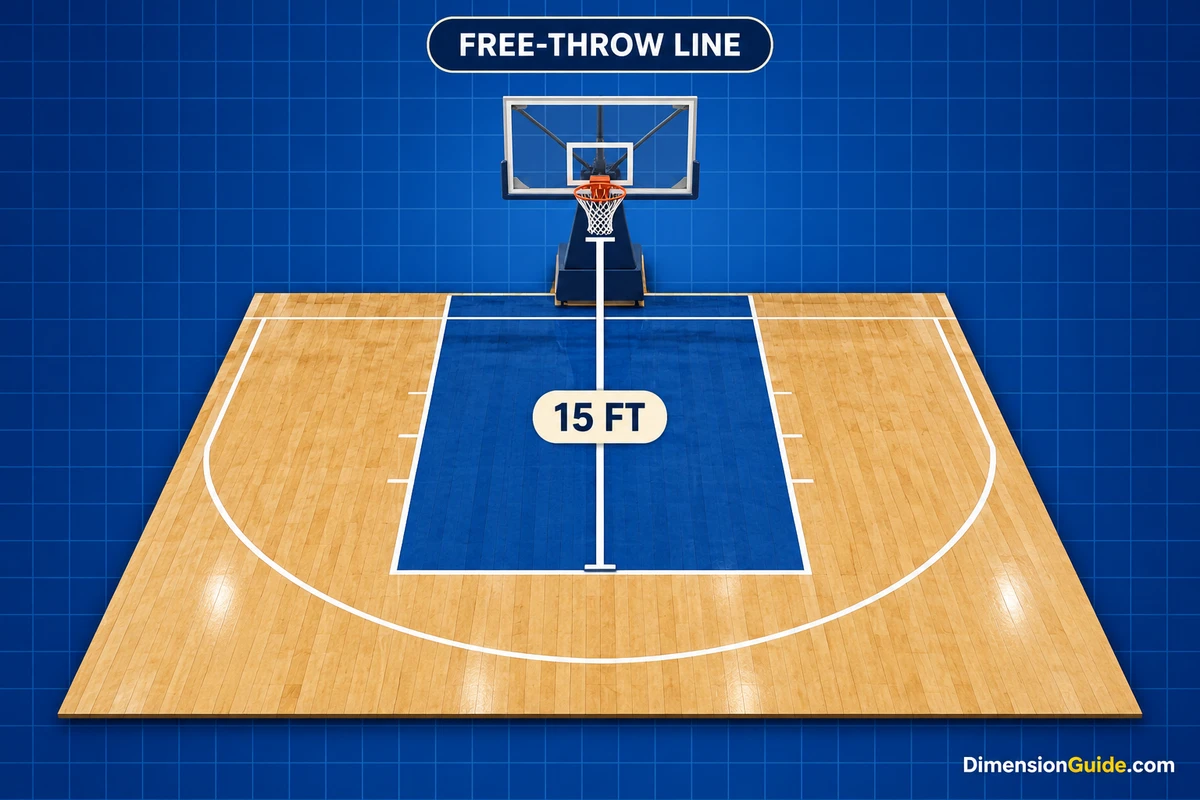
The free-throw line sits exactly 15 feet from the plane of the backboard face, according to the official NBA rulebook. That makes it one of the cleanest 15 foot measurements in sports.
Here is the catch most fans miss. Players do not shoot from 15 feet away from the hoop. The rim center hangs 15 inches out from the backboard, so the real shooting distance is about 13 feet 9 inches.
FIBA, the international body, uses 4.60 meters, which is about 15.09 feet.
So the next time someone says a free throw is 15 feet, you can smile and correct them gently. The line is 15 feet from the board, and the ball only has to travel about 13.75 feet to reach the center of the rim.
2. NHL Face-Off Circle (radius)
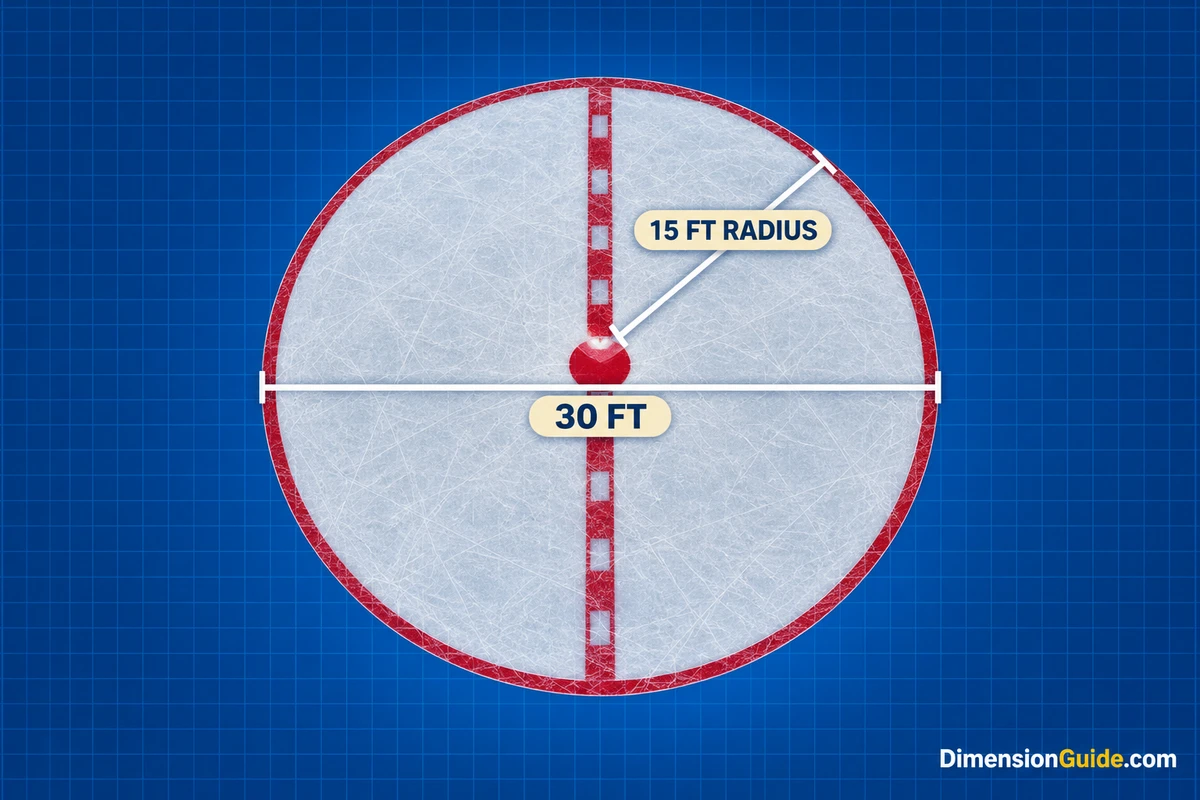
Every face-off circle in the NHL has a radius of 15 feet, measured from the center of the face-off spot.
Radius is the part that trips people up. Stand on the spot and walk straight out, and you reach the circle line after 15 feet. Walk all the way across and that is 30 feet.
The center-ice circle uses the same 15 foot radius, but it is painted blue while the end-zone circles are red.
The rules use the same number for personal space. During a face-off, no other player may enter the circle or come within 15 feet of the two players taking the draw. It is a handy way to see how much room that really is.
3. A 5-Yard Penalty in the NFL
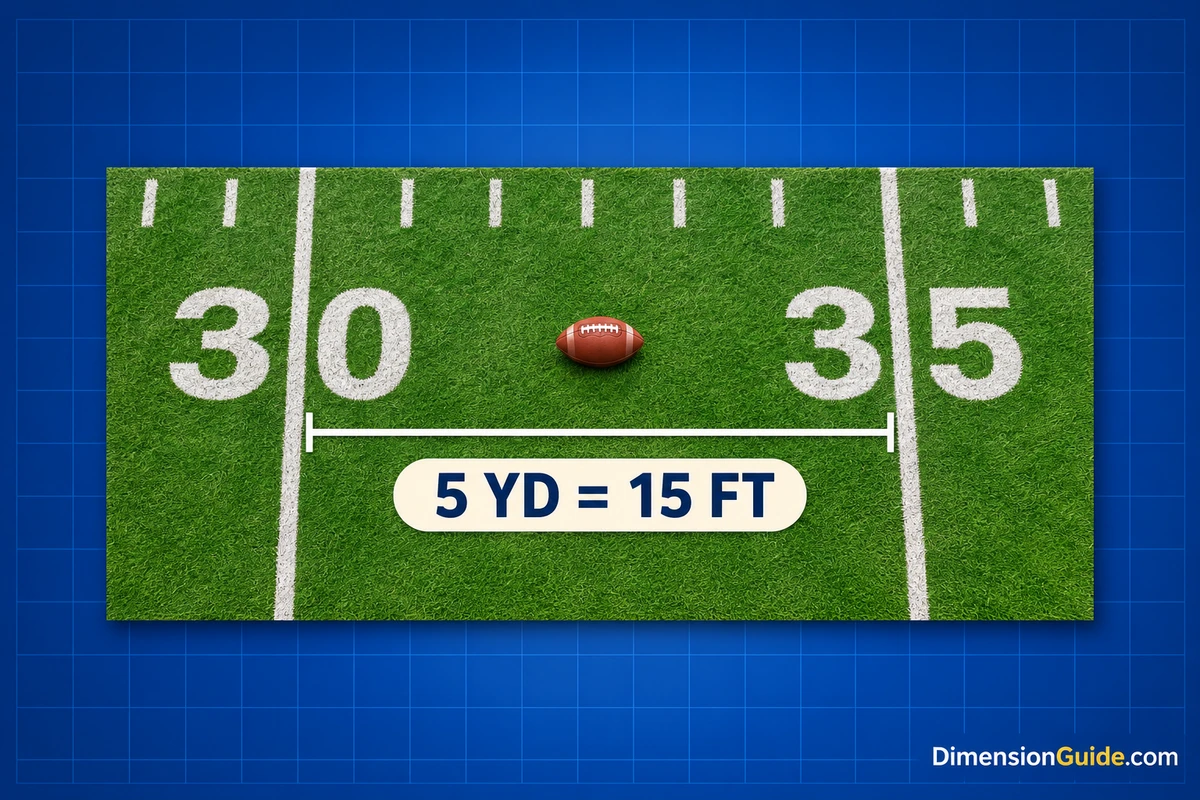
Think of a false start or an offside call. That flag costs a team 5 yards, and 5 yards is exactly 15 feet.
It sounds tiny on TV. Yet the ball just moved about the length of a small car, and on fourth down that gap can decide a whole drive.
Football fields are marked every 5 yards, so each stripe you see is another 15 feet.
4. Bowling Approach (minimum length)
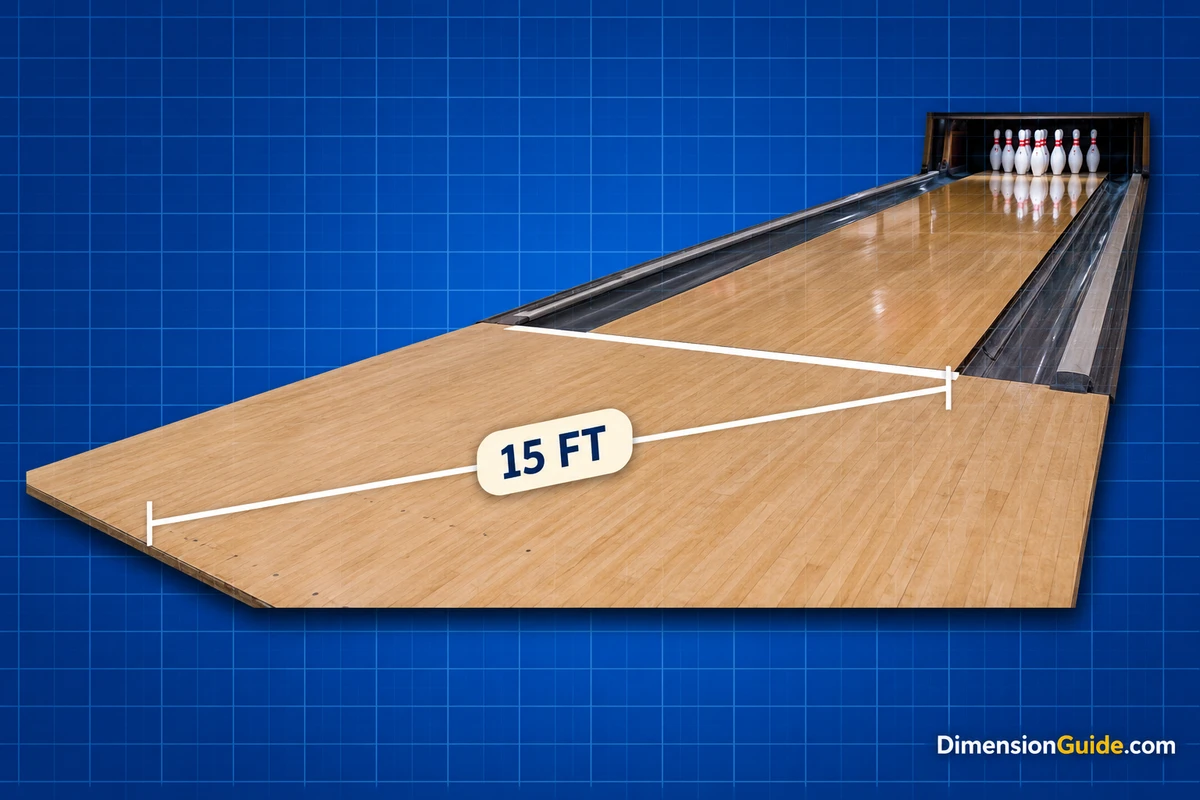
Is the area behind the foul line really that short? Yes. The USBC lists the approach length as 15 feet, measured back from the foul line, and it sets no maximum.
Most of us only notice the 60 foot lane. But the runway you walk on matters too, and it has to stay level. The USBC allows no dip of 0.250 inch or more near the foul line.
Look closely and you will spot guide dots on the approach. They sit 12 and 15 feet behind the foul line, so you can line up your steps.
5. Fire Hydrant No-Parking Zone (California)
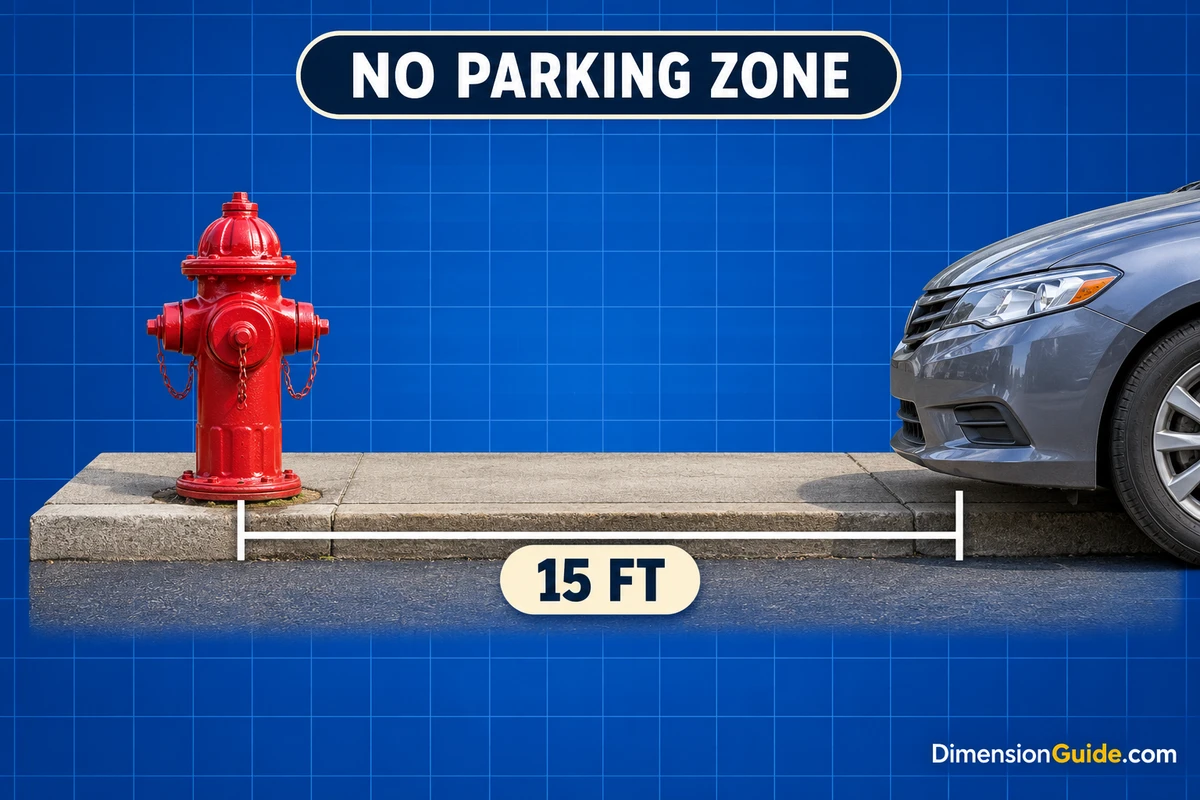
In California, Vehicle Code 22514 bars you from stopping, parking, or leaving a vehicle within 15 feet of a fire hydrant. The law has a few exceptions, like a licensed driver sitting in the front seat who can move the car right away.
The best part? The curb does not have to be painted red. The 15 feet applies either way.
Many other states and cities set their own distances, so check local rules before you park.
To picture it, imagine a compact car sized gap on each side of the hydrant. That open space is what a fire crew needs to hook up a hose.
6. Traffic Signal Clearance (minimum height)
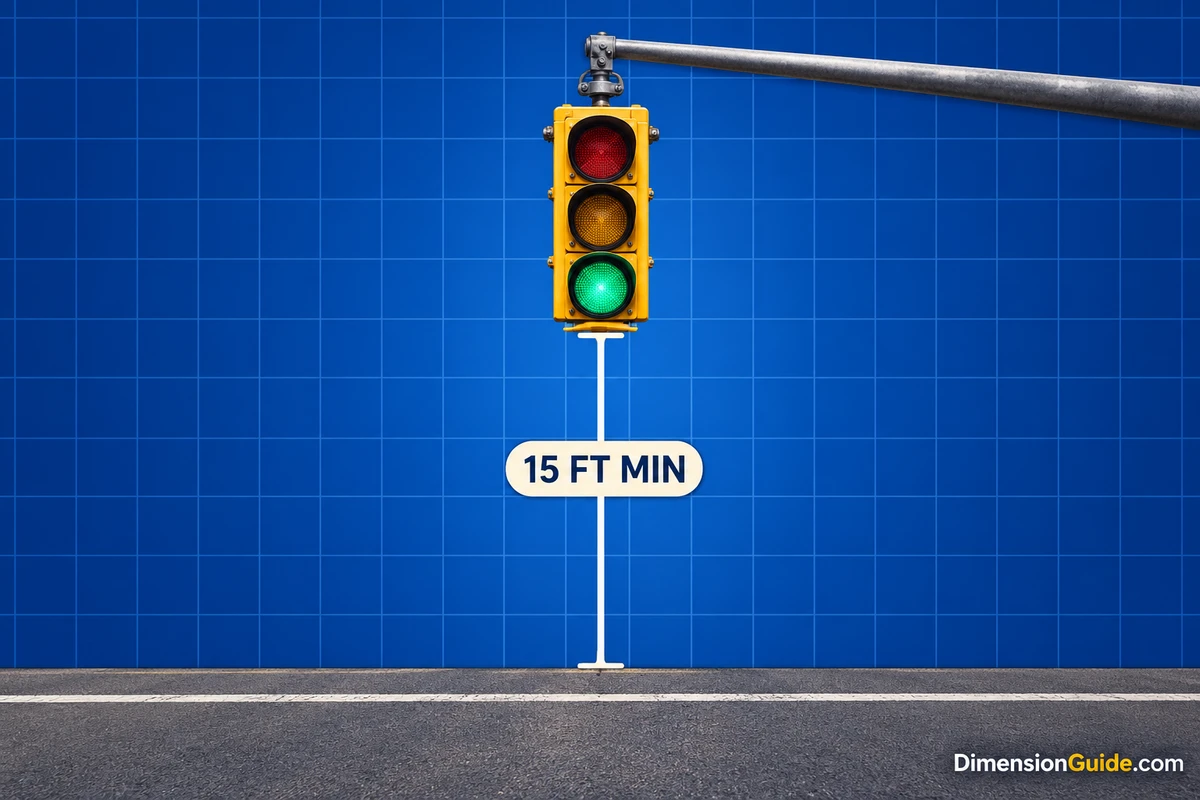
Look up at a hanging stoplight. Engineering course material summarizing the federal MUTCD says the bottom of the lowest signal head must be at least 15 feet above the road.
Many states ask for more so tall trucks can pass. Texas freight corridors, for example, call for 19 feet.
So 15 feet is the floor, not the usual height. Next time a big truck rolls under one, you are watching that rule in action.
7. Honda Civic Sedan (2024, near miss)
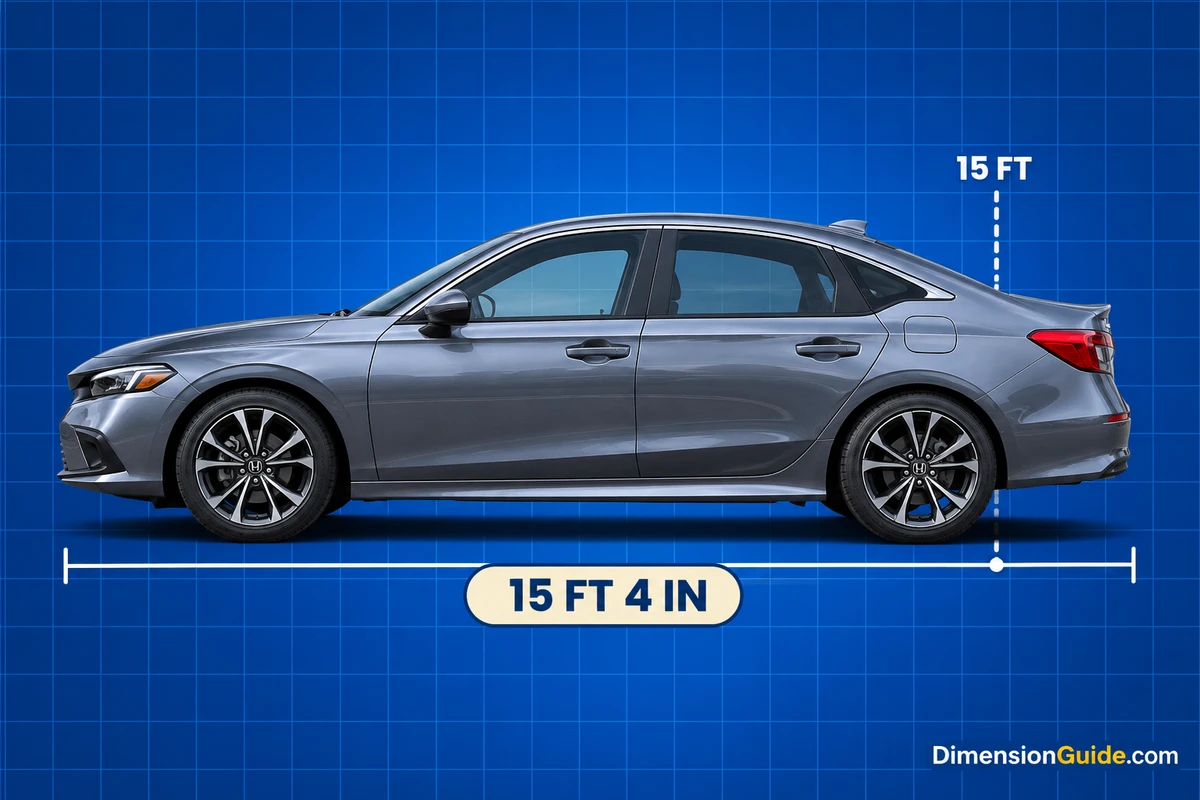
Compact sedans are the easiest way to picture 15 feet. Spec sites list the 2024 Civic sedan at about 184 inches, which is 15 feet 4 inches.
That is 4 inches over, so call it a near miss.
Weird, right? Some sites list 179 inches for the Civic, but that number matches the hatchback. When you compare car lengths, check which body style the spec sheet means. A 4-door sedan and a hatch of the same name can differ by about 5 inches.
That small gap is the reason I call this a near miss and not a match. A tape measure at the dealership is the only way to know for your exact trim.
8. Female Great White Shark
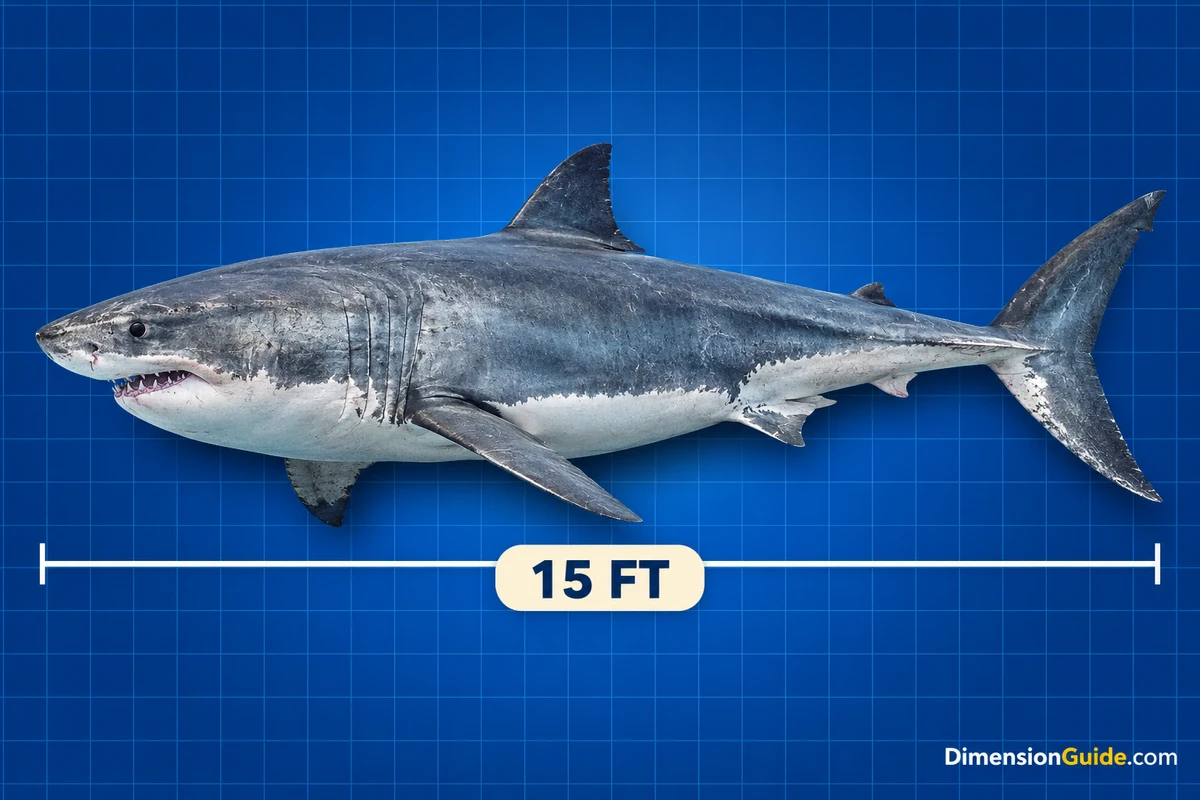
Adult female great whites are often listed at 15 to 16 feet, while males run shorter at about 11 to 13 feet. A NOAA Fisheries story describes a 15-foot female that washed up on Navarre Beach, Florida in 2024.
A shark that long is nearly as long as the sedan above, and it weighs far more than people expect for its length.
Treat it as a typical size, not an exact one. Individual sharks vary a lot, and some sites claim 20 feet for the biggest females.
I could not find a clean NOAA average, so I am leaning on the range that wildlife sources repeat. Use it as a mental picture and not as a spec.
9. Giant Manta Ray (wingspan)
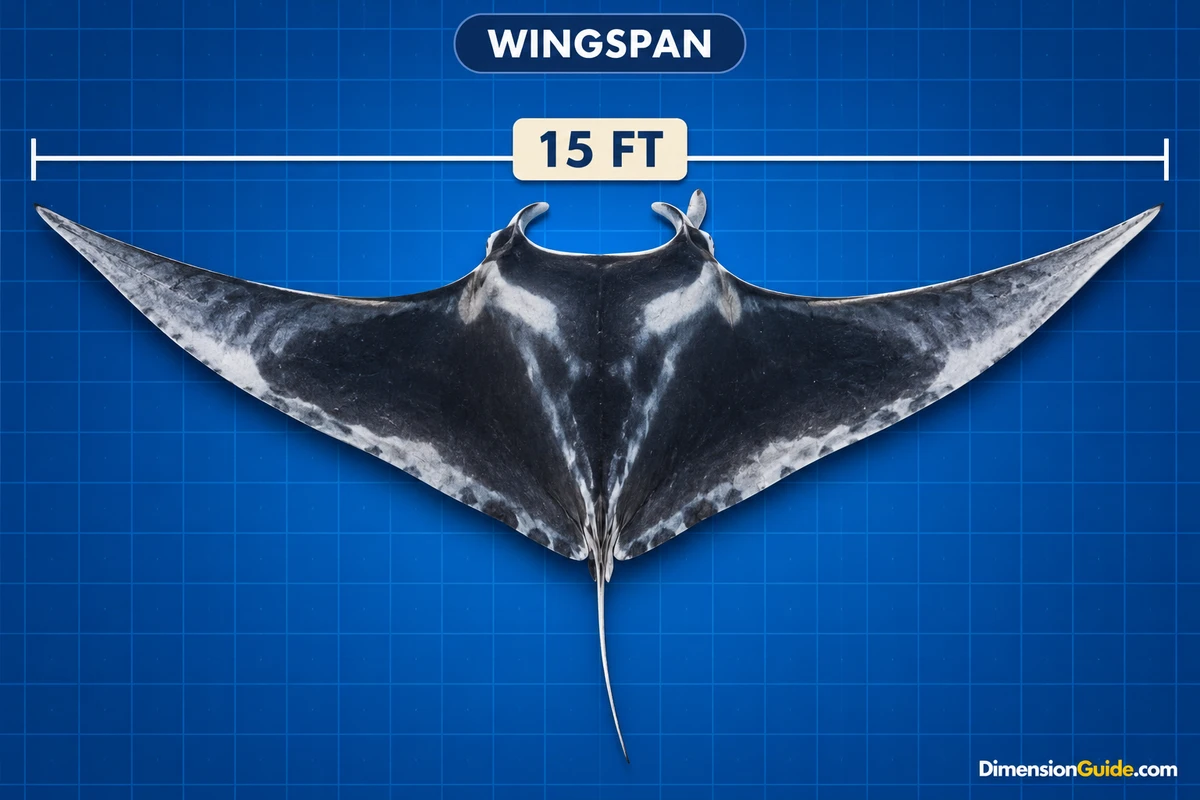
NOAA lists the giant manta ray’s typical wingspan, called disc width, at 13 to 16 feet. That puts 15 feet right in the middle of an average adult.
Pups are born around 6 feet across, and the largest rays reach about 26 feet. Floating under a manta would feel like a garage door gliding past.
Note that NOAA measures width, not nose to tail. The body is wider than it is long, which makes this a different kind of 15 feet than the shark.
10. Rogue 15-Foot Agility Ladder
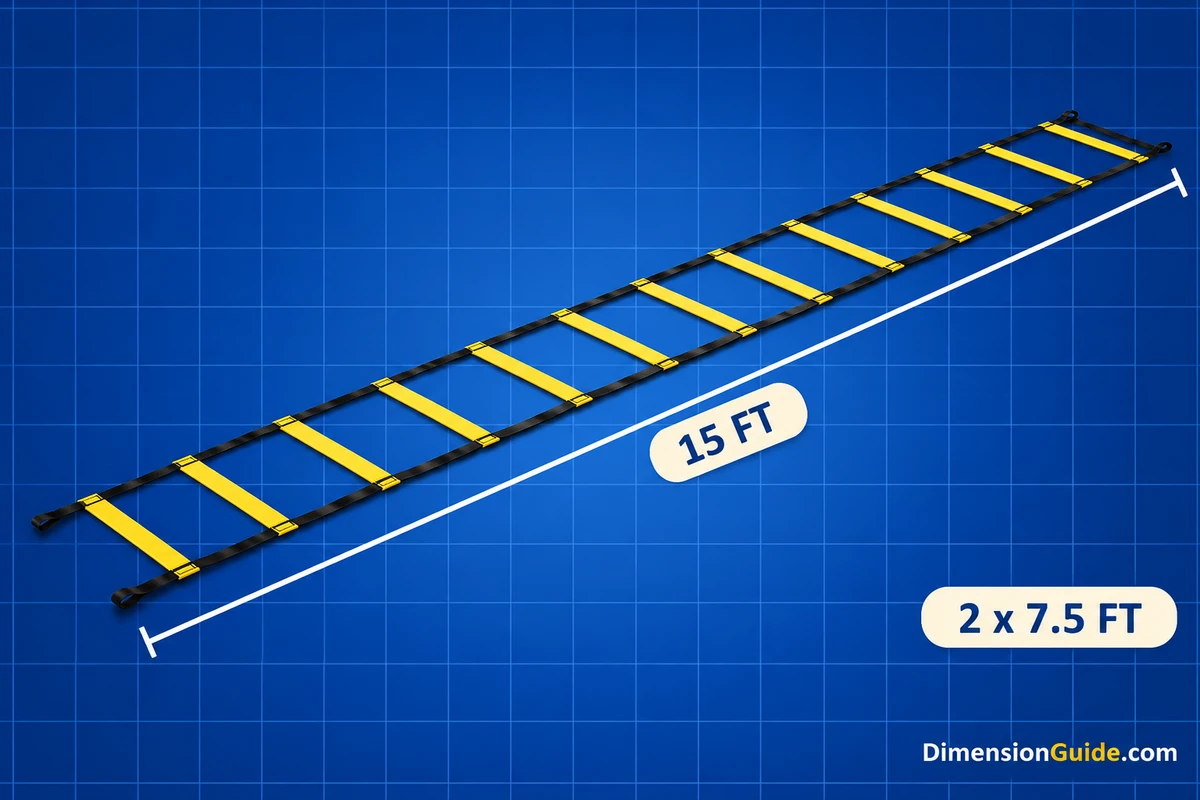
This one is built for training. Rogue Fitness sells a speed ladder that measures 15 feet, split into two 7.5 foot sections.
It is a handy tool if you want a real 15 foot line on your driveway or lawn. Lay it down once and you have a ruler you can see from across the yard.
11. 15-Foot Dog Training Leash
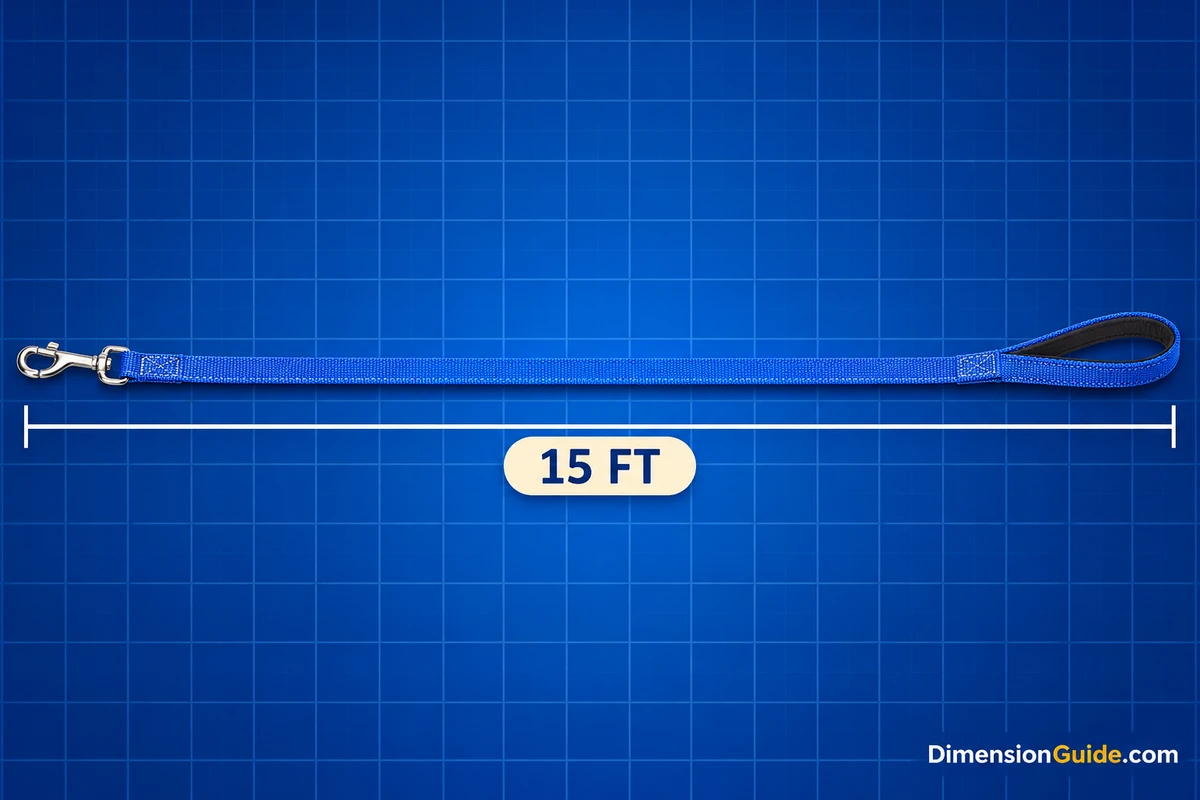
Long lines for recall training often come in 15 foot lengths. Retailers like Walmart stock red 15′ leashes sold for exactly this.
Unclip one in your backyard and you can see how far a dog can wander before the line goes tight.
Trainers like this length because it is long enough for freedom and short enough to keep control. Add a long line to your picture of 15 feet and it becomes something you can almost feel in your hand.
12. 15-Foot Extension Cord
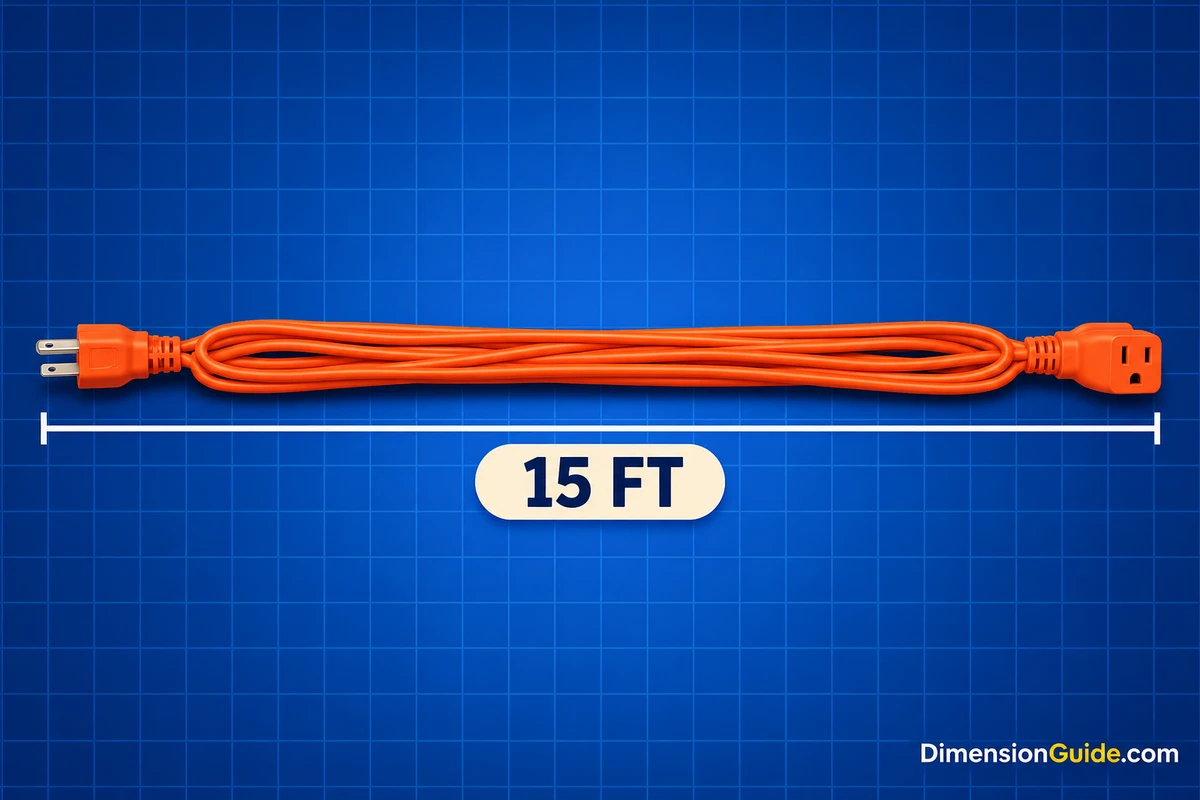
Hardware aisles sell 15 foot cords in bulk, and many are rated 1875 watts. That is the length people grab when the outlet is a room away.
Roll one out in a straight line and it gives you a pocket-sized way to check a measurement. Just remember a cord that says 15 feet may count the plug ends, so the working length can be a touch shorter.
13. Hyundai Elantra (length, near miss)
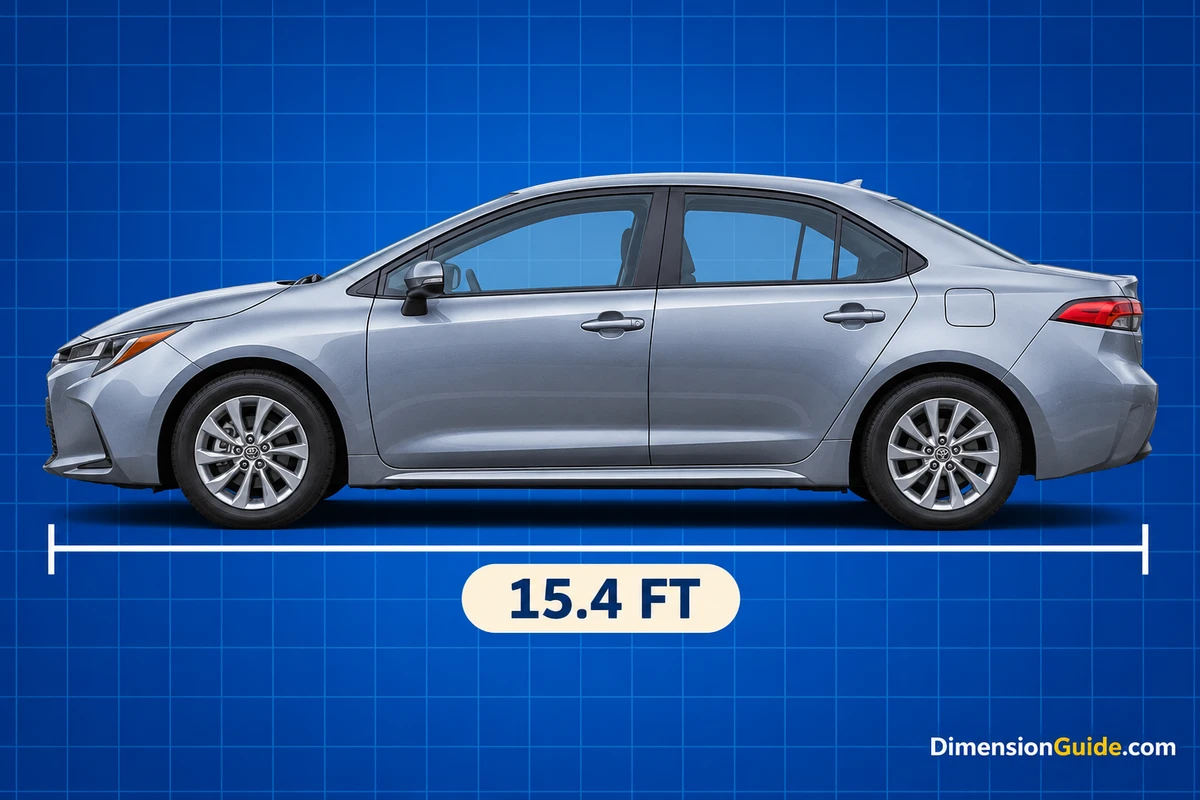
A recent Hyundai Elantra is about 185 inches long. That is roughly 15.4 feet.
Compact sedans make a good picture of 15 feet because they are everywhere. Add a few inches for a bumper and you are right on it.
14. 15-Foot Round Trampoline (diameter)
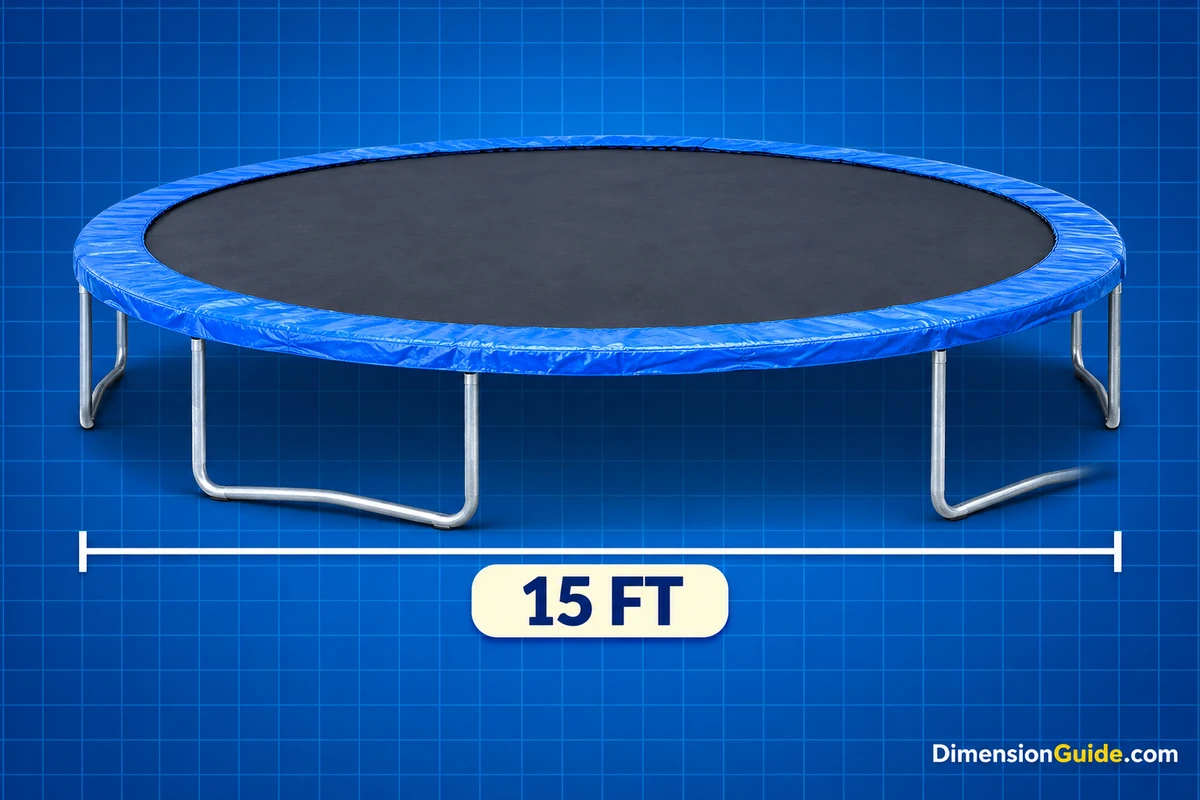
Round trampolines are sold in sizes such as 12, 14 and 15 feet, and the 15 foot one is the biggest common backyard model.
The measurement is across the frame. The jumping mat is smaller, so the real bounce space is a little shorter.
15. 15-Foot Round Above-Ground Pool
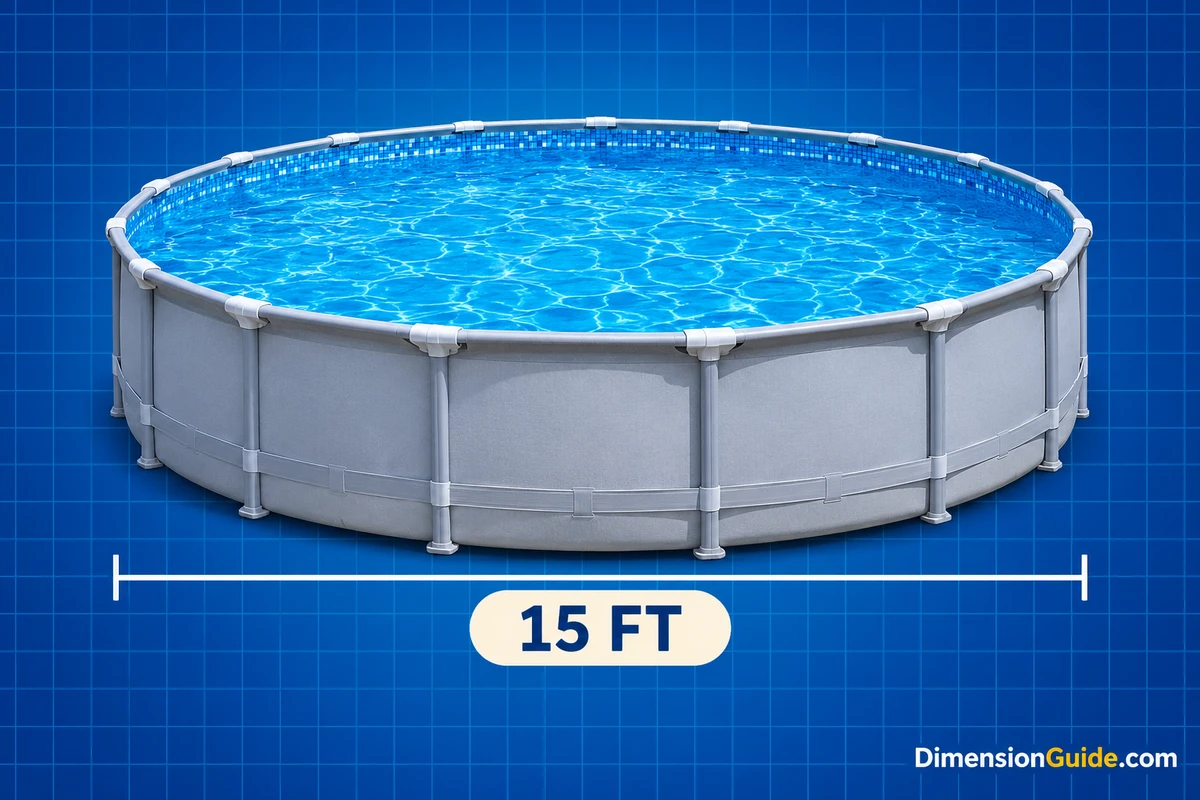
Round above-ground pools from brands like Intex come in a 15 foot size. That is 4.57 m across.
It is a good way to see 5 yards on a lawn, and you can swim across it in two or three strokes.
Exact Matches vs Near Misses
Not every item above is perfect, and that is fine. A rulebook distance such as the free-throw line is exact by definition. A living animal is an average with a wide range.
Products sit in between. A cord or leash is built to 15 feet, but the real working length can shift by an inch or two.
Watch out:
Do not trust a single number for animals or cars. Sizes vary by individual, trim, and body style, so use them to picture the distance and not to cut lumber.
Pacing and Picturing 15 Feet
Start with a known length. A standard 12 inch ruler or a 12 inch item equals one foot, so you would need 15 of them in a row.
For a quick field check, count steps. About 6 normal steps is close to 15 feet. Another trick is to compare it to a car parked at the curb. A compact sedan is a great stand-in.
If you work in metric, 15 feet is a little over 4.5 meters. For scale, a 30 meter distance holds about 6.5 of these 15 foot lengths.
Pro tip:
Mark 15 feet on a garden hose or rope with tape. Laid along a wall, it gives you a reusable measuring line for furniture, fences, and sports drills.
Where 15 Feet Shows Up in Real Projects
Fifteen feet is a very common room dimension. A 15 foot living room wall fits a long sofa plus side tables with space to spare, and 15 feet of fence is five 3 foot panels.
For flooring, 15 feet times 10 feet is 150 square feet. Buy about 10 percent extra for cuts, which brings you to 165 square feet of material.
Lumber is sold in 8, 10, 12, and 16 foot lengths, so a 15 foot run usually means buying a 16 footer and trimming a foot. Wire and rope work the same way, so measure twice before you cut.
Here is a quick conversion if your plans use inches. A 15 foot board is 180 inches, so a layout with marks every 16 inches (common for wall studs) gets you 11 full spans with 4 inches left over.
Think in Five Yards
Picture five yards of a football field, or the radius of a hockey face-off circle.
Then pace it once on your own street and save your step count.
In metric, 15 feet is 4.57 meters, so my 5-meter guide is close, and the 20-foot guide covers the next step up.
15 Feet: Quick Answers
How many meters is 15 feet?
15 feet is exactly 4.572 meters, because one foot is defined as 0.3048 meters.
Is 15 feet the same as 5 yards?
Yes. There are 3 feet in a yard, so 15 feet divided by 3 equals 5 yards.
How many steps is 15 feet?
For most adults it is about 6 steps. Step length varies, so pace it once to find your own number.
Is 15 feet longer than a car?
It is close to a compact sedan, which runs around 15 feet. Larger sedans and trucks are longer, often 16 to 19 feet.
Sources
- NBA Official: the free-throw line is 15 feet from the plane of the backboard face.
- NHL: face-off circles have a 15 foot radius.
- NOAA Fisheries: giant manta ray size and wingspan.
- Justia (California Vehicle Code): no parking within 15 feet of a fire hydrant.
- USBC: bowling approach length of 15 feet.
- CED Engineering: 15 foot minimum clearance for traffic signal heads.