
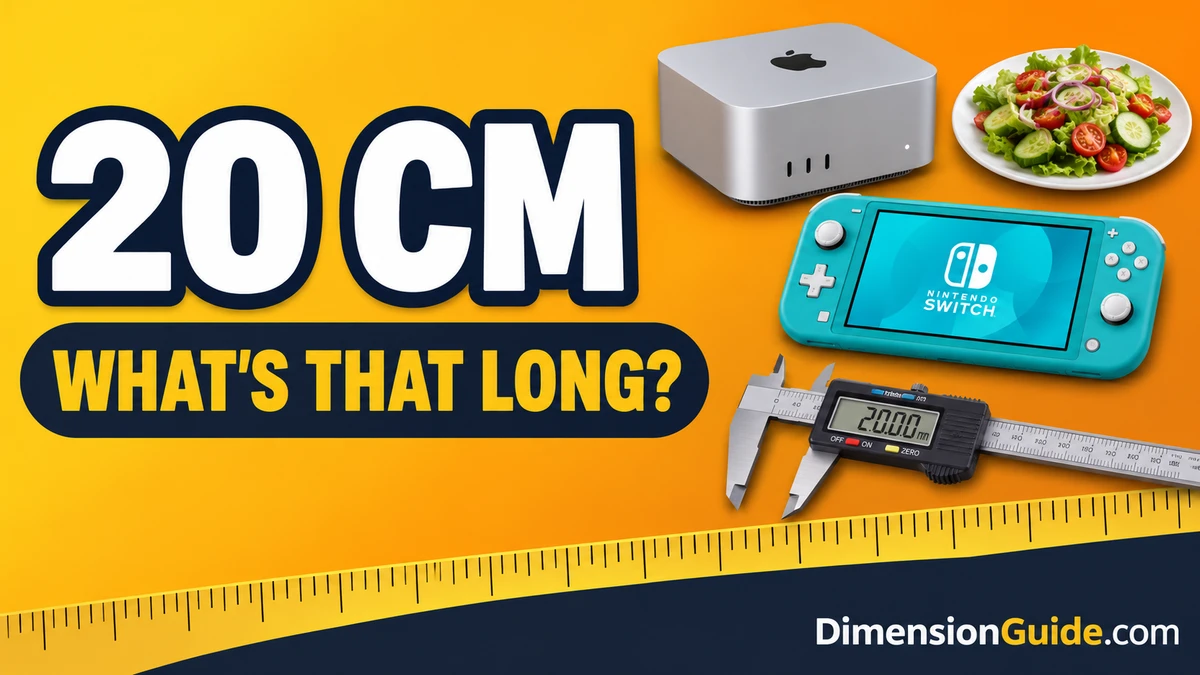


Quick answer: 20 cm is 7.87 inches, just shy of 8 inches (20.32 cm). It is also 200 mm, or 0.2 meters.
Spread your hand wide, and the gap from thumb tip to pinky tip is about 20 cm for many adults. That is 200 mm, or 7.87 inches.
Real objects like to miss it by a few millimeters, and many “8-inch” items are really 20.32 cm. The 16 below show the exact gap each time.
20 cm in Inches and Millimeters
Centimeters are the easy part. Here is what 20 cm equals in the units people ask about most. The inch is defined as exactly 25.4 mm, so these numbers are exact, not guesses.
| Unit | 20 cm equals |
|---|---|
| Millimeters | 200 mm |
| Meters | 0.2 m |
| Inches | 7.874 in |
| Feet | 0.656 ft |
| Yards | 0.219 yd |
Pro tip:
Need a picture in your head fast? Think “just under 8 inches.” It is accurate to within about 3 mm, which is plenty for shopping, packing, and craft projects.
Where 20 cm Lands on an Inch Ruler
Flip a ruler over and check the inch side. The 20 cm mark falls at 7.874 inches. That is almost exactly 7 and 7/8 inches, since 7 7/8 inches equals 200.025 mm.
So 20 cm and 7 7/8 inches are twins for everyday purposes. The full 8-inch mark sits at 20.32 cm, a hair past it.
Watch out:
An item labeled “8 inch” is not 20 cm. It is 3.2 mm longer. That gap is invisible by eye, but it can stop a metric part from fitting an inch-sized slot.
Measure 20 cm With Your Own Hand
Your hand is the cheapest ruler you own. Spread your fingers as wide as you can, press your thumb tip and pinky tip on a table, and measure the gap once.
Hand sizes vary a lot, so yours might be 18 cm or 22 cm. That does not matter. Once you know your own number, you can carry it everywhere. If your span is 21 cm, then 20 cm is just a hair less than a full stretch.
Do the check a few times and write the result on a sticky note. Your span stays the same for years, so a single measurement works for good.
16 Things That Are 20 cm Long
I checked each size against a maker’s spec page, a standards body, or a government source. Where something misses 20 cm, I say by how much.
1. Mac Studio (width)
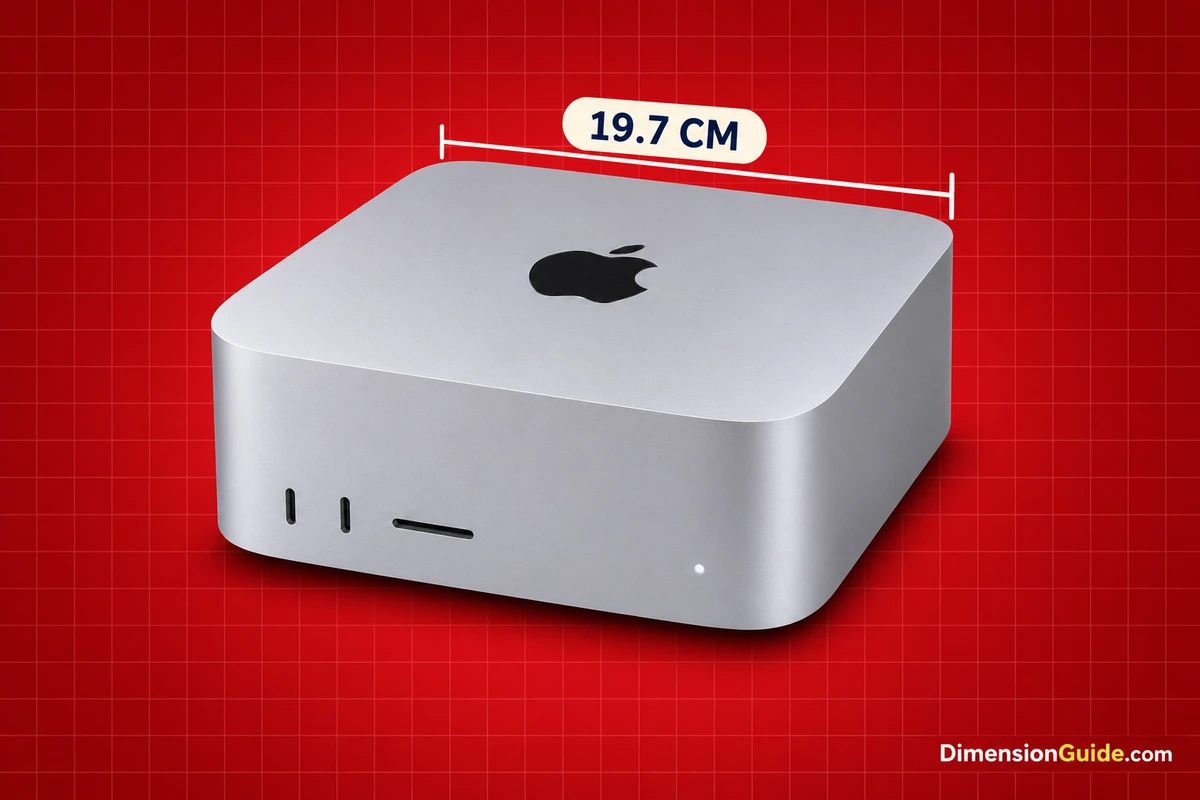
Apple lists the Mac Studio at 7.7 inches wide, which is 19.7 cm. The depth is the same, so the top of the box is a near perfect square.
That is only 3 mm short of 20 cm, and it is one of the cleanest desktop matches you can park next to a keyboard.
Older Mac mini models used the same 19.7 cm width, but the current Mac mini shrank to a much smaller footprint. If you own one of the older ones, you already have a 20 cm reference sitting on your desk.
Just measure the side, not the stand or the cables.
2. 25 LEGO Studs in a Row
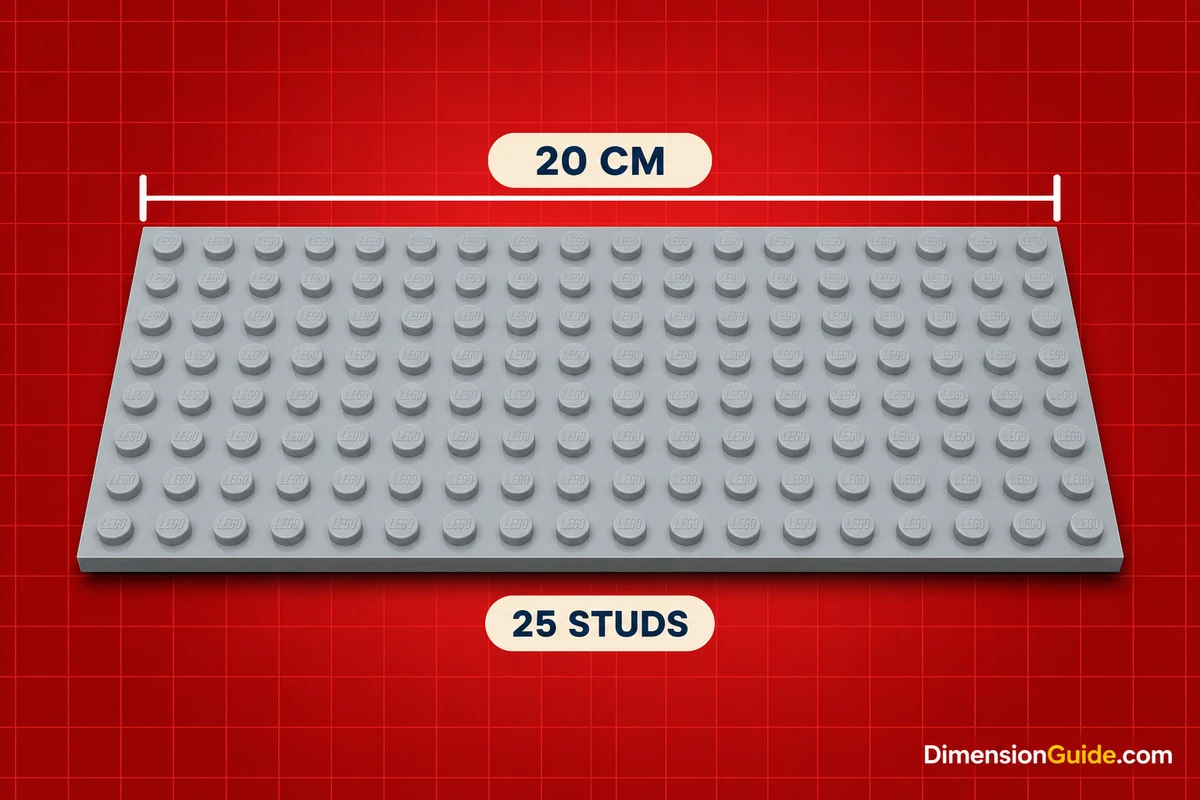
Why do LEGO bricks play so nicely with a metric ruler? Because the stud spacing is exactly 8 mm.
Multiply that by 25 and you get 200 mm. A plate that is 25 studs wide measures about 19.98 cm, thanks to a tiny 0.2 mm gap that lets pieces slide together.
It is a handy trick when you need 20 cm and all you have is a bin of bricks.
3. Ten Pennies in a Row
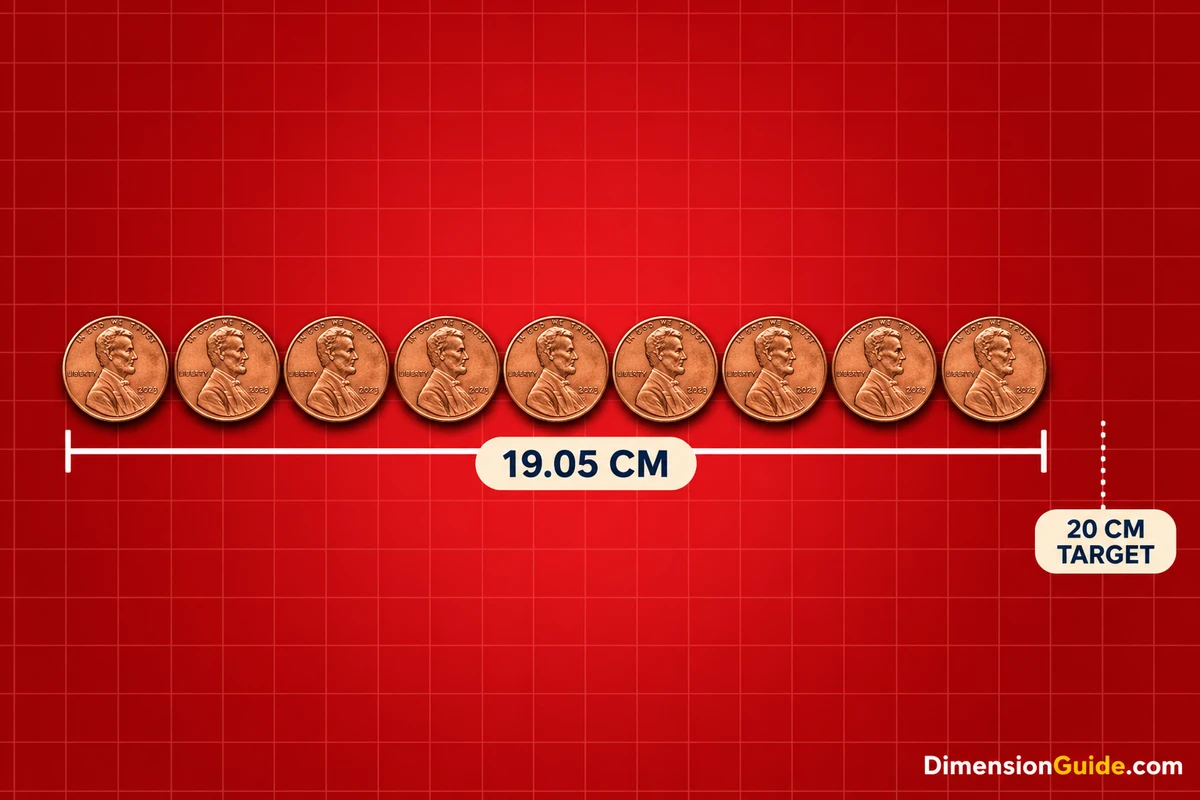
Check your pocket. A US cent is 19.05 mm across, according to the US Mint.
Line up ten and you get 190.5 mm. That is 9.5 mm short of 20 cm, so close but not perfect.
Dimes do better. A dime is 17.91 mm wide, so eleven in a row reach about 197 mm. That is only 3 mm under the mark, with no ruler needed.
4. Modular Brick (nominal length)
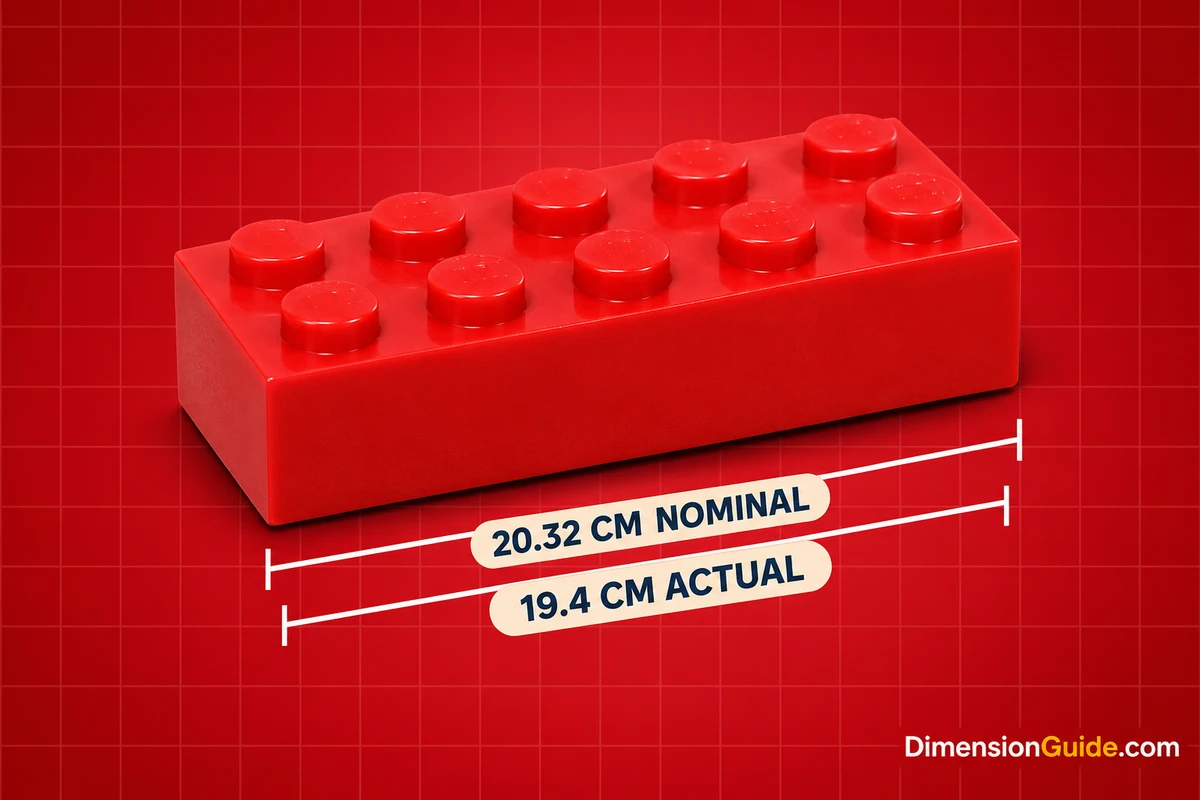
Here is a measurement twist. A standard US modular brick is called an “8-inch” brick, which is 20.32 cm.
But the brick in your hand is smaller. Its actual length is 7 5/8 inches, or about 19.4 cm. The missing 3/8 inch is the mortar joint, so one brick plus its joint fills the full 8 inches.
That is nominal versus actual size. Builders plan walls with the nominal number, and the real brick runs a little short. Lumber works the same way, which is why a 2×4 is not 2 by 4 inches.
So when you picture a brick, picture just under 20 cm.
5. Indoor Volleyball (across)
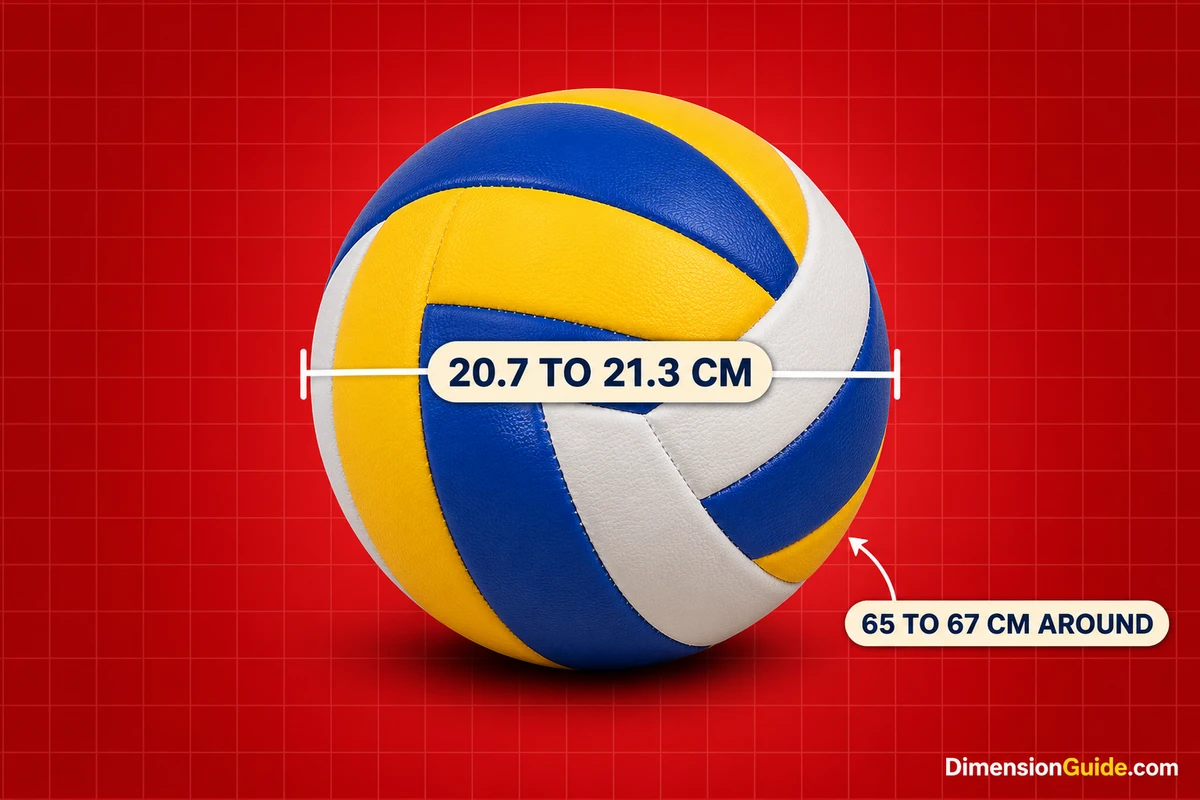
Volleyball rules list the ball by circumference, not width. FIVB says it must measure 65 to 67 cm around.
Divide by pi and you get a diameter of 20.7 to 21.3 cm. Every official indoor ball sits a little past 20 cm.
The trick works on any round thing. The distance around a circle is about 3.14 times the distance across it, so a 20 cm circle needs roughly 62.8 cm of string to wrap it. The volleyball is just a touch bigger than that.
It also shows why a ball feels larger in your hands than the number on a ruler suggests.
6. Disc Brake Rotor, 203 mm
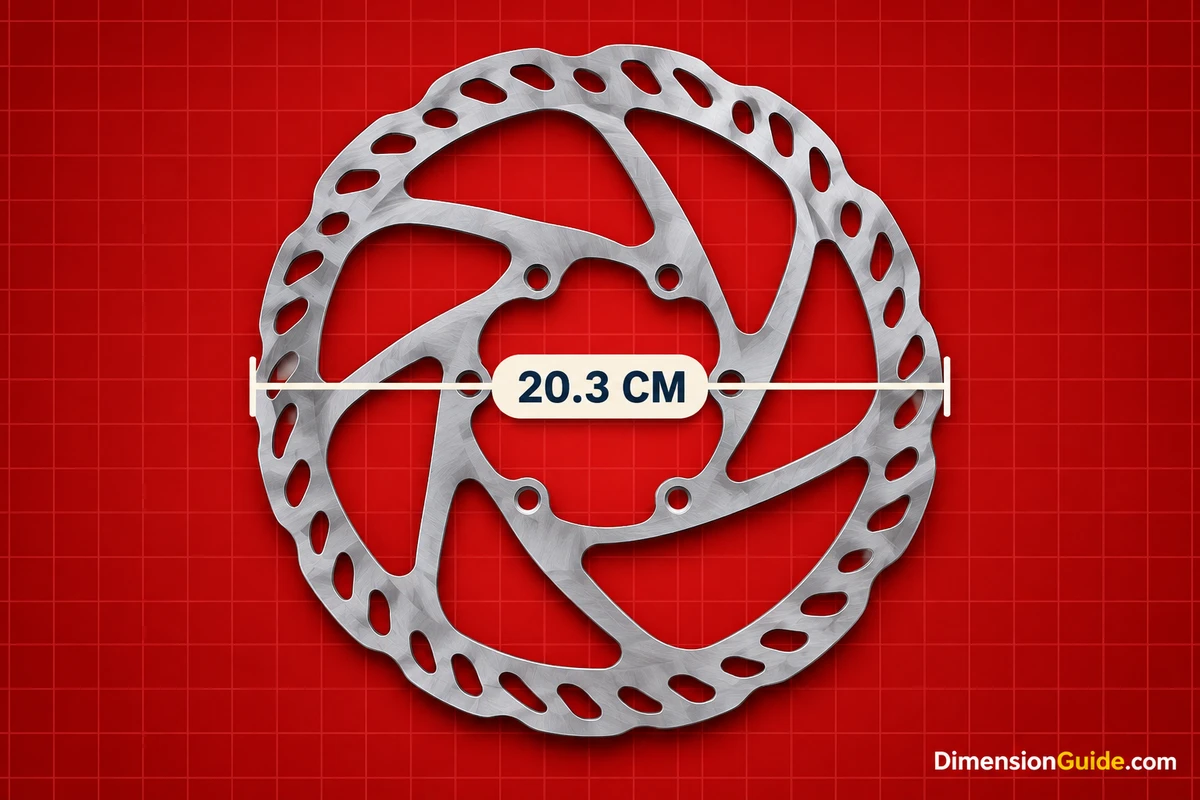
Mountain bikers know this one. Rotors come in standard diameters, and 203 mm is the largest common size, built for long steep descents.
That is 20.3 cm, only 3 mm over 20 cm. A bigger rotor gives more leverage and sheds heat better, which is why downhill riders love it.
The next sizes down are 180 mm and 160 mm.
Here is the catch for shoppers. The rotor size is the outside diameter. The part that actually grips the brake pads is a ring a bit narrower, so the shiny braking surface is shorter than 20 cm.
7. Skateboard Deck (width)
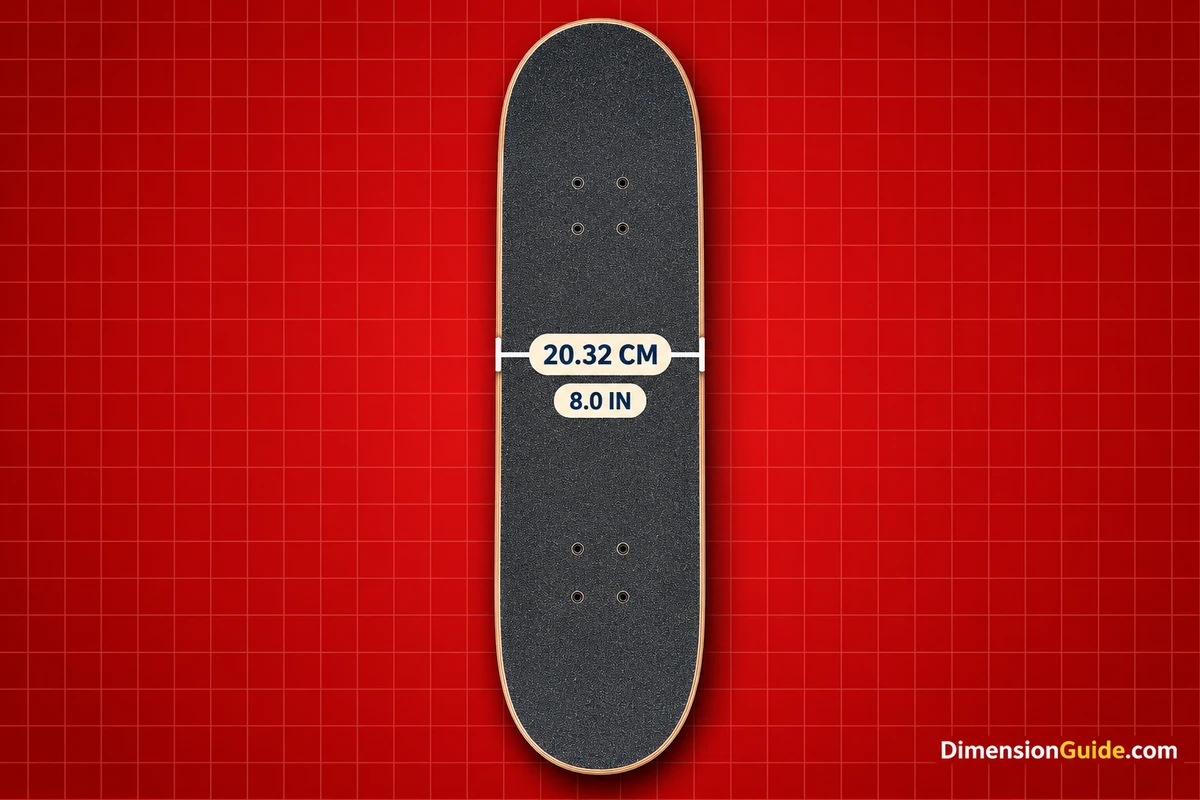
Is a skateboard 20 cm wide? One of the most popular deck widths is 8.0 inches, which is 20.32 cm.
Shops sell decks in inches, so you will see 7.75, 8.0, 8.25 and so on. The 8.0 deck is a middle pick that works for many riders.
It is 3.2 mm over 20 cm, and that is all.
Keep in mind that the deck is the board only. It also curves up at the ends, so measure flat across the middle. The full length is much longer, often around 80 cm, so this match only works across the width.
8. 20 x 20 cm Floor Tile (each side)
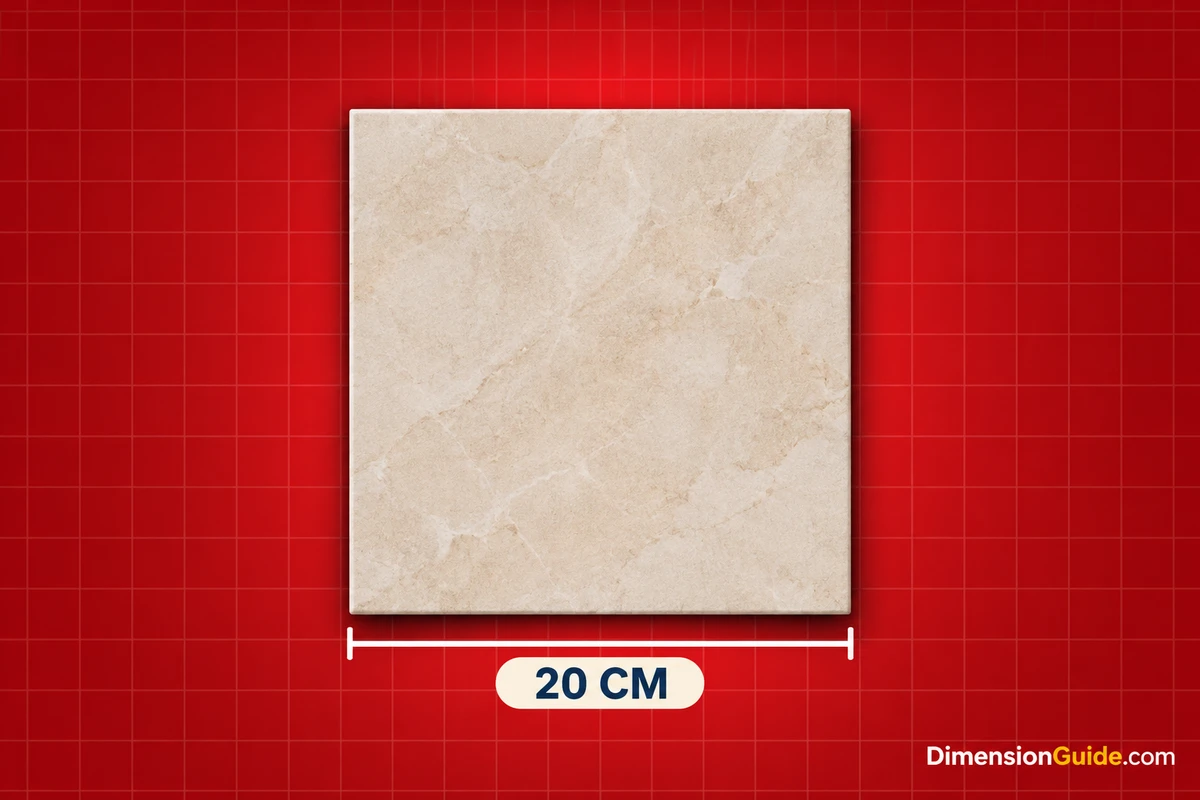
Tile boxes in Europe and many other regions list sizes in millimeters, and 200 x 200 mm is a classic.
Each tile is exactly 20 cm on a side. The finished wall is a bit different, because grout lines add space between tiles, so five tiles in a row cover a little more than a meter.
Check the box before you plan a layout. Some tiles are sold by a rounded nominal size, and the real tile can be a few millimeters smaller.
Weird, right? Even a “20 cm” tile may not be 20 cm.
9. European Starling (body length)
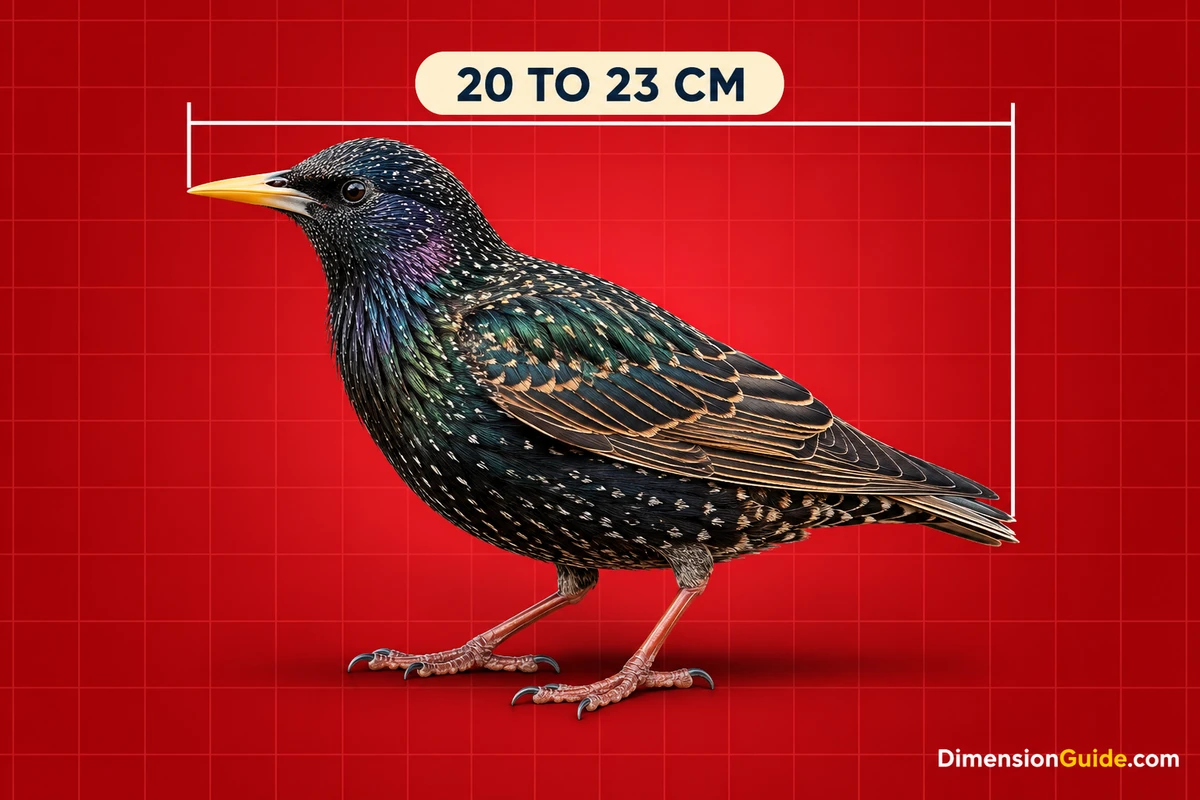
A starling is a plump, glossy bird you can spot on wires and lawns. Bird guides put it at about 20 to 23 cm from beak tip to tail tip.
That puts the smallest starlings right on the mark and the largest about 3 cm past it. Remember that the tail counts, so a bird sitting upright looks shorter than its full length.
Males and females are nearly the same size, so you do not need to tell them apart for this check.
10. Standard DVD Case (height)
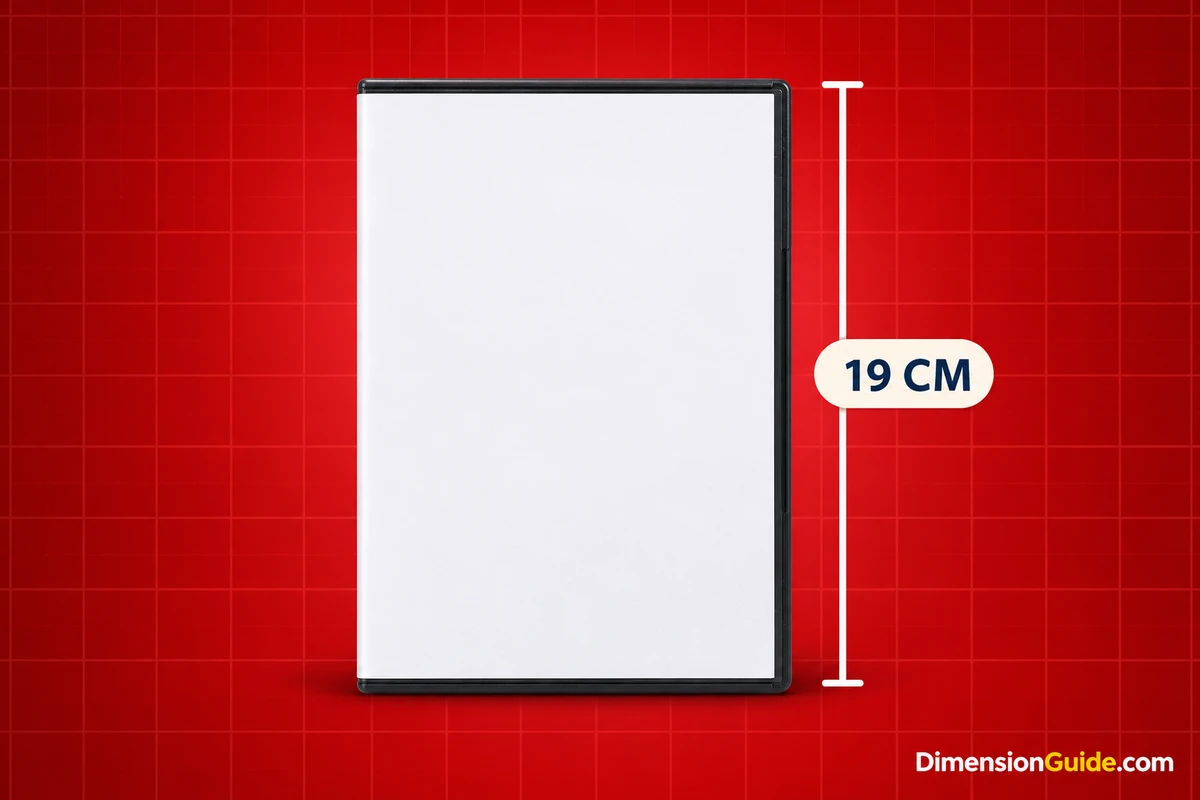
A regular DVD case is about 19 cm tall and 13.5 cm wide.
It is not exactly 20 cm, but it is only 1 cm short, which is close enough to help you eyeball the size on a shelf. Slim cases are a bit shorter, so use a standard one.
11. 20 x 30 cm Photo Print (short side)
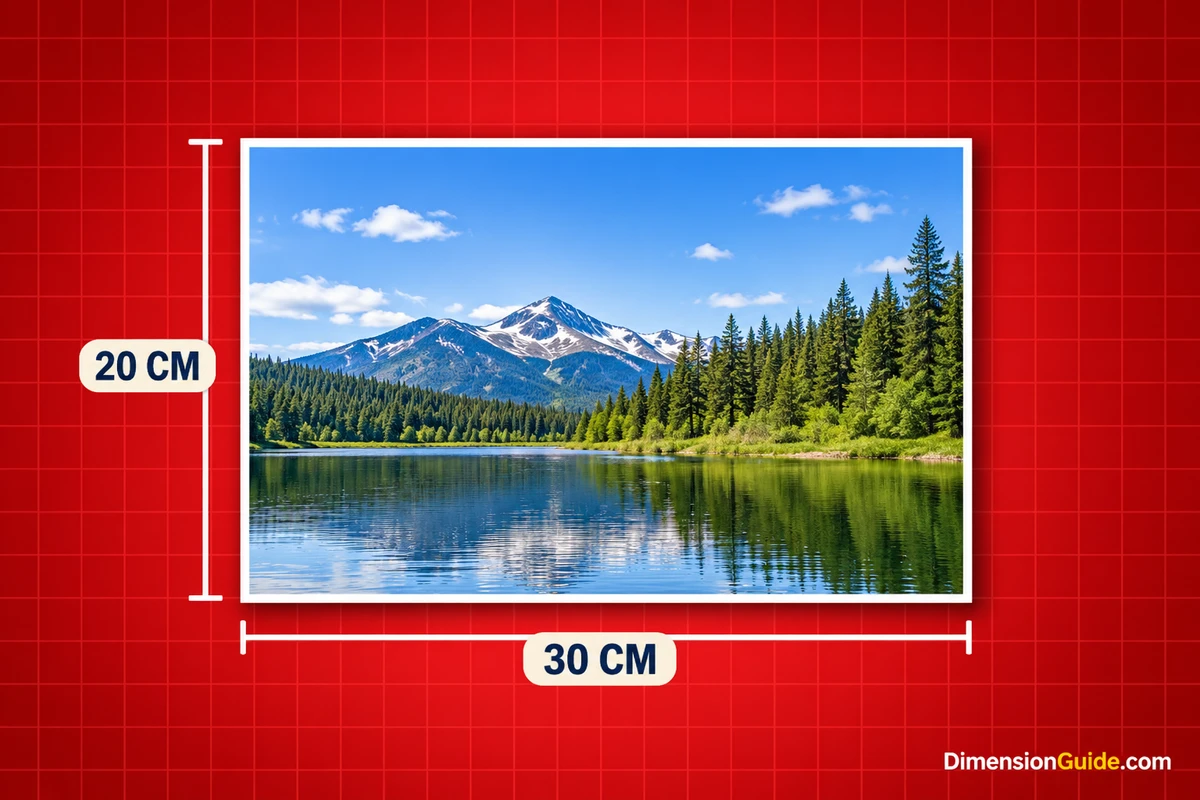
Walk into a print shop in Europe and you will find 20 x 30 cm prints on the price list. The short side is exactly 20 cm.
It is close to an 8 x 12 inch print, which would measure 20.32 x 30.48 cm. Frames for one rarely fit the other without trimming, so check the units before you buy.
Want to size up from here? See our list of things that are 30 cm long for the long side of this print.
12. Bowling Ball (across)
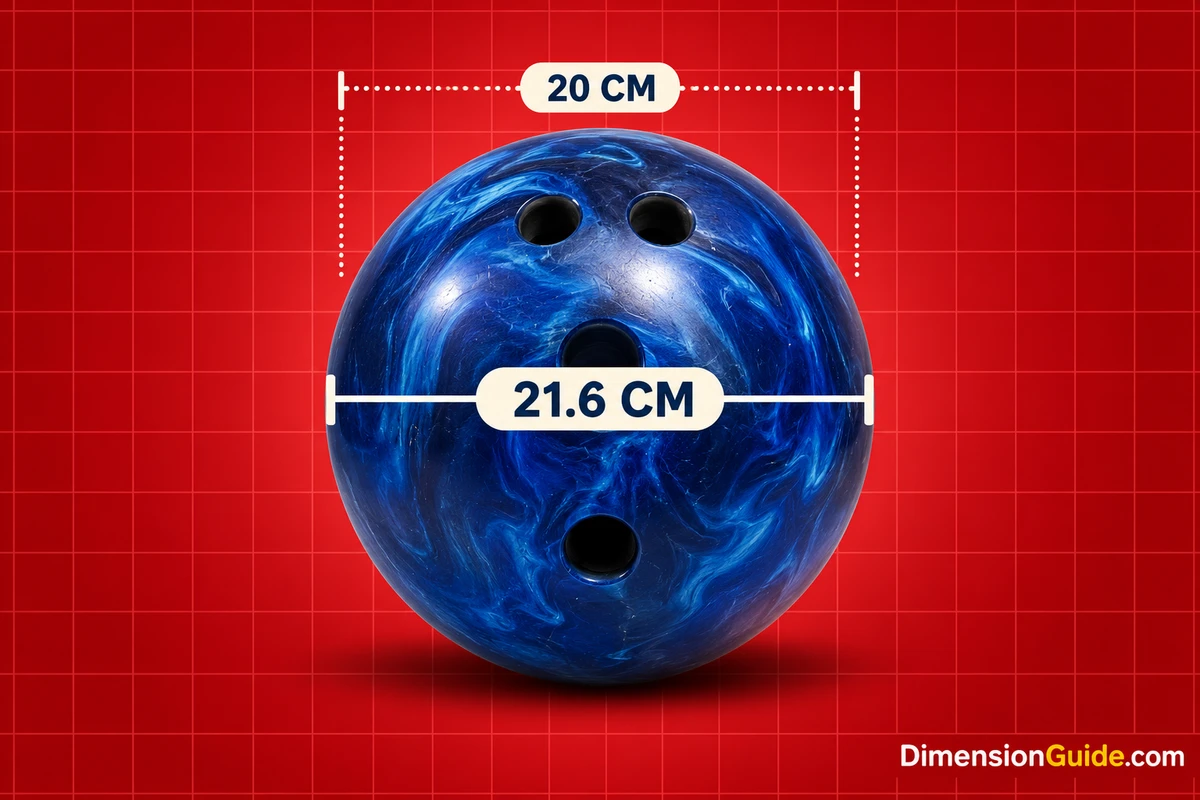
Bowling balls max out at a diameter of 8.595 inches under USBC rules, and most are listed as 8.5 inches. That is 21.6 cm.
It runs 1.6 cm past 20 cm, so it is the largest near miss on this list. Still, it is a good size to hold in two hands and feel how wide 20 cm is.
13. 200 mm Digital Caliper (jaw range)
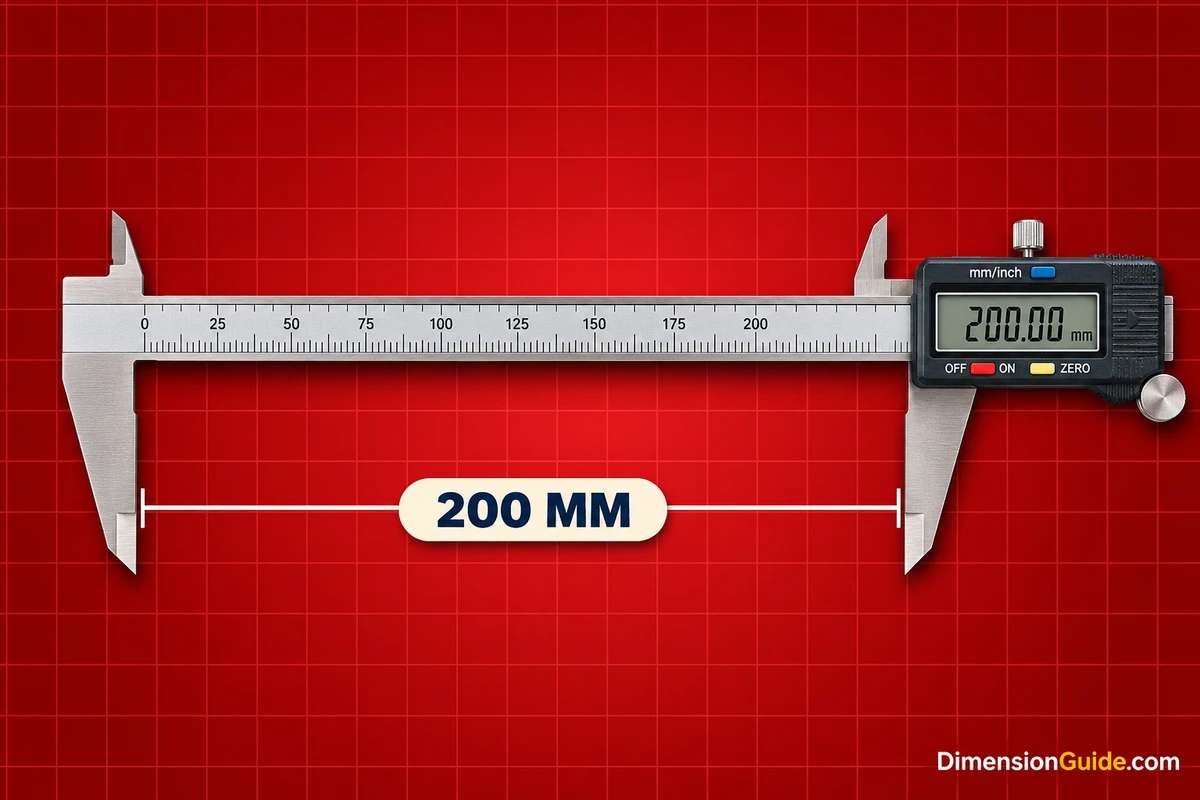
Do you own a caliper? A common size has a measuring range of 0 to 200 mm, or about 8 inches.
That means it can measure something up to 20 cm long. The tool itself is longer than that, since the beam and jaws add extra length, so do not mistake the body for the range.
14. Salad Plate (across)
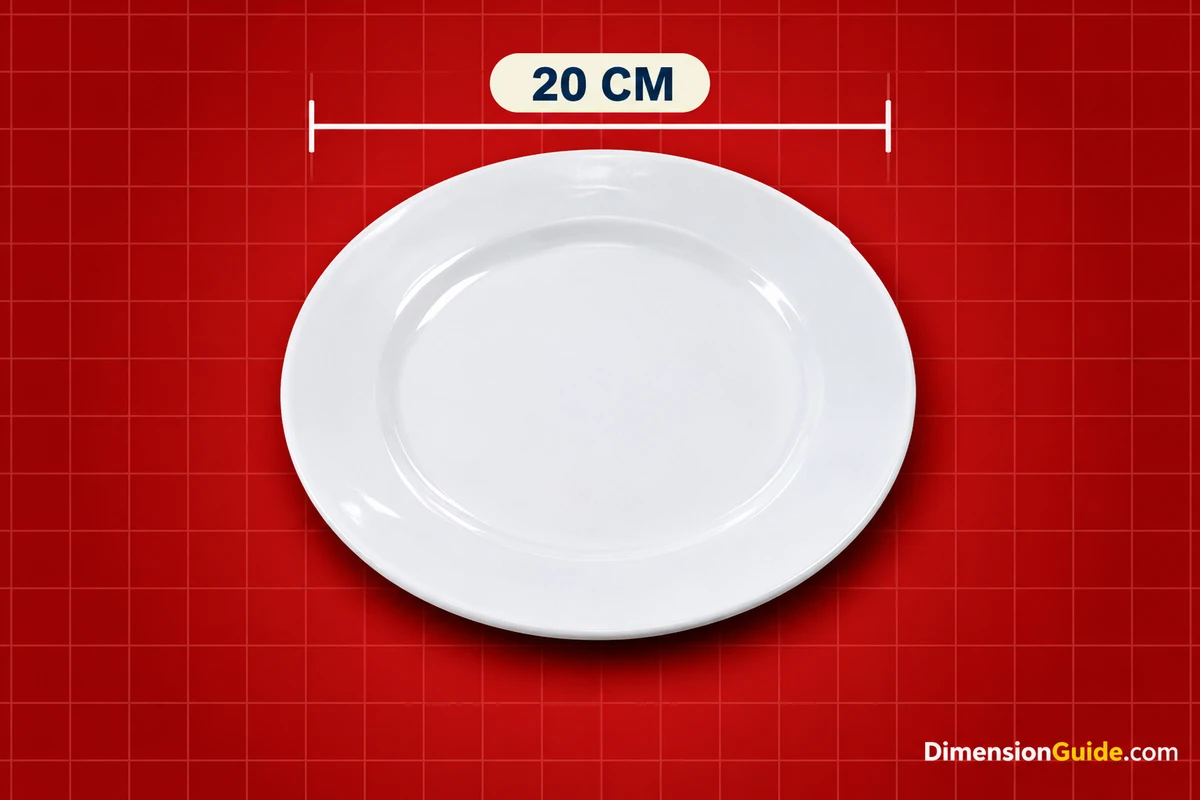
A standard salad plate is about 7.5 to 8.5 inches across, so many are around 20 cm.
Dinnerware varies by maker, so check the plate itself. A 20 cm one nests perfectly on a dinner plate.
15. Bohemian Waxwing (length)
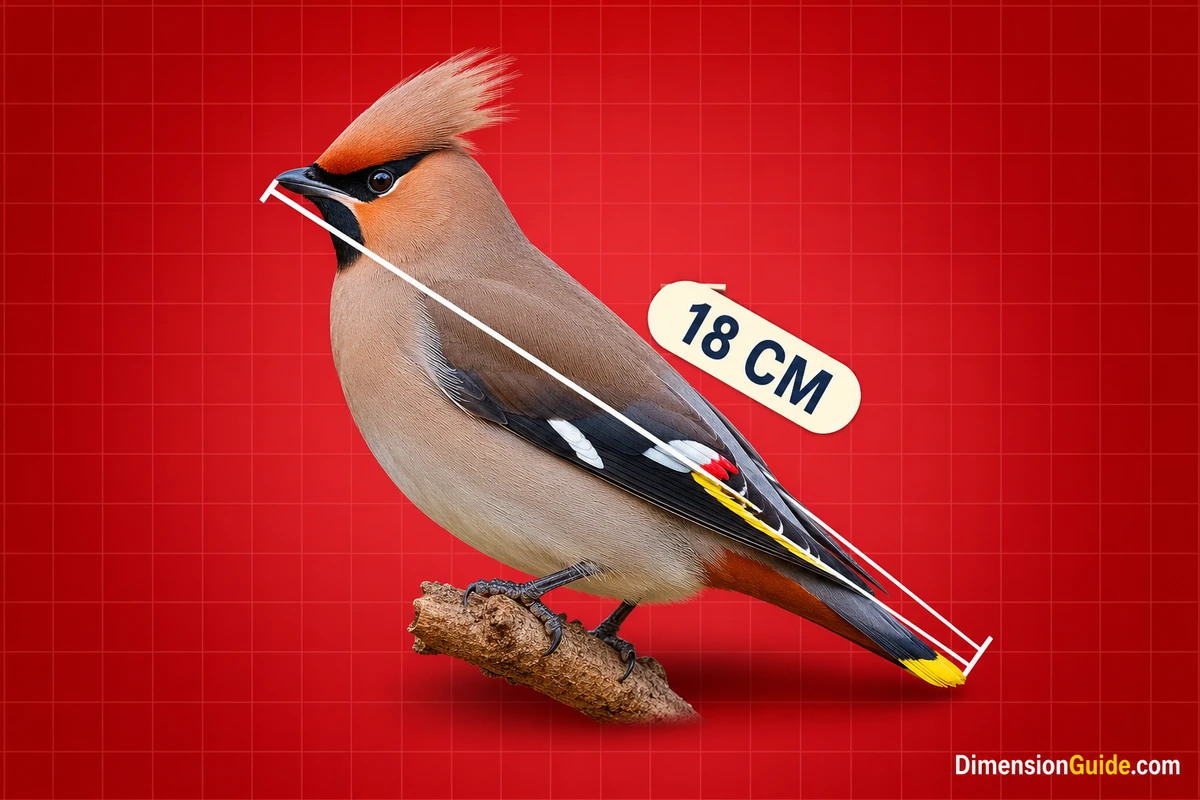
The RSPB lists the waxwing at 18 cm long, a near miss by 2 cm.
Its crest and red wing tips make it easy to spot in winter, when flocks come south to feed on berries.
16. Nintendo Switch Lite (width)
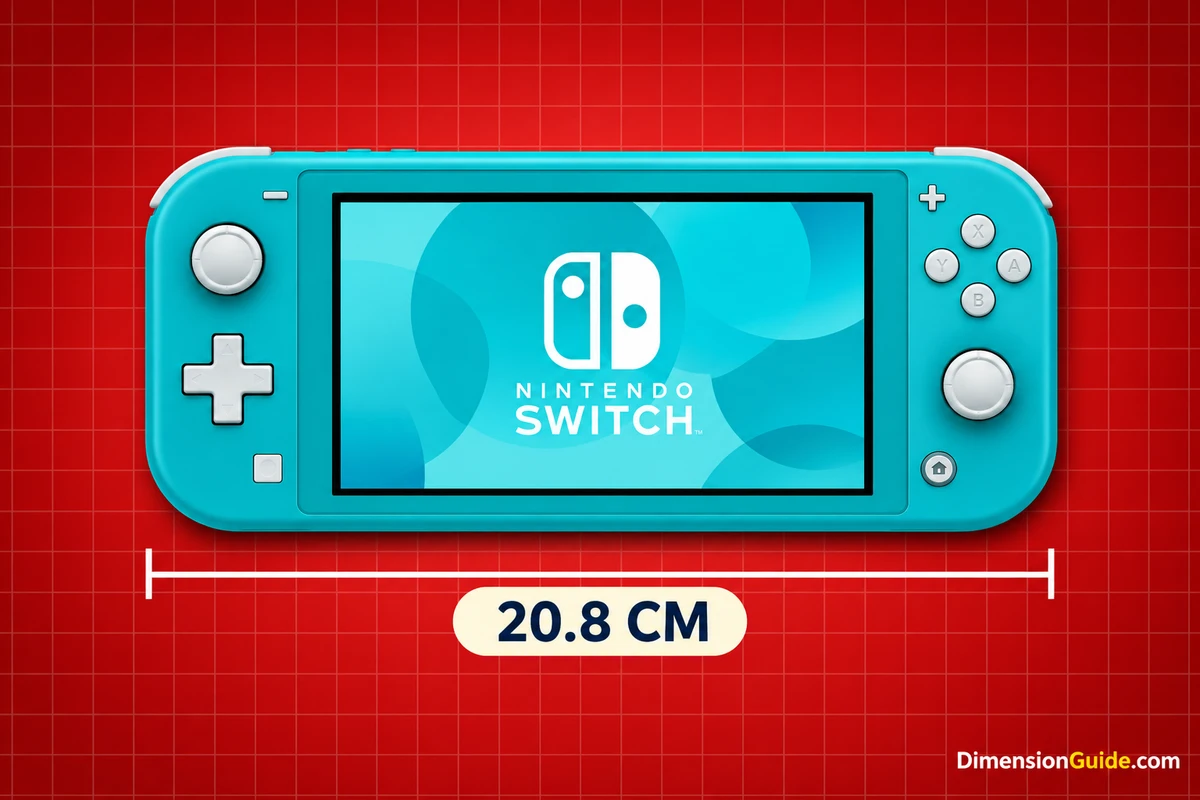
The handheld is 208 mm wide, which is 8 mm over 20 cm.
It is a decent rough check, since many people have one at home.
Why So Many 20 cm Things Are Really 8 Inches
Look back at the list. The brick, the skateboard, and the rotor all trace back to inches, and each lands within 3 mm of 20 cm. Designers pick round numbers in whatever unit they use, and 8 inches happens to sit right beside 20 cm.
If you want to see more of those, check our list of things that are 8 inches long. Almost everything there is about 3 mm longer than 20 cm.
Need something shorter? Things that are 7 inches long measure 17.78 cm, which is about 2.2 cm under today’s size. And for a quick feel for the next step up, 10 inches is 25.4 cm.
Pro tip:
To check any 20 cm claim, measure from the zero line on a metric ruler, not from the edge. Many rulers have a small gap before the zero mark.
Quick Ways to Mark Out 20 cm
No ruler nearby? These picks get you close, and I list how far off each one is.
- Eleven dimes in a row. About 19.7 cm. Error: 3 mm short.
- A Mac Studio side. 19.7 cm. Error: 3 mm short.
- 25 LEGO studs. About 19.98 cm. Error: under 0.5 mm.
- A 20 x 20 cm tile. Exactly 20 cm. Error: none, if the label is true.
How Far Is 20 cm in Time?
Distance is not just about rulers. Here are a few fun ways to see how small 20 cm is.
Light crosses 20 cm in about 0.67 nanoseconds. Sound covers it in roughly 0.58 milliseconds, using 343 meters per second for air at room temperature.
Hair is slower. It grows about 1.25 cm a month on average, so a 20 cm length takes close to 16 months to grow.
See the 8-Inch Gap Yourself
An inch is exactly 25.4 mm, so 8 inches is 20.32 cm. Put an 8-inch item beside a ruler and the 3.2 mm difference shows.
No ruler on hand? A Mac Studio, a row of LEGO studs or a handful of dimes will do as a rough check.
Going smaller? The 15 cm and 10 cm lists sit just below this one.
20 cm: Quick Answers
Is 20 cm the same as 8 inches?
No. 8 inches is 20.32 cm, so it is 3.2 mm longer than 20 cm.
How many millimeters is 20 cm?
20 cm is exactly 200 mm, because there are 10 mm in each centimeter.
What can I use to measure 20 cm without a ruler?
Try a spread adult hand, which is often close, or eleven US dimes in a row, which come to about 19.7 cm.
Sources
- NIST: the inch is defined as exactly 25.4 mm, so 20 cm converts to 7.874 inches.
- US Mint: coin diameters, including the 19.05 mm cent and 17.91 mm dime.
- Apple: Mac Studio dimensions of 7.7 inches (19.7 cm) wide and deep.
- World of Volley: FIVB ball circumference of 65 to 67 cm.
- All About Birds: European starling size and shape.