
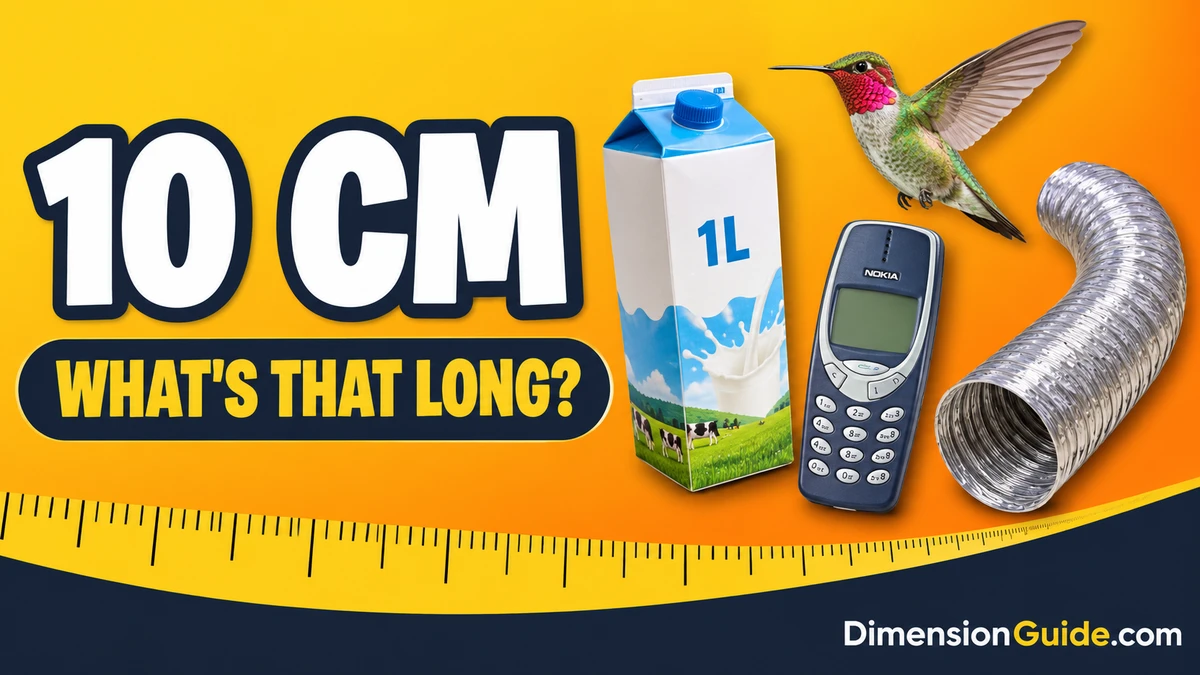


The short version: 10 cm is 100 mm, or 3.94 inches. That is a hair under 4 inches, which measures 10.16 cm.
In inches, 10 cm comes out to 3.94, a hair under 4. In millimeters it is a clean 100.
Designers love this size, so it hides in photos, tiles and lab gear. The 16 items below split into exact matches and near misses.
How Long Is 10 cm in Inches, Feet, and Millimeters?
Start with the numbers. One inch is defined as exactly 25.4 millimeters, so the math is clean. Divide 100 millimeters by 25.4 and you get 3.937 inches.
| Unit | 10 cm equals |
|---|---|
| Millimeters | 100 mm |
| Decimeters | 1 dm |
| Meters | 0.1 m |
| Inches | 3.937 in |
| Nearest fraction | 3 15/16 in (3.9375 in) |
| Feet | 0.328 ft |
| Yards | 0.109 yd |
In plain words, 10 cm is a hair under 4 inches. Four inches is 10.16 cm, so the gap is only 1.6 millimeters. That is about the thickness of two credit cards stacked.
Pro tip:
Need the bigger picture? Compare 10 cm with things that are 4 inches long. The two lists overlap a lot, but the exact sizes are different.
Why does this matter? Because “about 10 cm” and “exactly 10 cm” can fit very different jobs. A tile, a cutting board insert, or a 3D print needs the real number.
Why 10 cm Is Such a Handy Size
Ten centimeters is one decimeter. The metric system is built on tens, so 10 cm is a natural stopping point. Ten of them make a meter, and ten millimeters make each centimeter.
That is why so many metric products start here. Designers like round numbers, and 100 mm is as round as it gets. You will see it in craft supplies, lab equipment, and building materials.
It also fits the human hand. Most adults can hold something 10 cm wide in one palm without trouble. Bigger than that and you start to need two hands or a stronger grip.
Watch out:
A label that says 10 cm may be a nominal size. That means it is a name, not a measurement. The pipe pick later in the list shows how far off a name can be.
16 Things That Are 10 cm Long
Each pick below says how close it really is. Some are exact. Some are near misses, and I label them.
1. 10 x 15 cm Photo Print (short side)
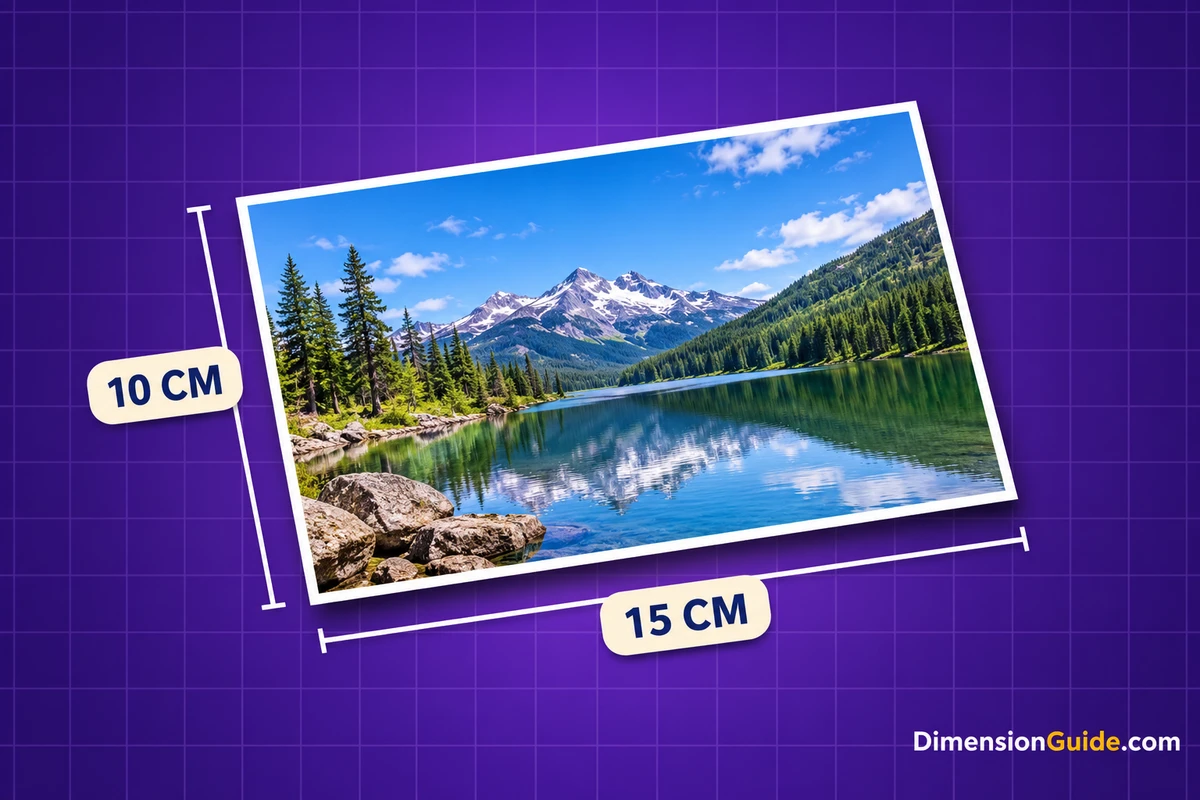
Walk into a photo shop in Europe or Asia and ask for a standard print. You get 10 x 15 cm paper, so the short side is exactly 10 cm.
The US version is different. A 4 x 6 inch print measures 10.16 x 15.24 cm, which is 1.6 millimeters longer on the short side.
That tiny gap matters when you buy frames. A 10 x 15 cm print can slide around inside a 4 x 6 inch frame, and a 4 x 6 inch print will not squeeze into a tight 10 x 15 cm frame without a bend. Check the label before you order.
2. 1 Liter Cube (each edge)
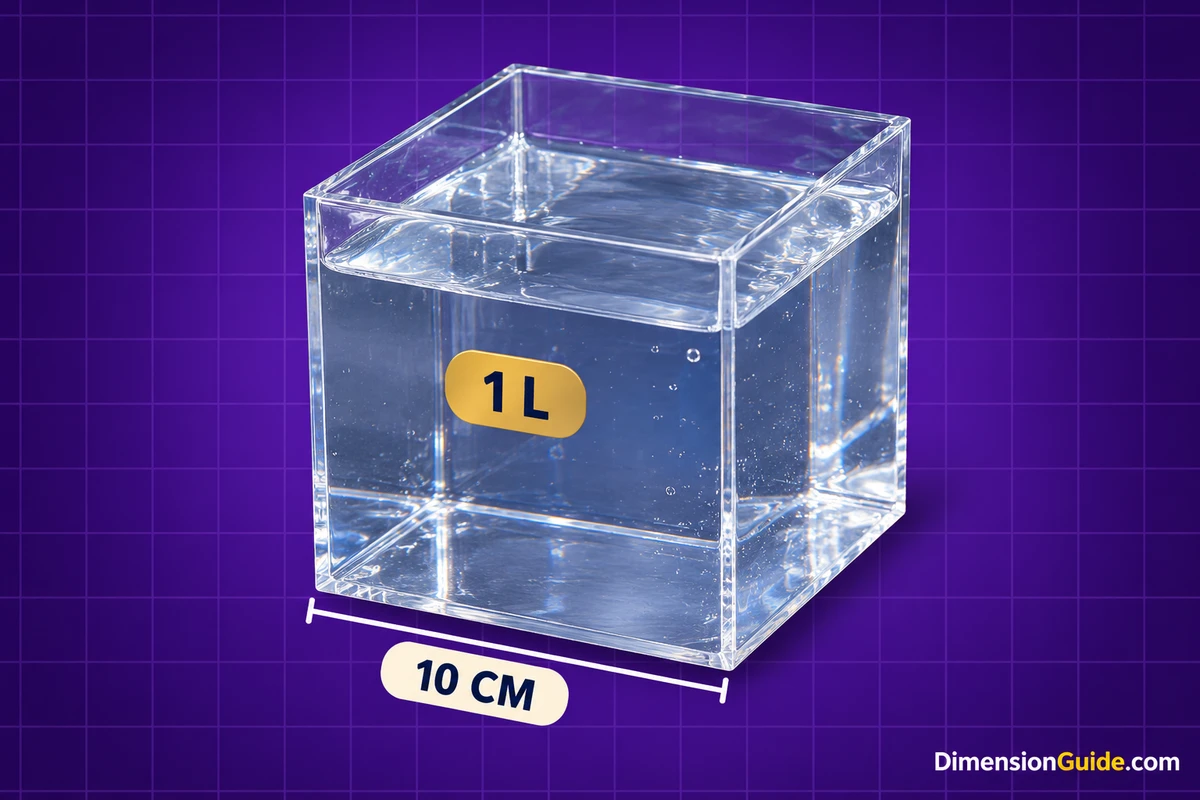
One liter is exactly one cubic decimeter. Picture a box with every edge at 10 cm and you are looking at a liter.
Weird, right? The metric system was built so that length, volume, and mass fit together. Fill that cube with water and it holds about one kilogram.
This is also why a liter feels so familiar. A box that measures 10 cm on every side is the same space as a bottle of water, only squared off. Most real bottles are taller and thinner, so the cube shape just looks smaller than it is.
3. Golf Hole (minimum depth)
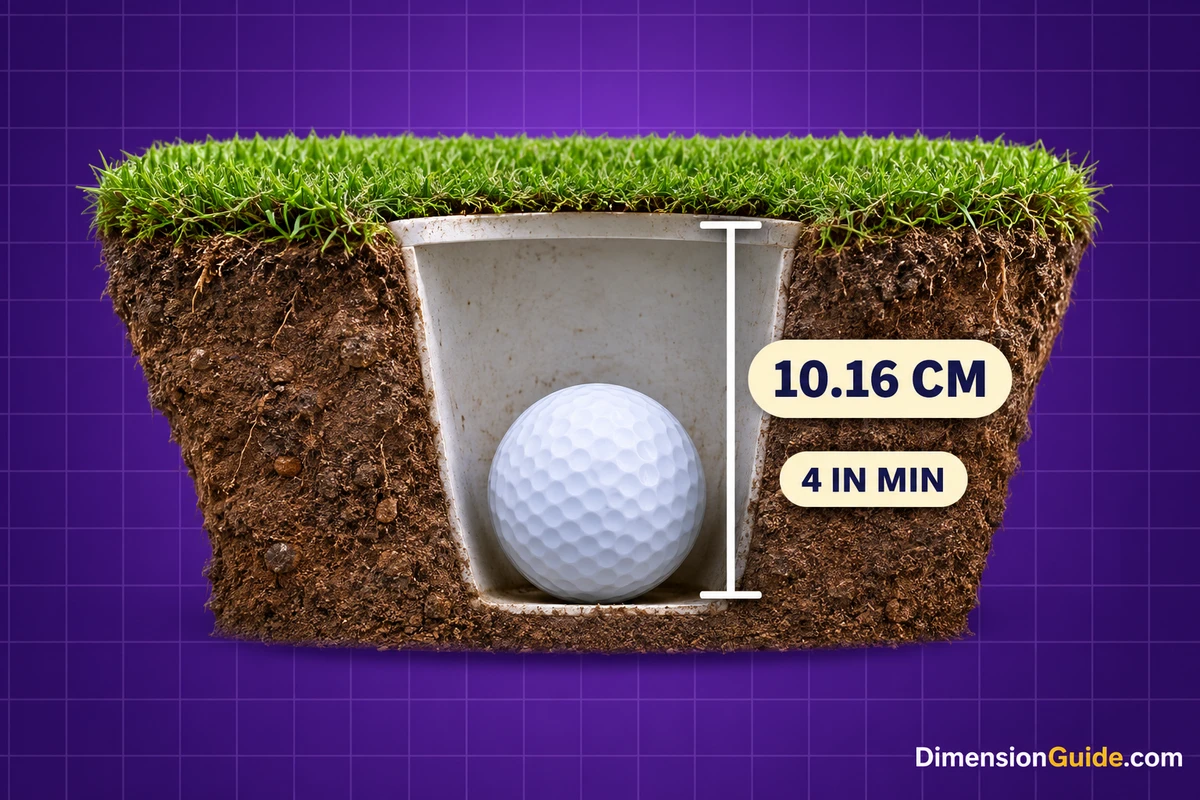
Think a golf hole is about 10 cm wide? You are close. The Rules of Golf set the width at 4 1/4 inches, or 108 mm, which is 10.8 cm.
The depth is where it lands almost on target. The hole must be at least 4 inches deep, and that equals 101.6 mm, or 10.16 cm.
So the answer is a near miss on both counts, and the depth is the closer one. The rules set a minimum depth but no maximum, so real cups can run deeper.
4. 10 x 10 cm Ceramic Tile (each side)
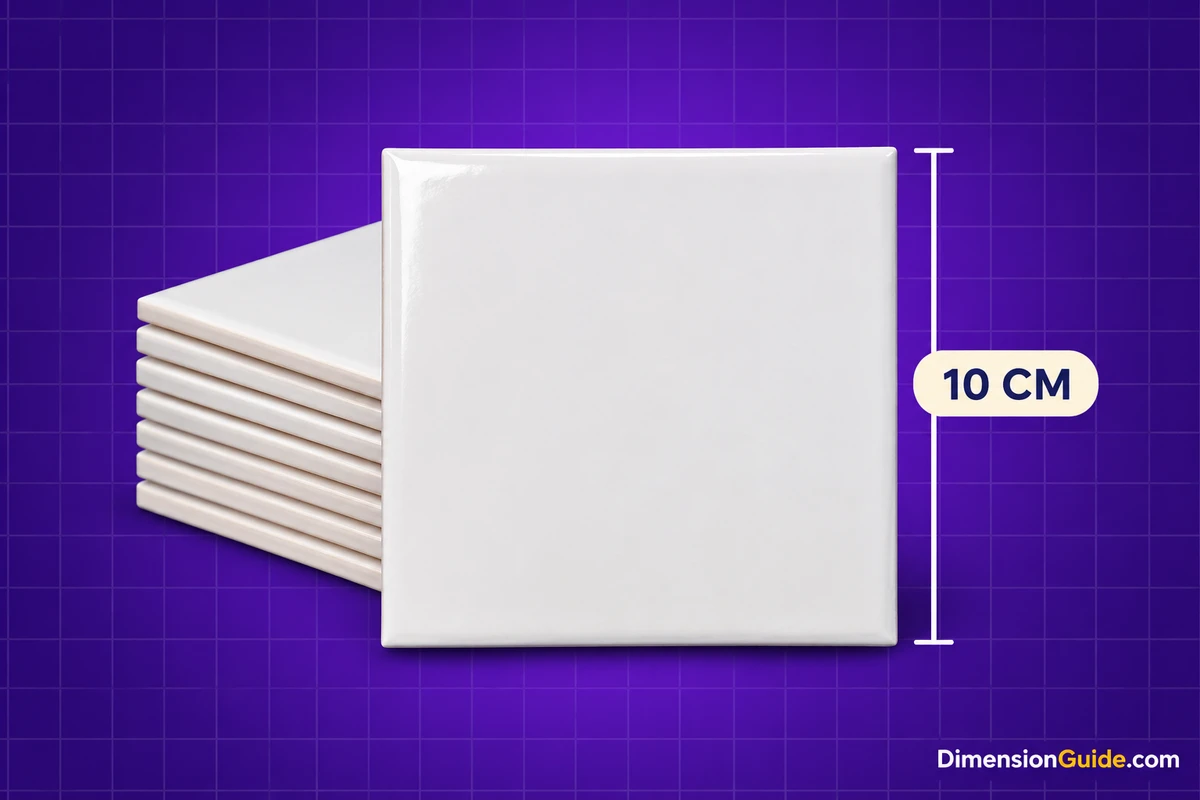
Small square tiles sell by the thousands in a 10 x 10 cm size.
Look closely at the box though. Many are made a few millimeters smaller than the label so grout lines fit, and sizes vary by brand.
That is the same idea as a lumber label. The name is a round number, and the real piece leaves room for the install.
5. 100 mm Petri Dish (across)
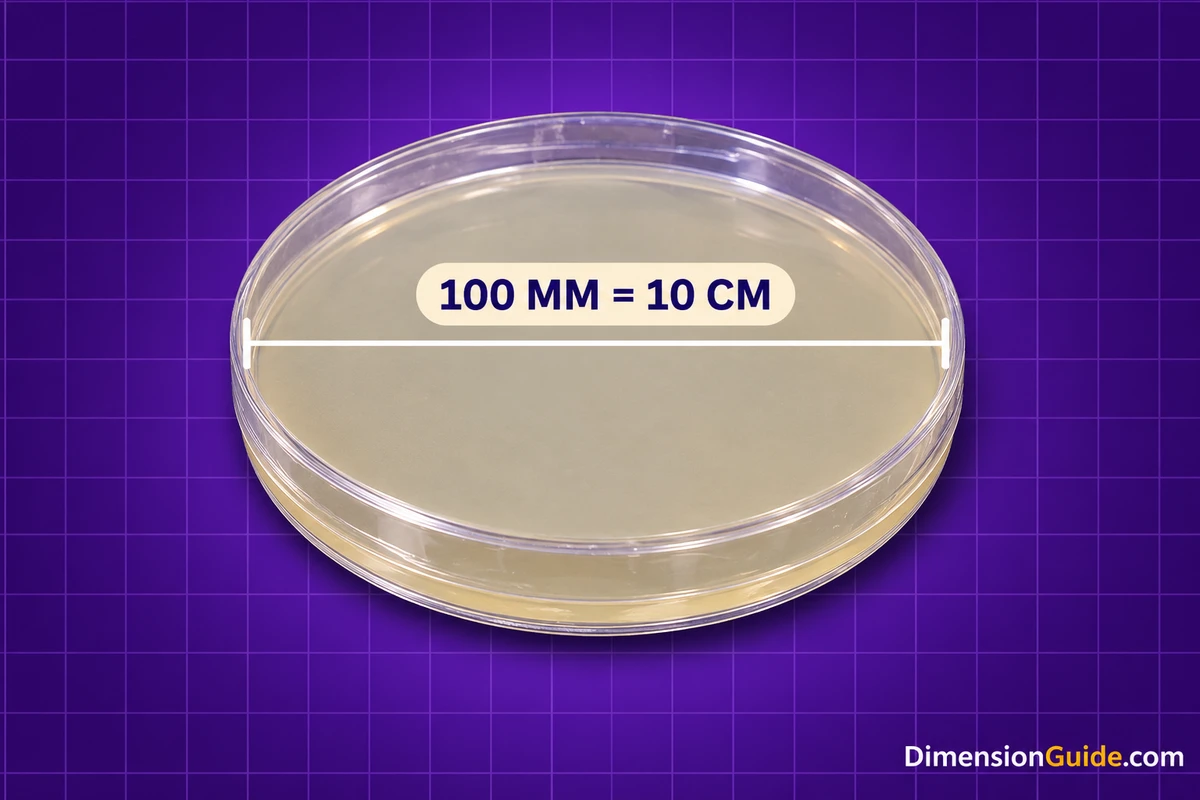
Ever wonder what size a lab petri dish comes in? Two common sizes are 90 mm and 100 mm, and the 100 mm dish is a classic round 10 cm across.
It is a near-exact match for the outside of the lid, though lids can be a little wider than the base.
Measure a spare if you are fitting one into a holder or incubator rack, since brands differ slightly.
6. Anna’s Hummingbird (length)
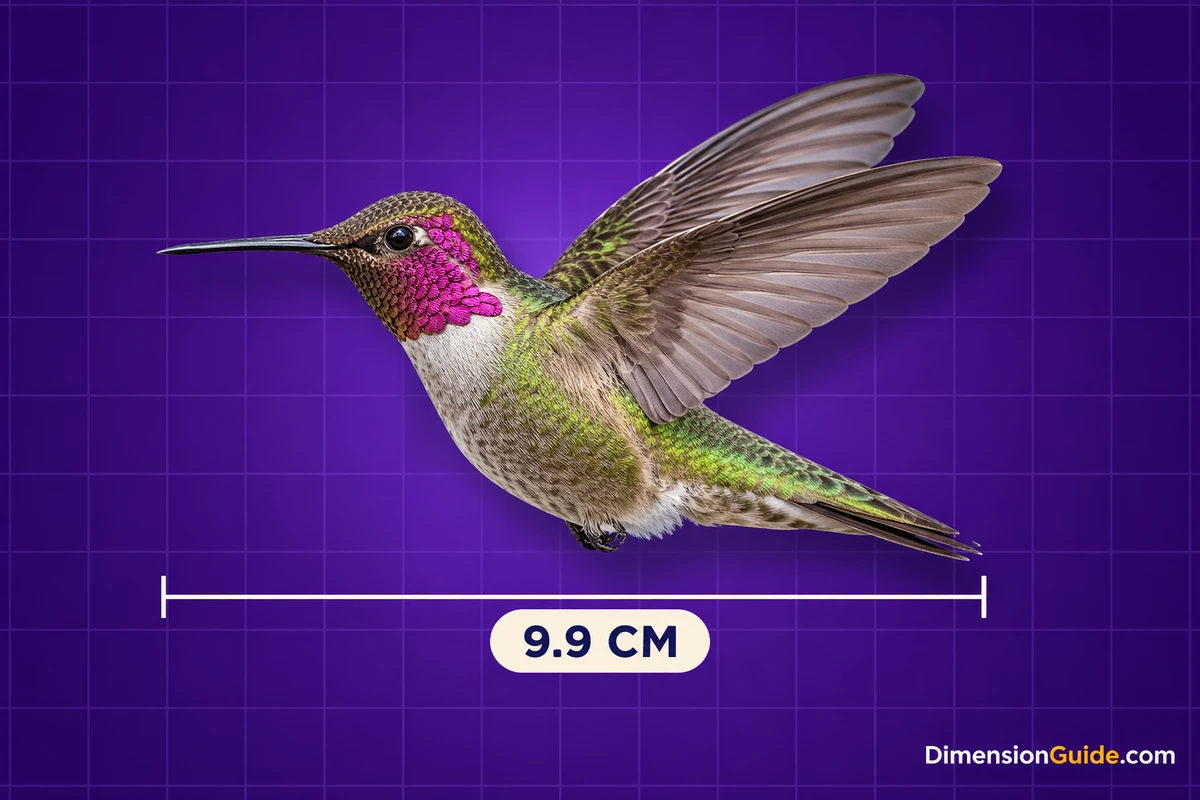
This tiny bird measures about 3.9 inches from beak tip to tail tip, according to the Cornell Lab of Ornithology. That works out to roughly 9.9 cm.
It is a close match for 10 cm, though individual birds vary.
Most of that length is beak and tail, so the actual body is tiny. Cornell lists the weight at only 0.1 to 0.2 ounce.
7. A7 Paper (long side)
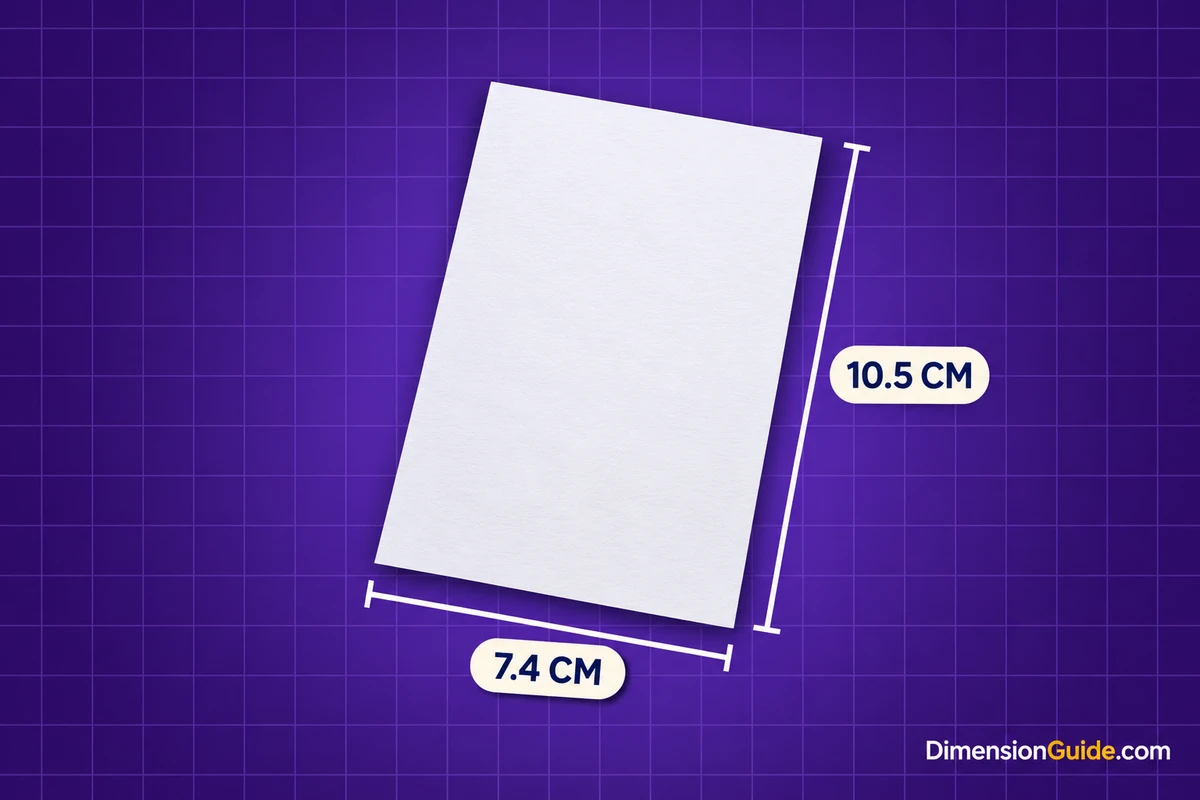
Paper sizes follow a neat pattern. Cut an A6 sheet in half and you get A7, which measures 74 x 105 mm.
That puts the long side at 10.5 cm, only half a centimeter over.
It is about the size of a small notebook page or a flashcard, so it is an easy way to see how big ten centimeters really is.
Each step down the A series halves the sheet, which is why the sizes always stay in the same proportion.
8. Bocce Ball (across)
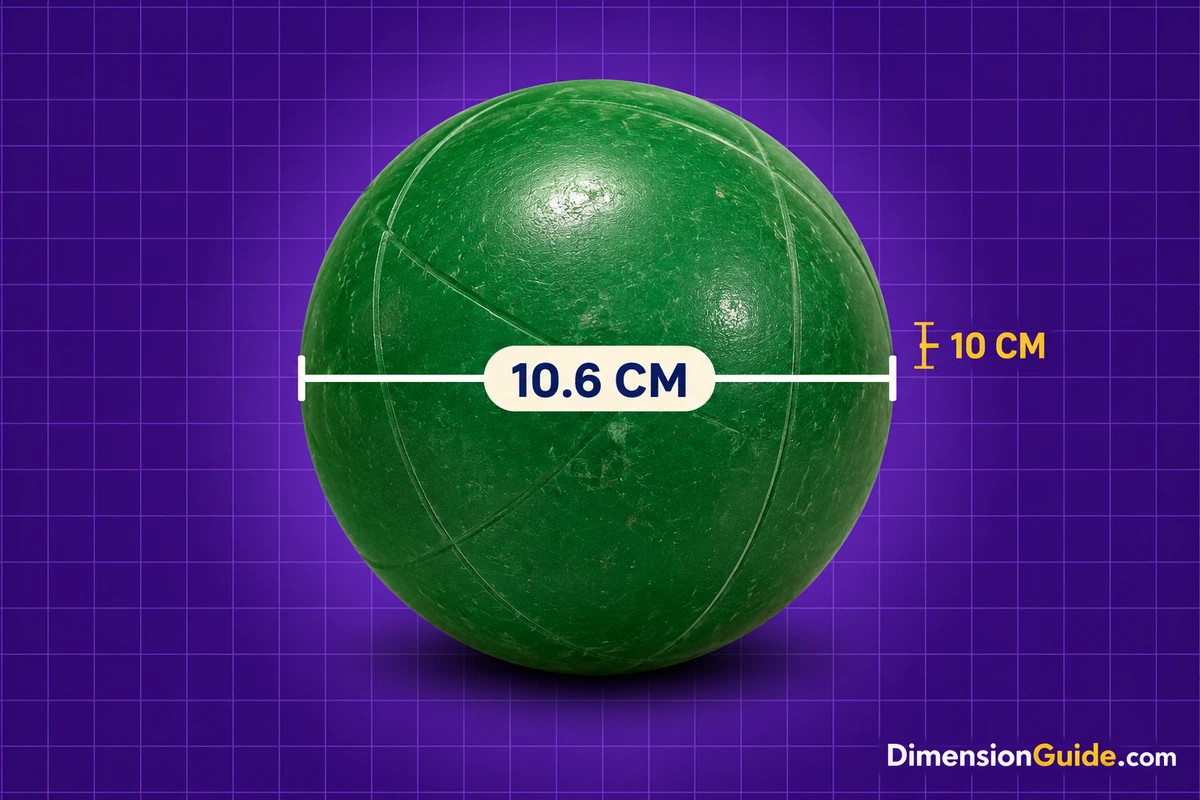
Is a bocce ball bigger or smaller than 10 cm? A touch bigger. The international rulebook allows a diameter of 106 to 107 mm, so you are looking at 10.6 to 10.7 cm.
That is a near miss, but a useful one. A tennis ball is only around 6.7 cm across, so a bocce ball looks huge next to it.
If you have a set at home, hold one in your fist. It should fill your whole hand and then some, with no gap to wrap your fingers all the way around.
Sets sold online sometimes run a millimeter or two off spec, so treat 10.7 cm as the target, not a promise.
9. Chess King (FIDE height)
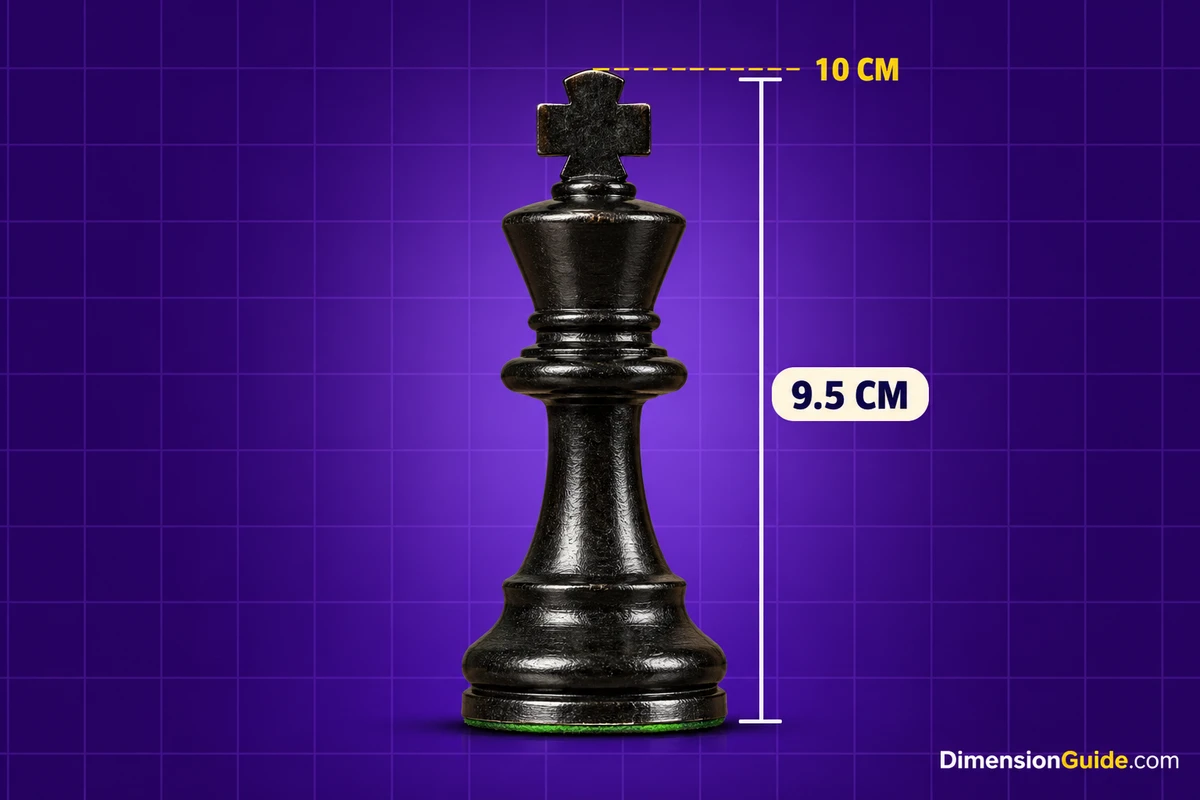
The tallest piece on the board has an official size. The FIDE equipment standard lists the king at 9.5 cm tall.
That is a near miss at 5 millimeters short, but there is a catch. The standard lets makers vary each piece by up to 10 percent as long as the pieces stay in the right height order.
So a legal king can land right on 10 cm. It also sets the base at 40 to 50 percent of the piece height, which keeps it from tipping over.
Weighted sets sold as 3.75 inch kings are about 9.5 cm too, because 3.75 inches is 9.525 cm.
10. 5 x 100 Wheel Bolt Pattern
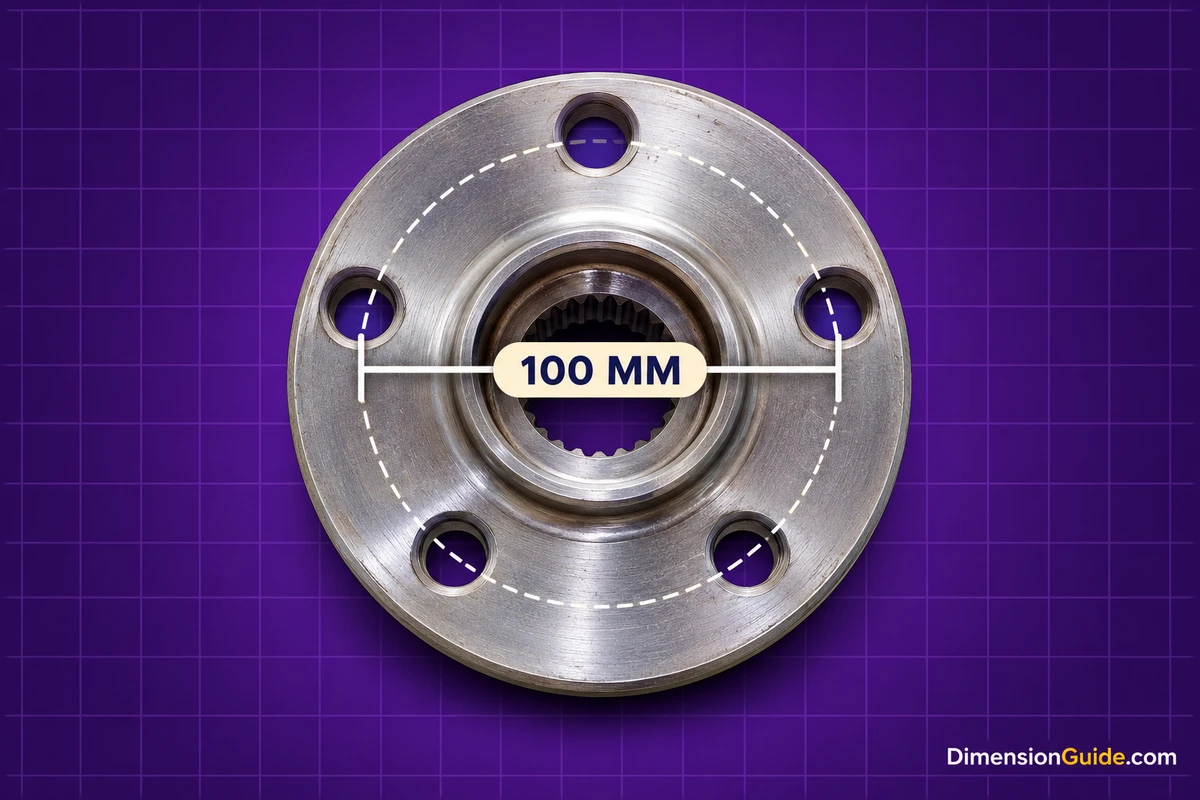
Some cars have five wheel bolts on a circle that is 100 mm wide. People call it “5×100.”
That circle is exactly 10 cm across, measured through the middle of the bolt holes. It shows up on many Subaru, Toyota, and Volkswagen models, though you should always check your own car.
Here is the trick that trips people up: with five bolts, no two sit directly opposite each other. You cannot just lay a ruler across the middle. That is why shops use a bolt pattern gauge instead.
A wrong guess here means a wheel that does not seat. A 5×100 wheel and a 5×10⁸ wheel look almost identical, yet they are 8 mm apart.
11. 100 mm (DN 100) Pipe (nominal size)
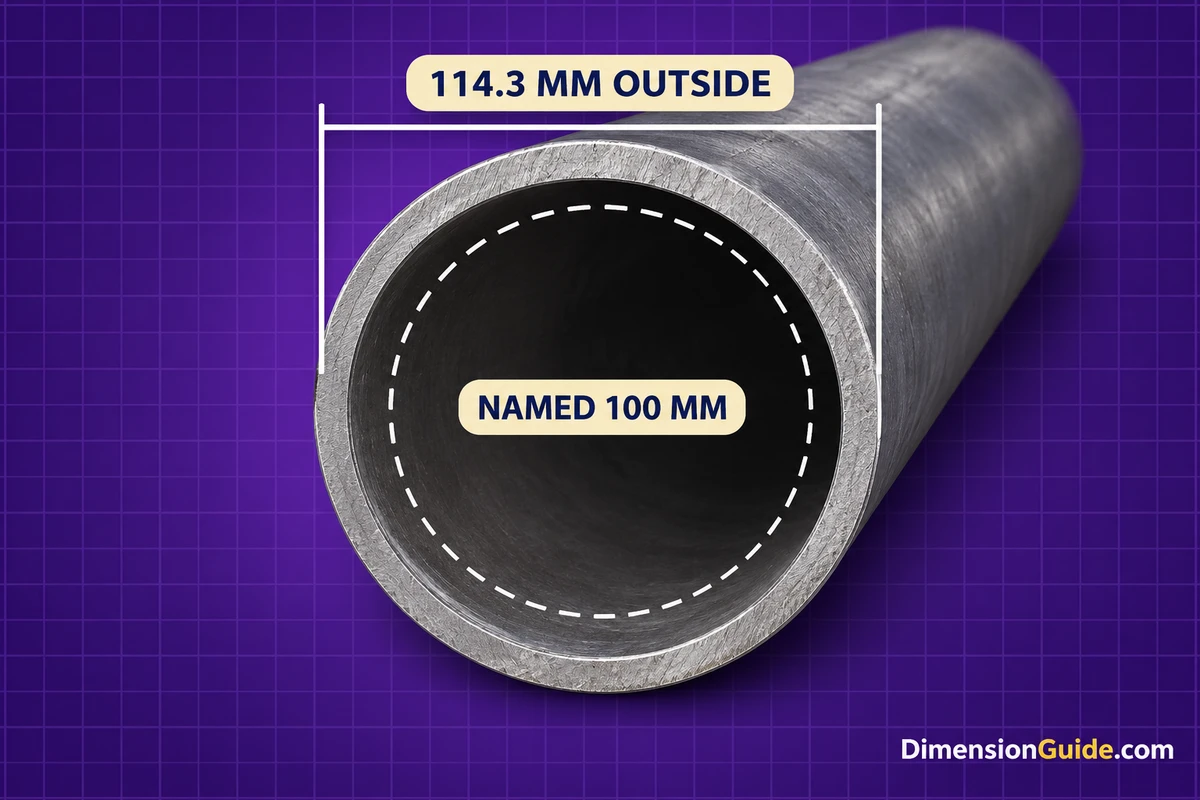
A pipe labeled 100 mm sounds like it should measure 10 cm. It does not, and that is the whole point of this pick.
The “DN 100” label is a nominal size. For common steel pipe, the matching outside diameter is 114.3 mm, which equals 4.5 inches. The inside depends on the wall thickness.
Nominal means “named,” not “measured.” The same trick shows up with a 2×4 board, which is not 2 by 4 inches either.
So before you cut a hole for a 100 mm duct or pipe, measure the real outside diameter first. A 10 cm hole will be too small.
12. Victorinox Swiss Army Knife (closed)
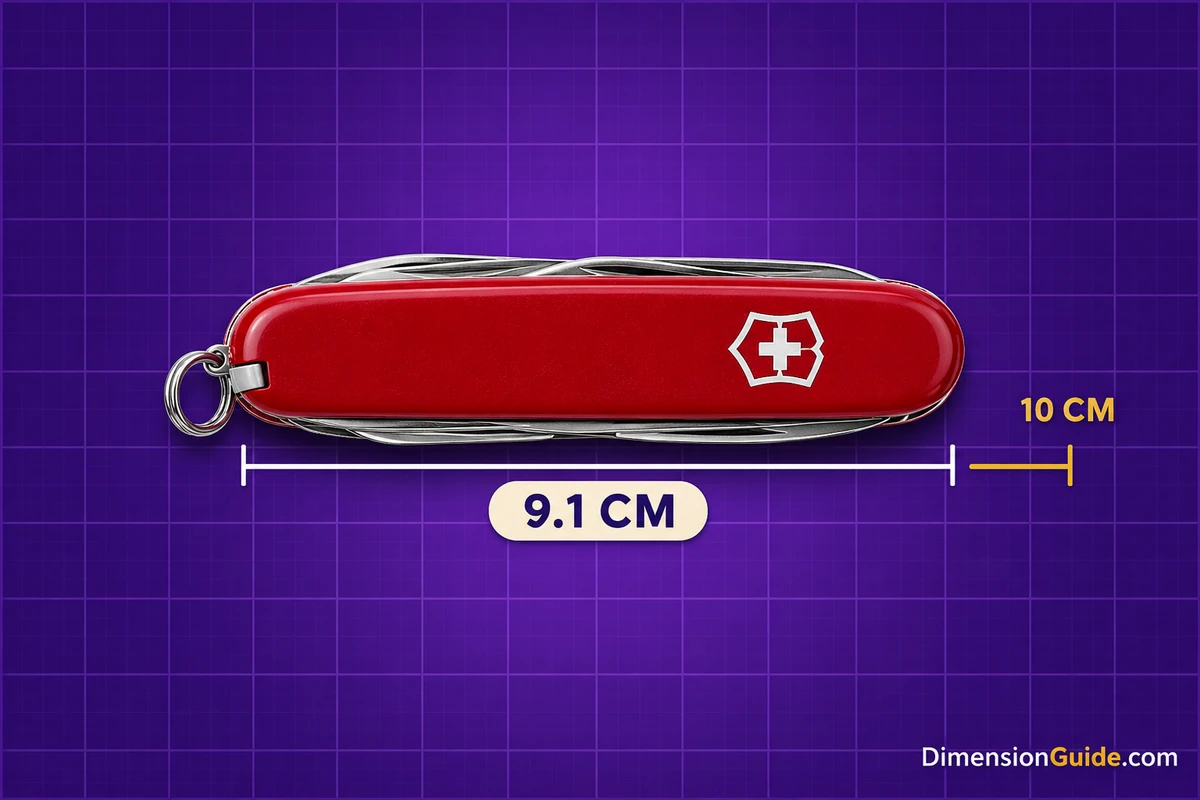
Open a drawer in a Swiss home and you may find one of these. The classic Victorinox large models are called “91 mm” because that is how long they are when closed.
That makes a near miss at 9.1 cm, so about 9 mm under 10 cm.
Different models in that family vary in thickness, but the closed length stays the same.
13. UK Standard Brick (width)
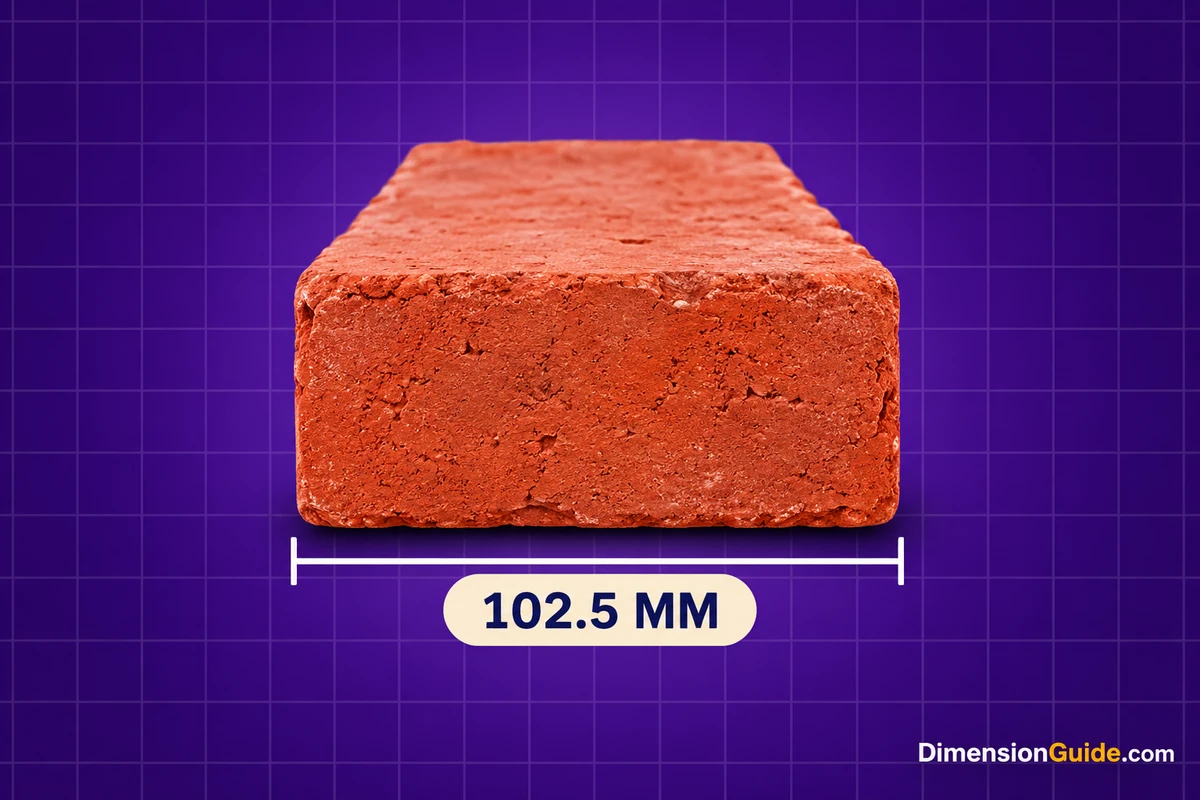
British bricks are made to 215 x 102.5 x 65 mm. The width is 102.5 mm, only 2.5 mm over 10 cm.
Bricklayers call that dimension the “bed” width when they plan a wall. It is also why a single-skin brick wall is roughly 10 cm thick.
14. 4-Inch Dryer Vent Duct (diameter)
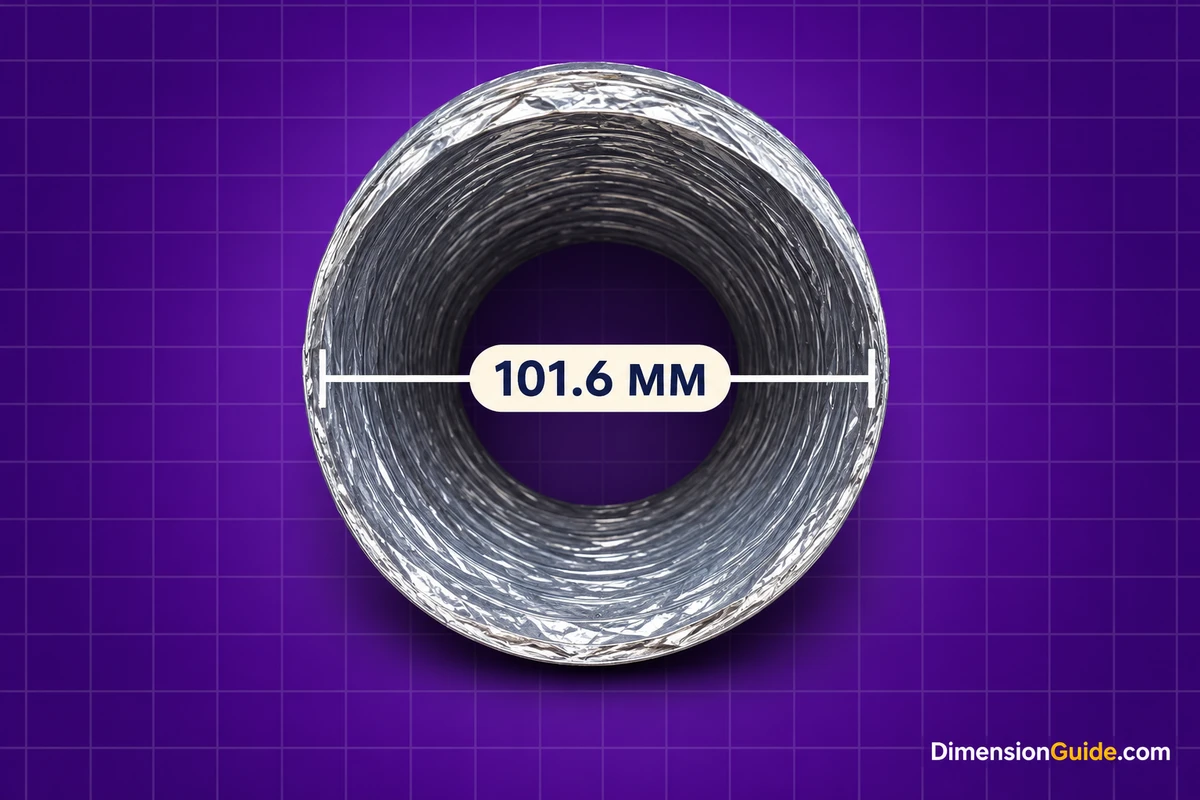
Dryer vent pipes are sold as 4 inch, and the real size is 101.6 mm.
That is 1.6 mm over 10 cm. If you cut a hole with a 10 cm hole saw, the fit is tight, so most people use a 4-inch saw instead.
15. Eurasian Wren (length)
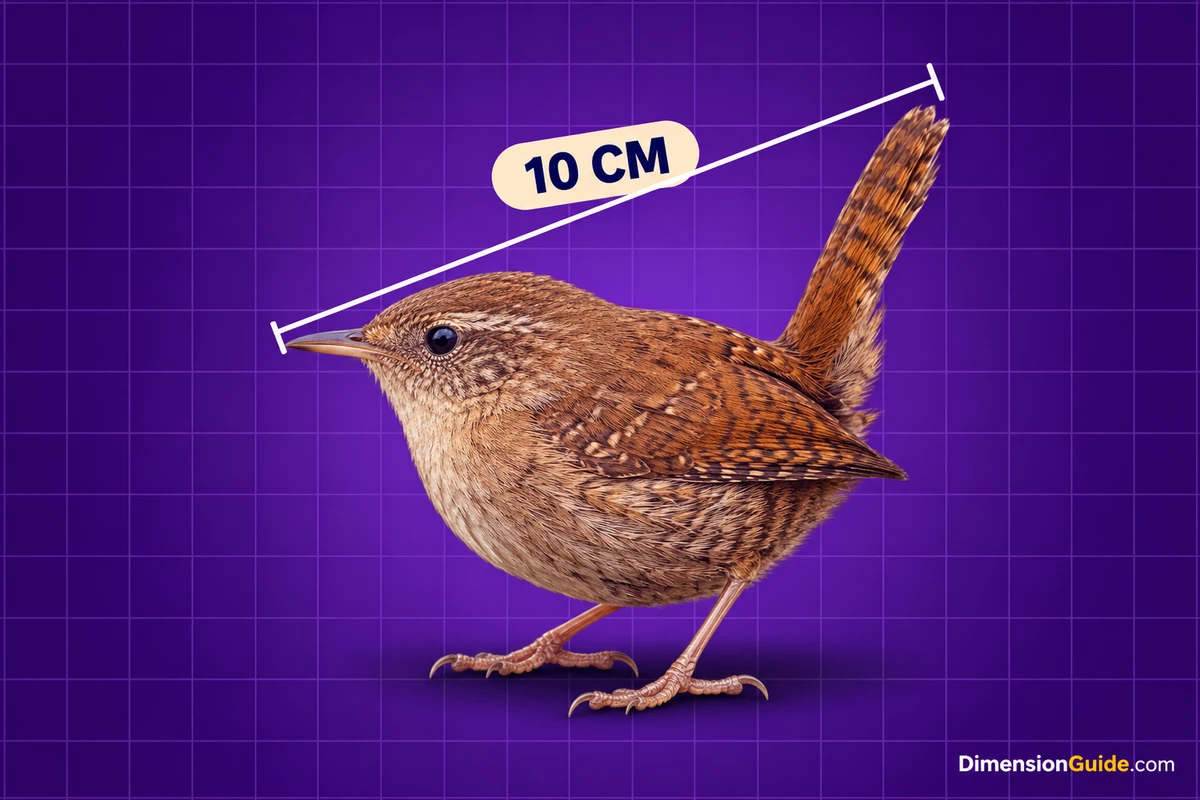
One of the smallest birds in Britain, the wren measures about 9 to 10 cm from beak to tail tip, according to the RSPB.
The tail sticks straight up, which makes the bird look even more compact. A top-end wren is a clean 10 cm.
16. Nokia 3310 (near miss)
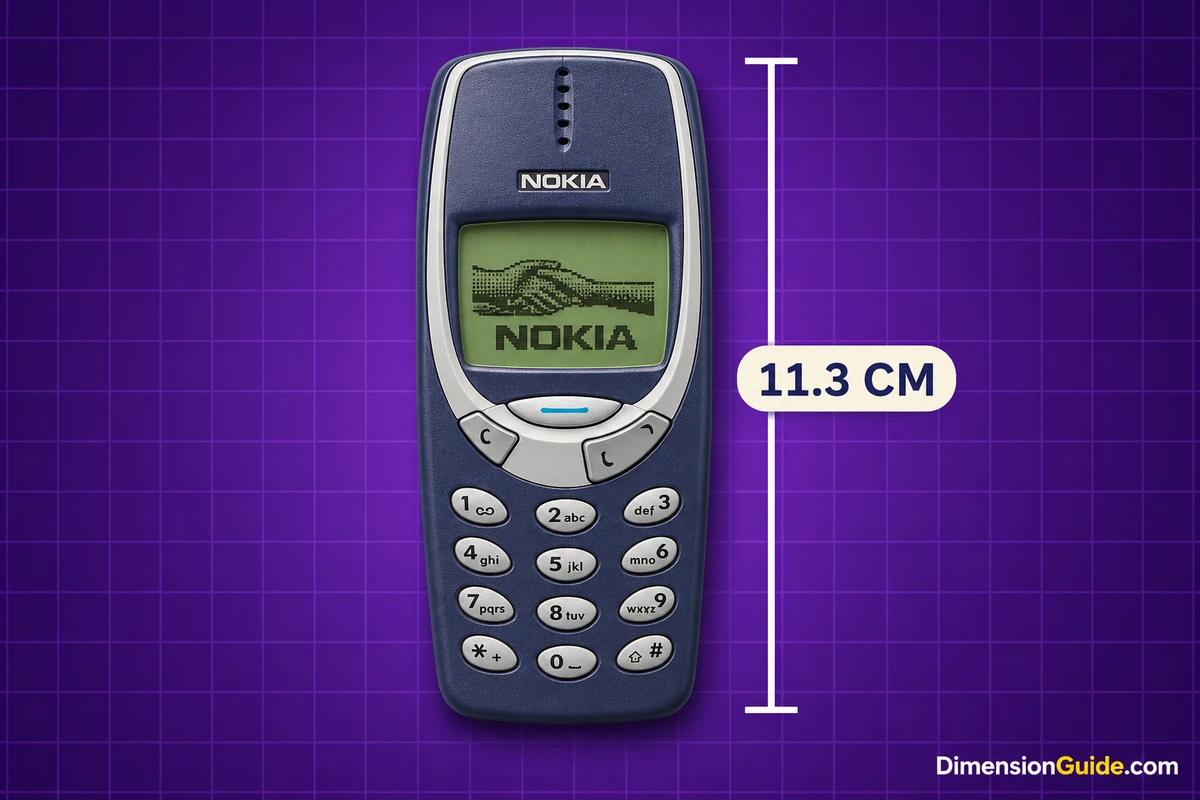
The classic phone measures 113 mm tall, which is 1.3 cm over.
It is a fun pocket reference if you remember how it felt, though the real number is a little longer than the 10 cm picture in your head.
Finding 10 cm Around the House
You will not always have a ruler. These checks get you close, and I would rather give you the honest range than a fake exact number.
Use the items above as pocket rulers. A US 4 x 6 photo has a short side of 10.16 cm. A bocce ball is 10.6 to 10.7 cm. Anything the same size as a standard 4 inch index card edge is 10.16 cm.
For your own hand, measure the width of your palm once with a real ruler, and write the number down. After that you have a ruler you carry everywhere. Hands vary a lot, so do not borrow someone else’s number.
Watch out:
Never trust a phone screen as a ruler. Apps can drift by a millimeter or two, and pixel density changes between devices. For anything that needs to fit, use a real ruler or caliper.
Exact Match or Near Miss? A Quick Scorecard
| Item | Real size | Gap from 10 cm |
|---|---|---|
| 10 x 15 cm photo (short side) | 10.0 cm | 0 mm |
| 1 liter cube (edge) | 10.0 cm | 0 mm |
| 5×100 bolt circle | 10.0 cm | 0 mm |
| Anna’s hummingbird | about 9.9 cm | about 1 mm under |
| Golf hole depth (minimum) | 10.16 cm | 1.6 mm over |
| Chess king (FIDE) | 9.5 cm | 5 mm under |
| A7 paper (long side) | 10.5 cm | 5 mm over |
| Bocce ball | 10.6 to 10.7 cm | 6 to 7 mm over |
| Swiss Army knife (closed) | 9.1 cm | 9 mm under |
| DN 100 pipe (outside) | 11.43 cm | 14.3 mm over |
Need more inch-based comparisons? Try how long is 10 inches for the next size up, or look at how long is 2 inches to see how small the starting point is.
If you want to go bigger in metric, 30 cm is exactly three of these end to end.
Exact Twin or Close Neighbor?
The liter cube, the 10 x 15 cm print and the 5×100 bolt circle are true to 100 mm.
A bocce ball or a hummingbird lands within a centimeter, which is fine for a classroom task and not good enough for a cut.
Looking for a bigger reference? The 15 cm and 9 inch lists are the next two steps up.
10 cm: Quick Answers
Is 10 cm the same as 4 inches?
Not quite. 10 cm is 3.937 inches, while 4 inches is 10.16 cm. The gap is 1.6 millimeters, so 4 inches is a fine stand-in for a rough guess but not for a precise fit.
How many millimeters is 10 cm?
10 cm is 100 millimeters. There are 10 millimeters in each centimeter.
What can I use as a 10 cm ruler at home?
A 10 x 15 cm photo print is exactly 10 cm on its short side. A US 4 x 6 print is 10.16 cm, which is close enough for casual checks. Always confirm with a real ruler for anything that must fit.
Sources
- NIST: the inch is exactly 25.4 mm, and the liter is one cubic decimeter.
- USGA Rules of Golf: the hole is 4 1/4 inches wide and at least 4 inches deep.
- FIDE Handbook: chess piece heights, with the king at 9.5 cm.
- Cornell Lab All About Birds: Anna’s hummingbird size and shape.
- United States Bocce Federation: international bocce ball diameter rules.