
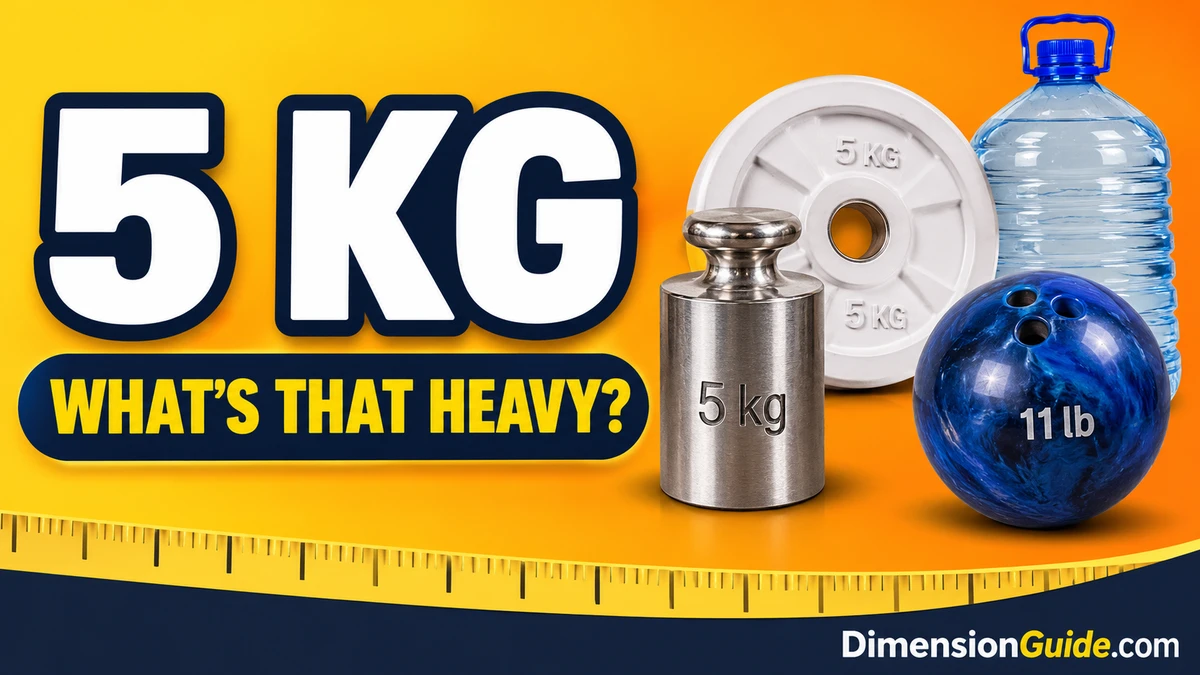


Quick answer: 5 kg is 11.02 pounds, not 10. It is also 176.4 ounces, 0.79 stone or 5,000 grams.
Plenty of people think 5 kg is 10 pounds. It is 11.02 pounds, and that mix-up is easy to make.
On paper it looks small. After a flight of stairs it does not. The 16 items below give you something real to compare it with.
How Much Is 5 kg in Pounds and Other Units?
The kilogram is the base unit of mass in the metric system. One pound is defined as exactly 0.45359237 kg, so 5 kg works out to a little over 11 pounds.
| Unit | 5 kg equals |
|---|---|
| Grams | 5,000 g |
| Pounds | 11.023 lb |
| Ounces | 176.37 oz |
| Stone | 0.787 st |
| Pounds and ounces | 11 lb 0.4 oz |
Here is the reverse. A flat 11 lb weighs 4.99 kg, so it is only 10 grams short of 5 kg. That is why 11 lb items show up so often on this list.
Pro tip:
For a fast mental conversion, double the kilograms and add 10 percent. For 5 kg, that gives 10 + 1 = 11 lb. It lands within a hair of the real answer.
Easy Ways to Judge 5 kg Without a Scale
You do not need lab gear to get a feel for this weight. Most homes already hold something close, and you can build the rest.
- Five 1 liter water bottles. Each liter is close to 1 kg. Error: under 1 percent for the water, plus the bottles.
- Eleven 1 lb boxes or bags. Butter, sugar or pasta in US sizes all work. Error: about 10 grams.
- A bowling ball you already own. Check the drilled label for an 11 lb ball. Error: about 10 grams.
The water bottle trick is the most flexible, because you can add or remove one bottle to get closer to the weight you want. Below are 13 real objects to compare it to.
16 Things That Weigh About 5 kg
Each item below says how close it really is to 5 kg, so you know when to trust it.
1. OIML M1 Calibration Weight (5 kg)
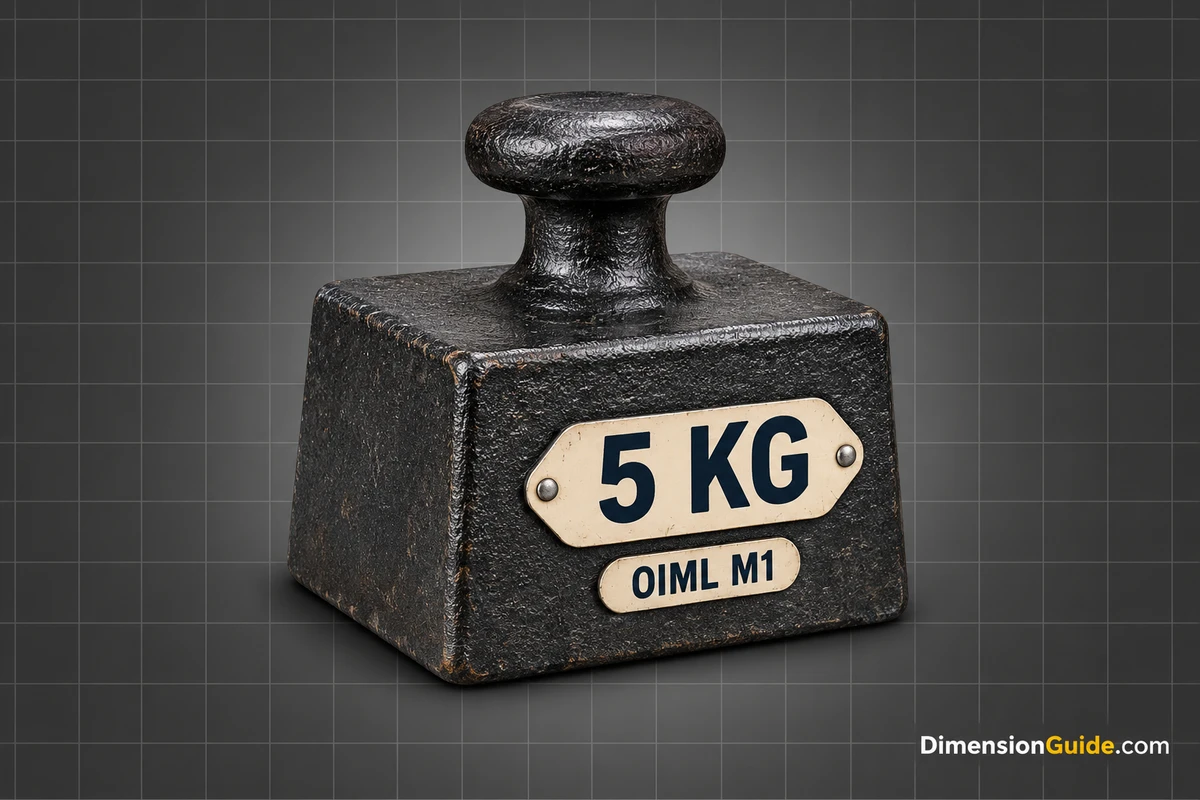
This is the closest thing to a perfect 5 kg you can buy. Cast iron 5 kg test weights are made to the OIML R 111 standard, which sets how far a weight is allowed to drift from its label.
For an M1 class 5 kg block, the allowed error is only plus or minus 250 milligrams. That is about a quarter of the weight of a single paper clip, on a block that heavy.
Shops use these blocks to check industrial scales. Their size surprises people. One common model is roughly 152 mm long, 77 mm wide and 86 mm tall, so it fits in one hand.
2. White Weightlifting Plate (5 kg)
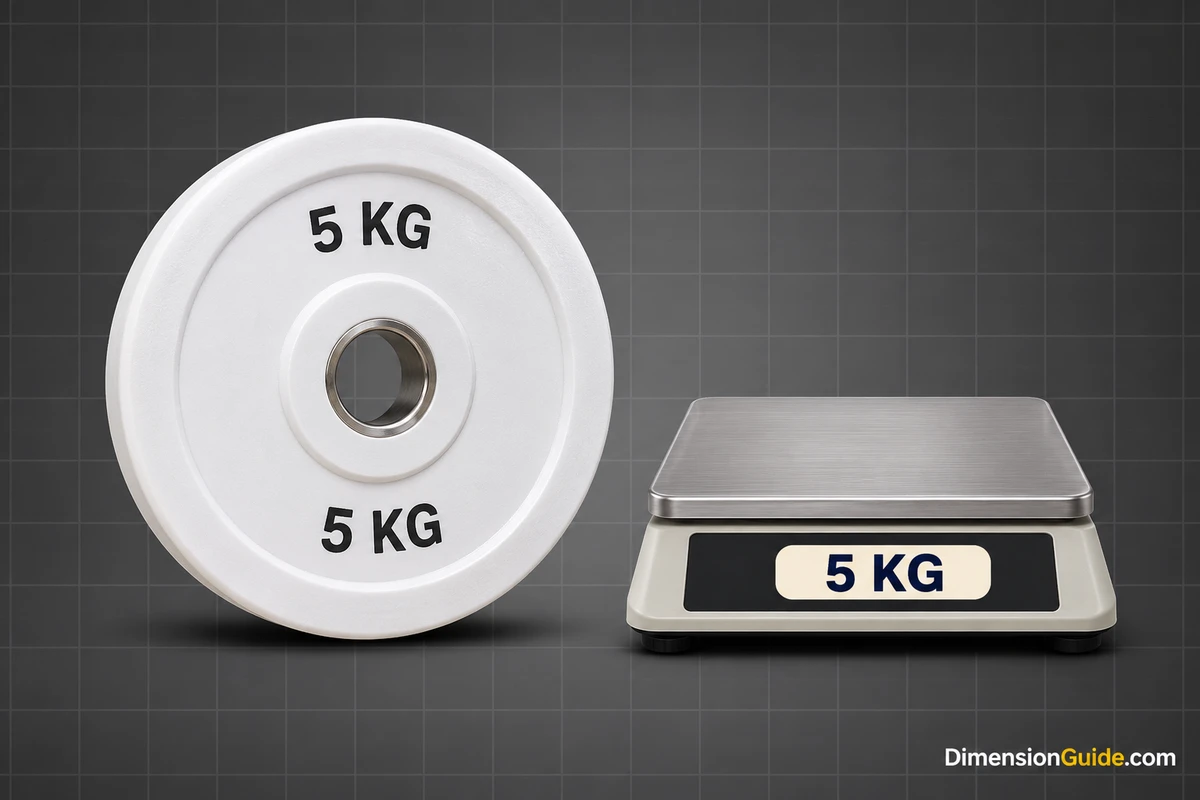
Competition plates follow a color code from the International Weightlifting Federation. White means 5 kg, and green means 10 kg.
What if you grab one blind? Competition plates all share the same 450 mm diameter, so a 5 kg plate is as wide across as a 25 kg plate. Only the thickness changes. The color is the only quick clue, and that is exactly why the code exists.
Try lifting one with a single hand. It will feel light, and then you will learn what 5 kg really is when you do ten slow raises.
3. 5 Liter Jug of Water
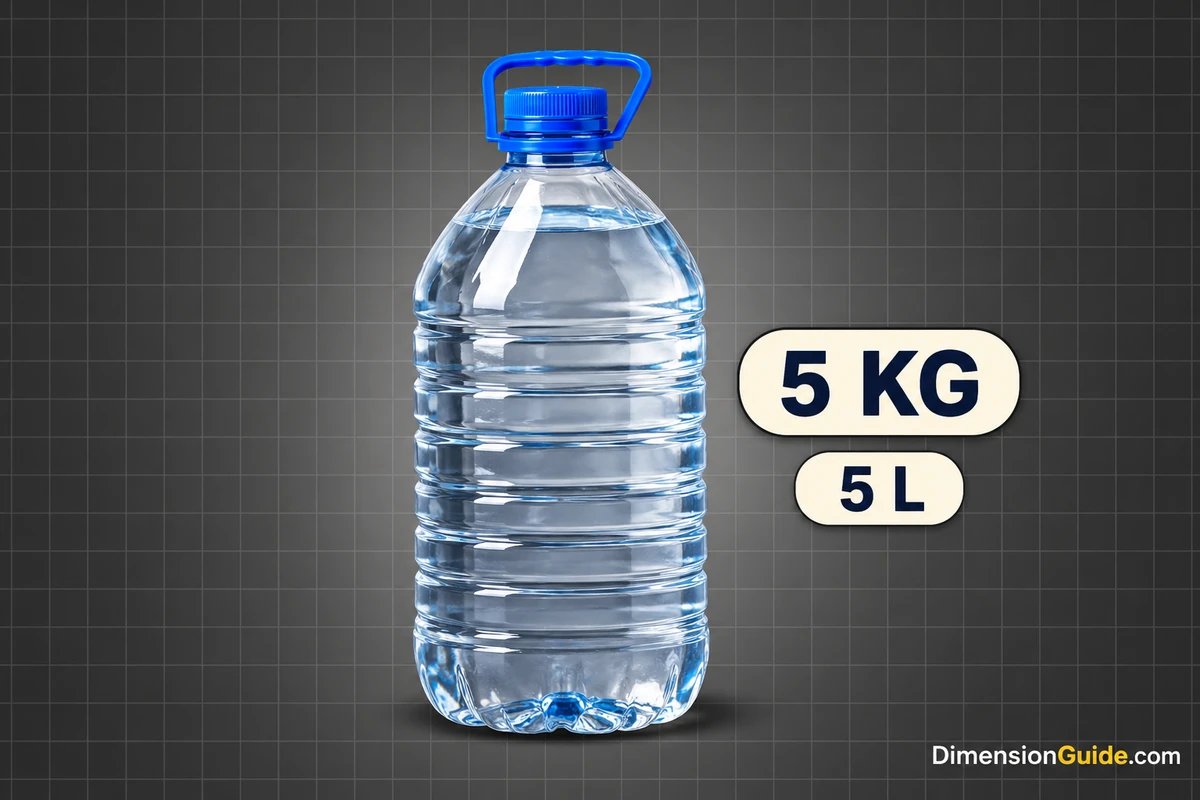
Water is the easiest way to see 5 kg. One liter of pure water at its densest weighs 1 kg, and at room temperature (20 degrees C) it is 0.9982 kg per liter, according to the USGS.
That makes 5 liters of water about 4.99 kg. The jug adds a little more, so a full one lands right near 5.1 to 5.2 kg depending on the plastic.
Weird, right? A volume you can pour is also a weight you can lift. That works for any size, so 10 liters is 10 kg, and 20 liters is about 20 kg, which links up nicely with how heavy 20 kg feels.
4. 11 lb Bowling Ball
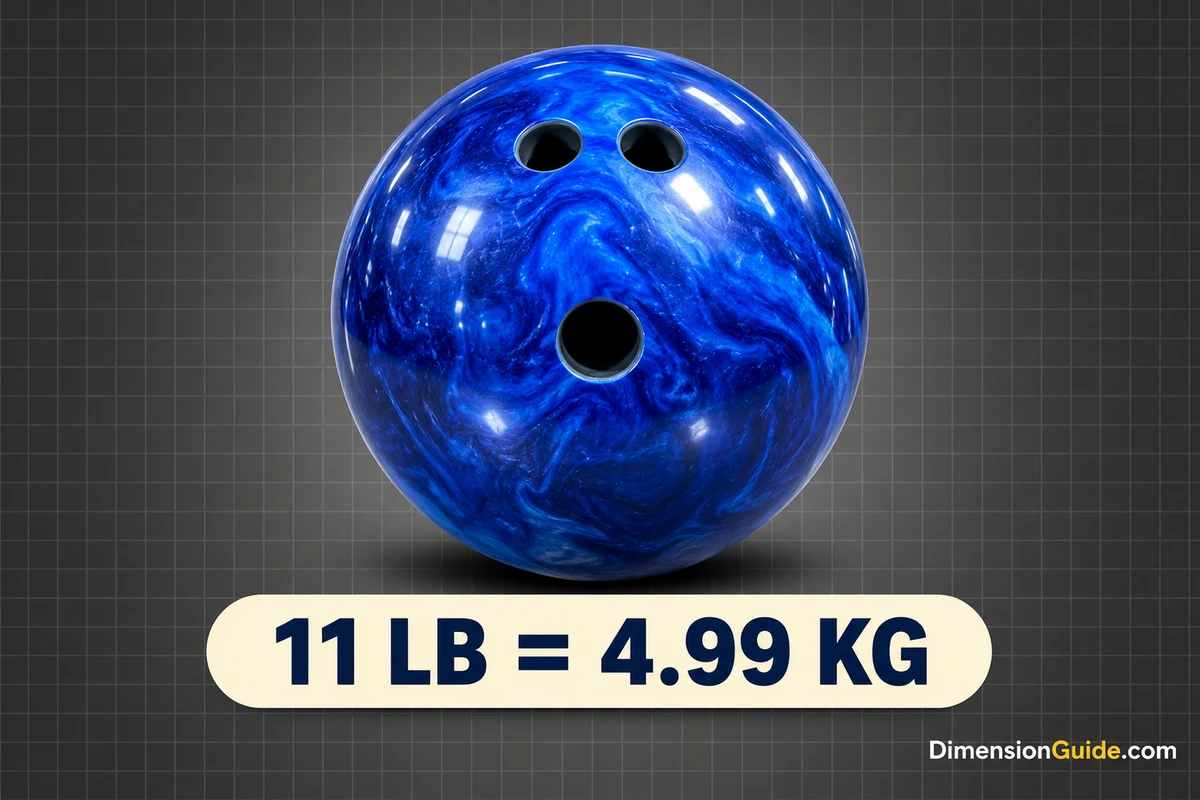
An 11 lb bowling ball weighs 4.99 kg. That is basically 5 kg.
The United States Bowling Congress sets a maximum ball weight of 16 pounds, but there is no minimum. Lighter balls are common for kids and for adults who want less strain on the wrist.
Here is the a-ha part. Ball weight is printed in whole pounds, so you can never find a “5 kg ball.” You find an 11 lb ball and that is the closest match by a mile.
5. 10 lb vs 5 kg Dumbbell (Nominal vs Real)
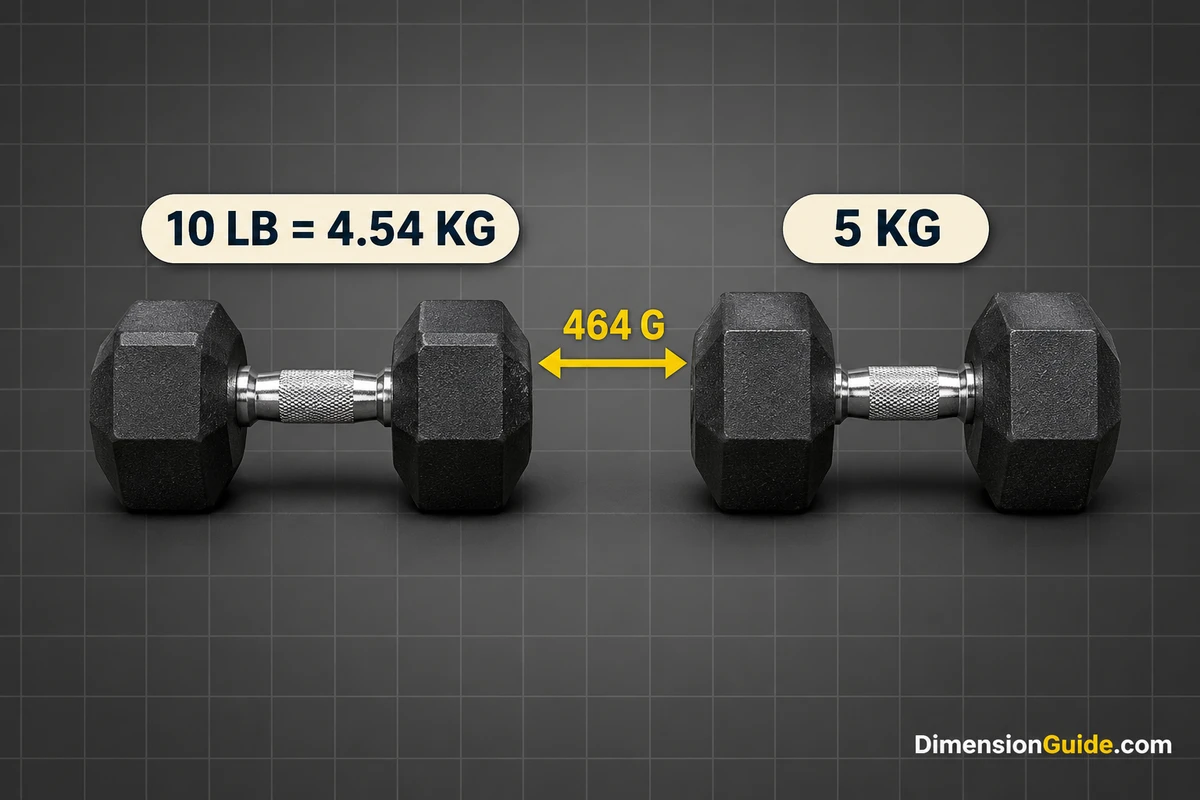
Does a 10 lb dumbbell weigh 5 kg? Not quite. Ten pounds is 4.536 kg, which is 464 grams short.
That gap is nearly a full pound. If a program tells you to use 5 kg dumbbells and you grab a 10 lb pair, you are lifting about 9 percent less.
The fix is simple. Look for a dumbbell with a metric label. Gyms outside the US stock real 5 kg pairs, while American gyms usually jump from 10 to 12 lb, and 12 lb is 5.44 kg.
So the best US match is the 11 lb dumbbell, when your gym has one. Otherwise, choose between a little under and a little over.
6. Miniature Dachshund (heaviest allowed)
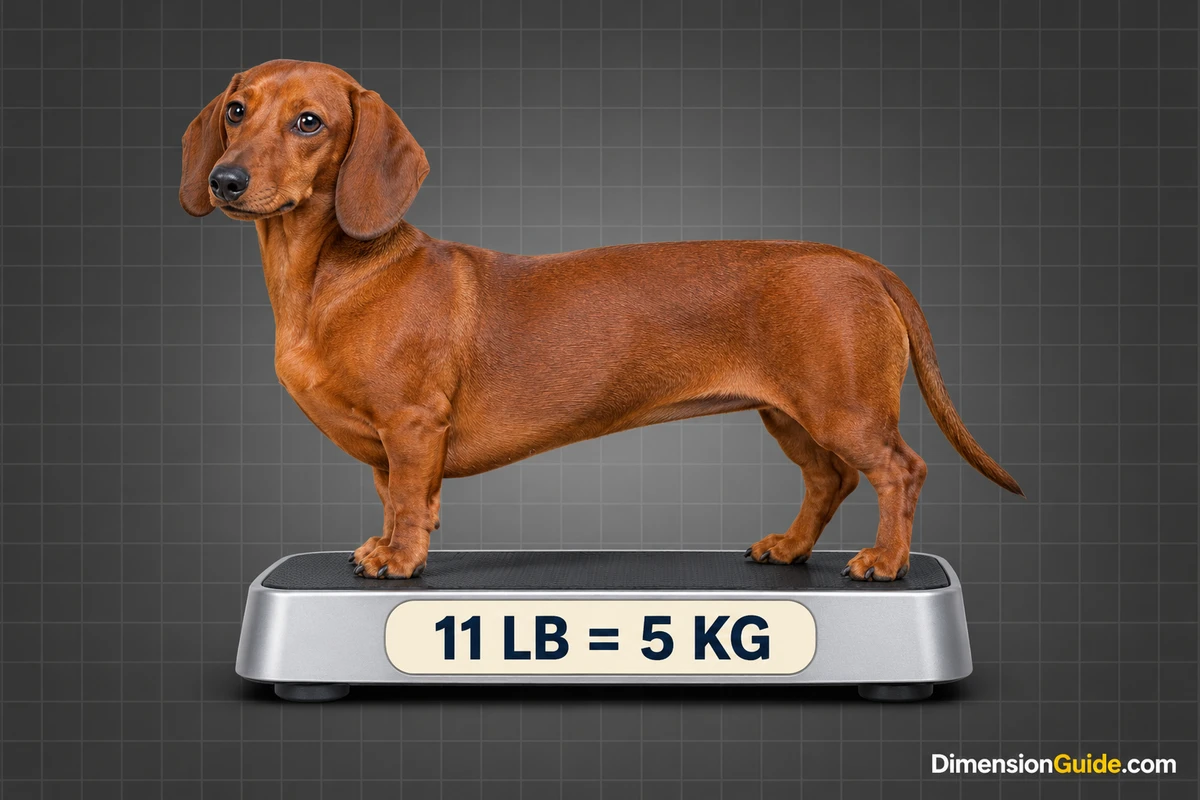
Did you know dog clubs weigh their dogs? In the AKC breed standard, a miniature dachshund is 11 pounds or under at 12 months of age and older.
That puts the top of the miniature range right at 4.99 kg. Most minis weigh less, so a 5 kg one is a big, sturdy example of the breed.
7. Average Adult House Cat
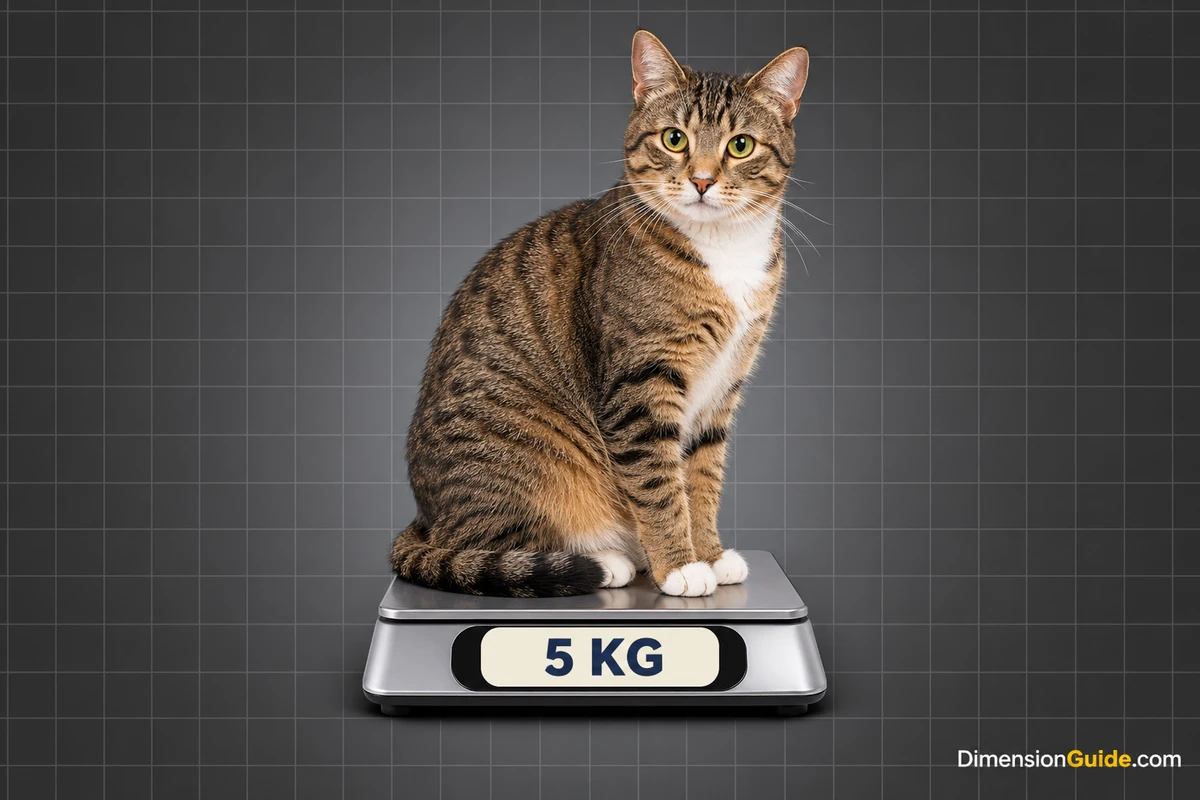
Vets often call 8 to 10 pounds (3.6 to 4.5 kg) a healthy range for a typical adult domestic cat. A cat at 11 lb is right at 5 kg.
It is a near miss for many cats and an exact hit for some. Big breeds like the Maine Coon can run well past it.
8. 11 lb Frozen Turkey
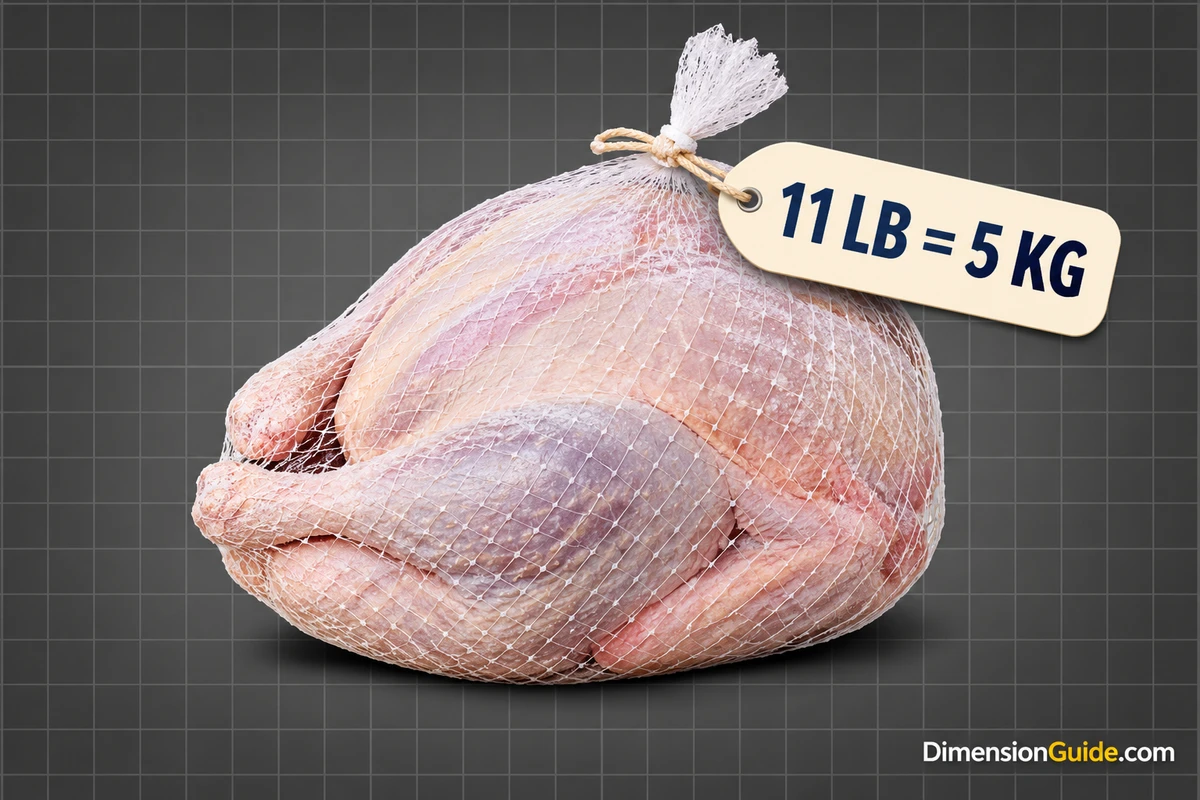
Holiday shoppers see turkeys sold in pounds. An 11 lb bird is 4.99 kg, so you are carrying almost exactly 5 kg when you lift one out of the freezer case.
The label weight is usually the weight at packaging, so ice and water can shift it a little.
Turkeys are sold in many sizes, so you can pick one near 5 kg on purpose. It also feeds a small table, which makes it a fun way to remember the number.
9. 5 kg Bag of Flour or Rice
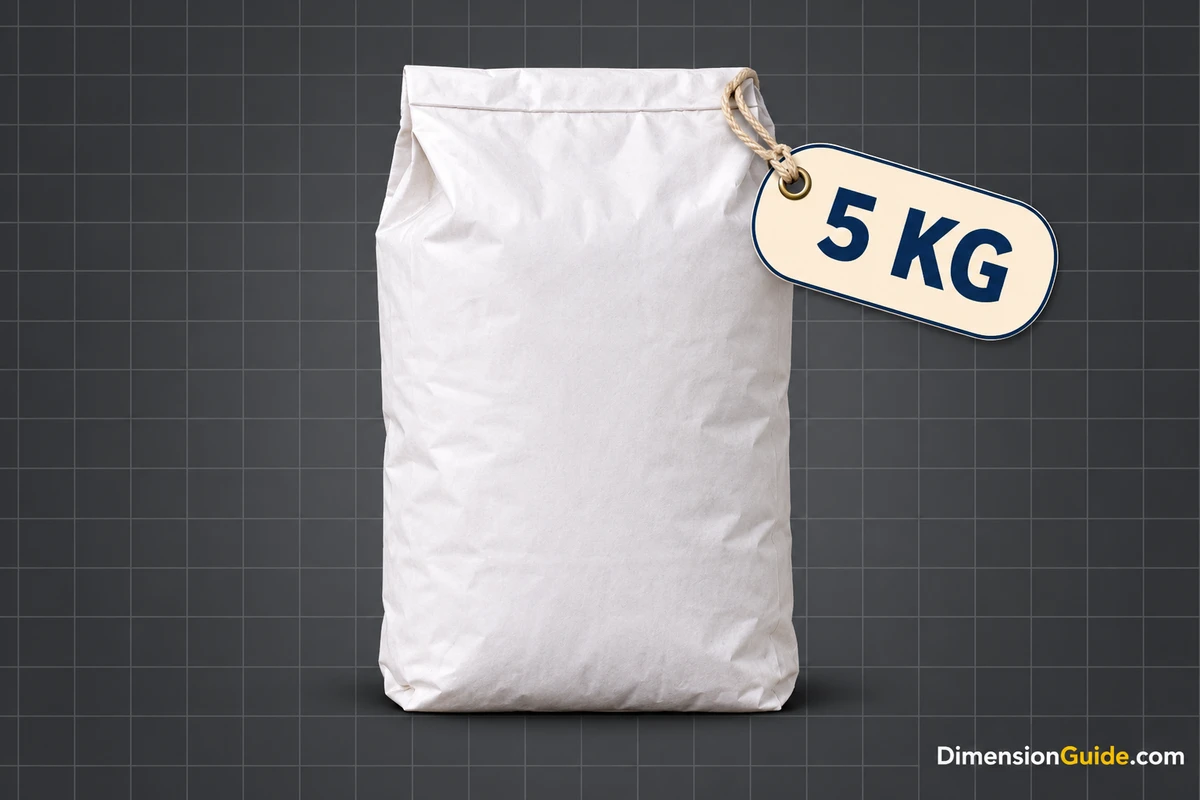
Open any supermarket in the UK or Europe and you will find 5 kg bags of flour, rice and potatoes. The label is the net weight, so the food itself is 5 kg.
It makes a handy test. Carry a bag and you have a built-in 5 kg weight.
Just remember that in the US the same bag is usually sold as 5 lb or 10 lb, so check the unit on the label before you count on 5 kg.
10. Baby Girl at About Two Months
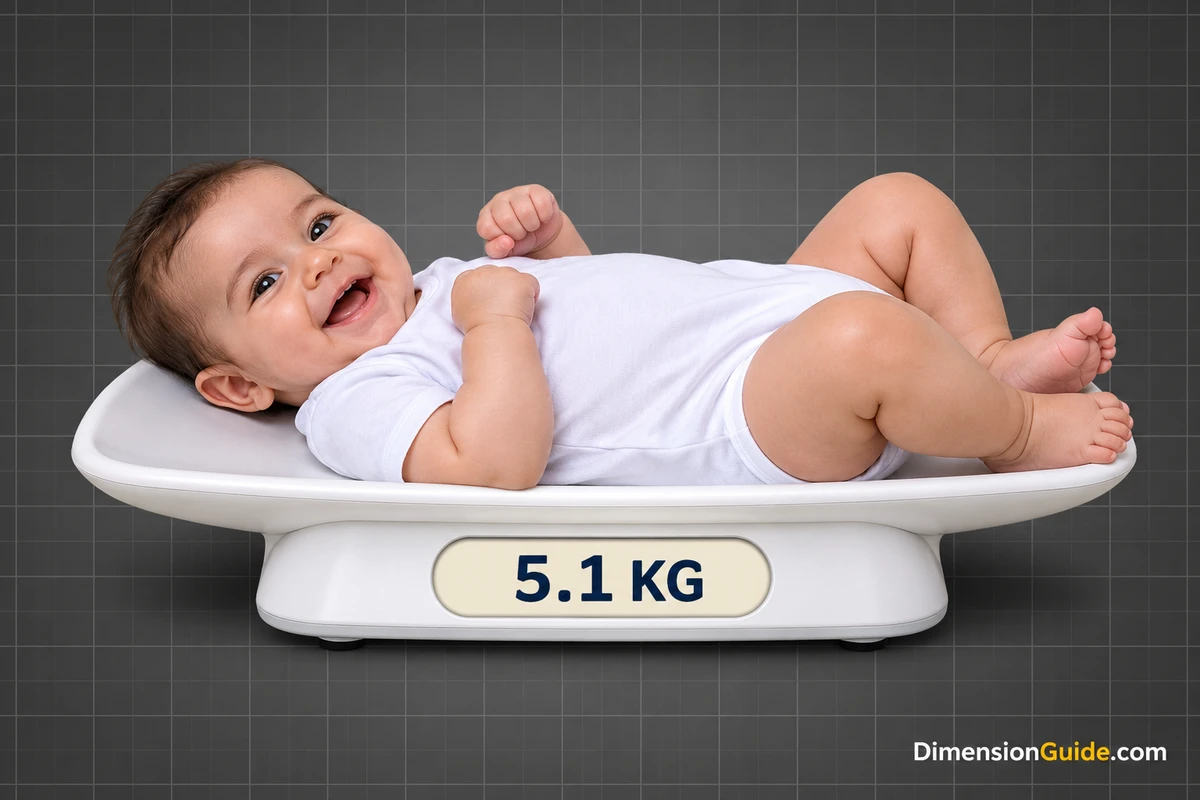
The World Health Organization growth charts put the median weight of a two-month-old girl at about 5.1 kg. For boys the median is higher, at about 5.6 kg.
Newborns arrive at around 3 to 3.5 kg, so a baby gains roughly 2 kg in the first eight weeks. That is fast growth.
These are medians, which means half of healthy babies weigh more and half weigh less. A baby does not need to hit 5 kg on any exact day.
11. Adult Human Head
Your head is often compared to a bowling ball. Commonly quoted numbers put an adult head at 10 to 11 pounds, which is about 4.5 to 5 kg.
Individual heads differ, so treat this as a ballpark. Even so, it explains why a stiff neck feels awful after a long day.
Your neck muscles carry that load all day without you noticing, which is a pretty good picture of what a steady 5 kg feels like.
12. 11 Boxes of Butter
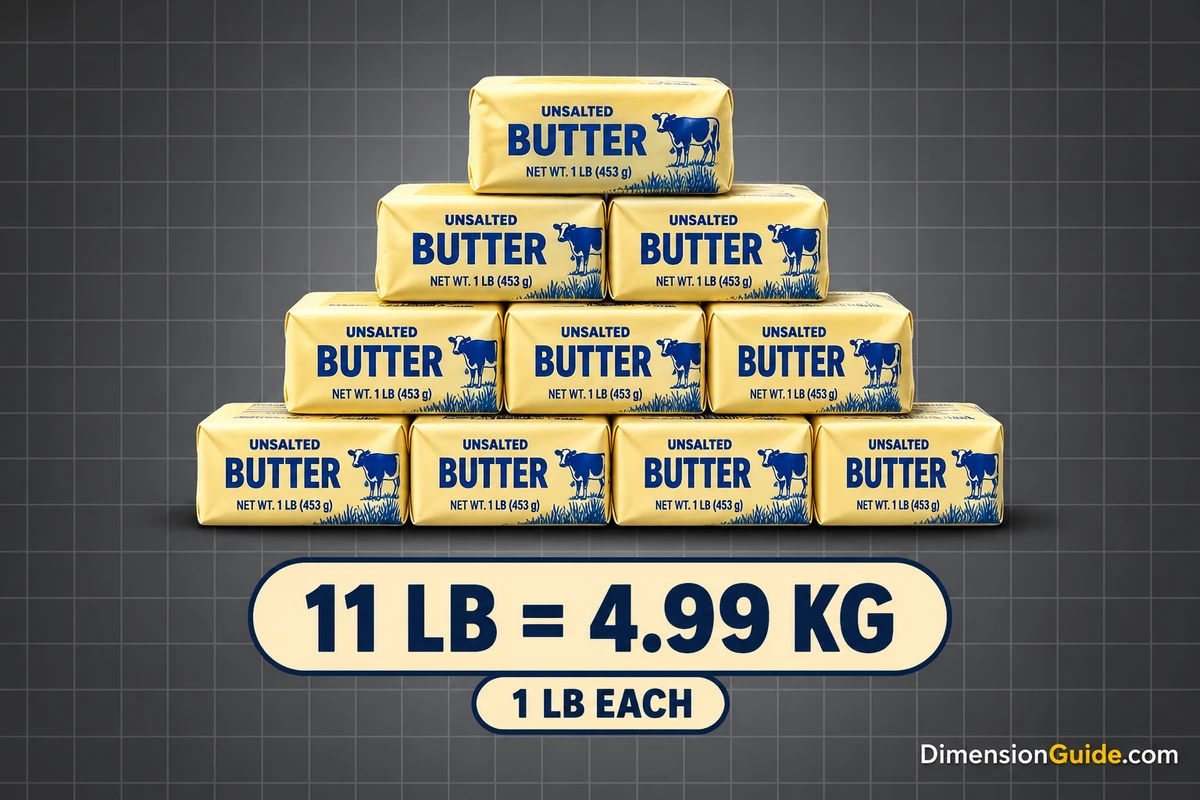
A standard US box of butter holds one pound, or 453.6 grams. Stack 11 of them and you have 4.99 kg.
Funny way to shop, but it works. It also shows how the pound and the kilogram relate, because every box is a little under half a kilogram.
Next to the kitchen scale, this is a neat check. Ten boxes would give you 4.54 kg, and the 11th box closes the gap.
13. 13 Cans of Soda (estimate)
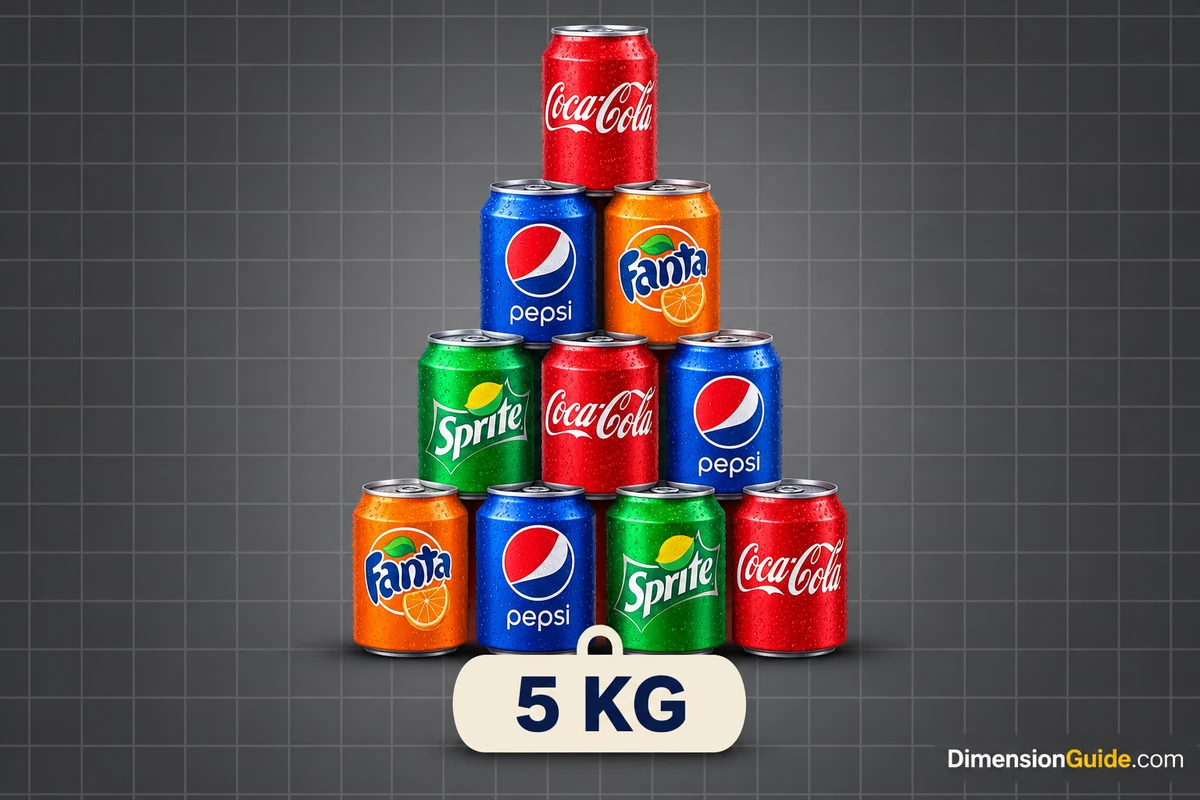
A full 12 oz soda can has about 355 mL of liquid and roughly 14 grams of aluminum, so a can lands near 385 grams. Thirteen cans come to about 5 kg.
This one is a math estimate, not a spec. Brands differ by a few grams a can, so your total could land a bit above or below.
14. Five 1 kg Bags of Sugar
Five of the usual 1 kg bags make 5 kg, plus a few grams of packaging.
Carry them in one tote and you will notice how the weight pulls on a single shoulder.
15. Women’s Shot Put (near miss)
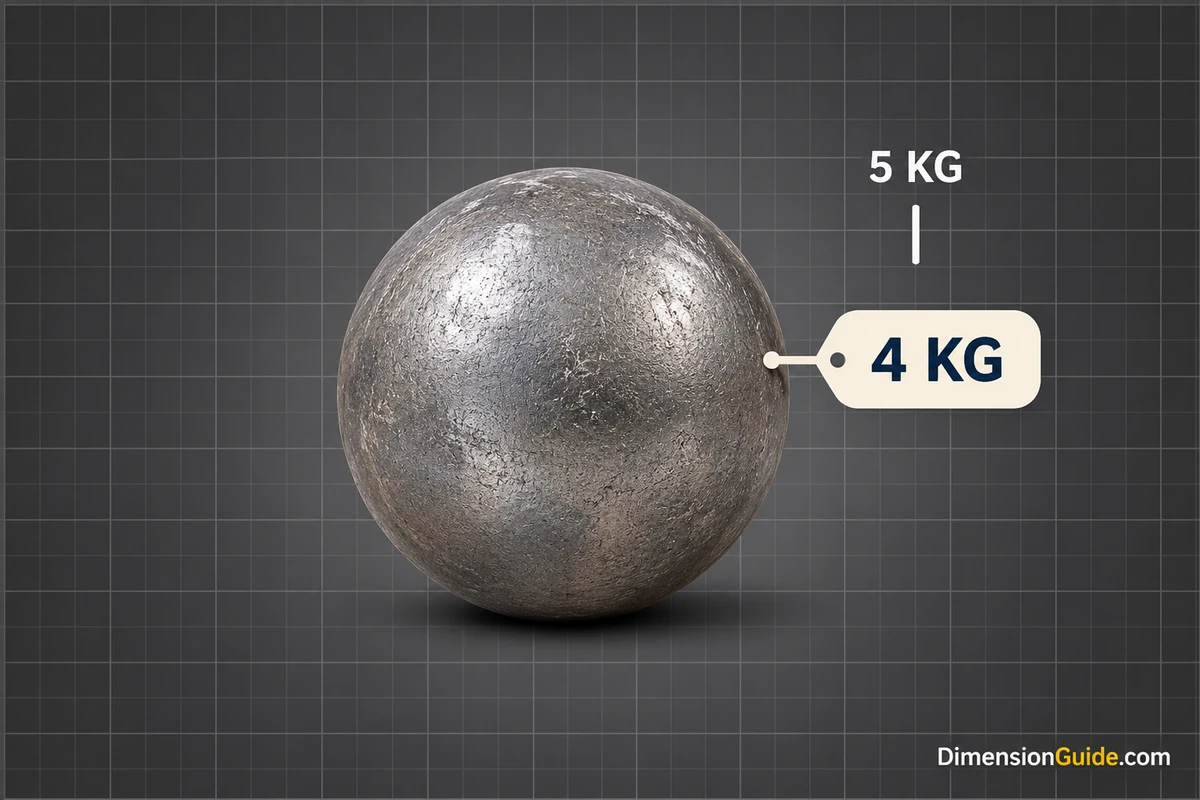
A women’s competition shot put is 4 kg, which is 8.82 pounds. That is a kilo under the mark.
It is a small iron ball, only about 10 cm across, yet it feels far heavier than anything that size should.
16. Female Bald Eagle
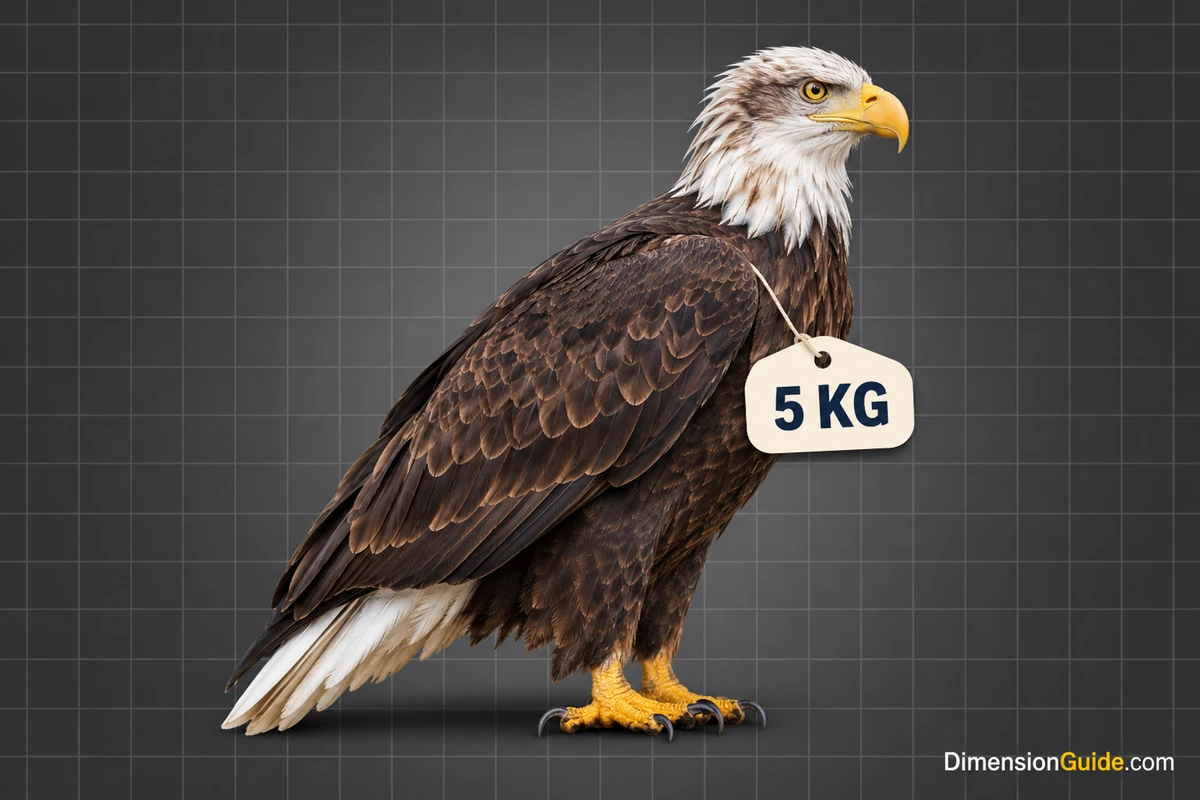
Female bald eagles run bigger than males and typically weigh about 4.5 to 6.8 kg, with an average near 5.5 kg.
An average female lands right around 5 kg, which is a lot of bird to keep in the air.
Why 5 kg Is Not the Same as 10 Pounds
This is the mix-up behind most bad 5 kg guesses. Ten pounds sounds close, but it is only 4.54 kg. The real match is 11 pounds. Here is how common weights line up.
| Pounds | Kilograms | Gap from 5 kg |
|---|---|---|
| 10 lb | 4.536 kg | 464 g under |
| 11 lb | 4.990 kg | 10 g under |
| 12 lb | 5.443 kg | 443 g over |
Watch out:
Do not treat 10 lb as 5 kg when you follow a medical dose, a shipping rate or a lifting plan. The 0.46 kg difference is real, and it adds up fast on heavier loads.
How Heavy Is 5 kg to Lift and Carry?
For most healthy adults, 5 kg is easy to pick up and awkward to carry far. A single loaded grocery bag at 5 kg is fine for a short walk, but the handles start to dig in after a few minutes.
If you scale up, 5 kg times five is 25 kg, which is the load in things that weigh 25 kg. Times ten gets you to 50 kg.
Pro tip:
To feel 5 kg at home, fill a backpack with water bottles. Five 1 liter bottles weigh about 5 kg before you count the bottles, and you can adjust one bottle at a time.
Does Your Scale Read 5 kg Correctly?
Kitchen and bathroom scales can drift over time, and cheap ones can be off by tens of grams or more. A good check is to weigh something you trust, like a sealed 5 kg bag from a shop, and see what your scale says.
Labs do the same thing at a higher level with calibration weights, which is why the OIML block earlier on this list exists. If you only need a rough idea, the water trick is accurate enough for almost any home task.
A Cheap 5 kg Test
Fill a jug with 5 liters of water and carry it up a flight of stairs. It costs nothing and teaches the weight better than any list.
And when a label says 11 pounds, you will know it is the same thing.
Ready for a heavier lift? My 10 kg guide doubles this one.
5 kg: Quick Answers
Is 5 kg heavy to lift?
No, most healthy adults can lift 5 kg with one hand. It feels heavy when you carry it for a long time or lift it overhead many times.
How many pounds is 5 kg?
5 kg is 11.02 pounds. Multiply kilograms by 2.20462 to convert.
How many liters of water weigh 5 kg?
About 5 liters. At 20 degrees C, water is 0.9982 kg per liter, so 5 liters is 4.99 kg.
Sources
- NIST: defines the kilogram and the SI mass unit.
- USGS: water density figures, including 0.9982 g/cm3 at 20 degrees C.
- United States Bowling Congress: bowling ball weight limits.
- World Health Organization: weight for age growth standards for infants.
- American Kennel Club: the miniature dachshund weight class.